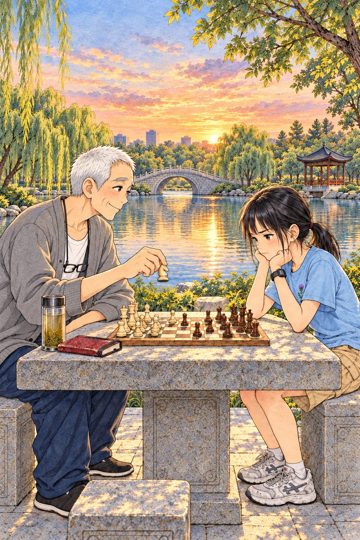
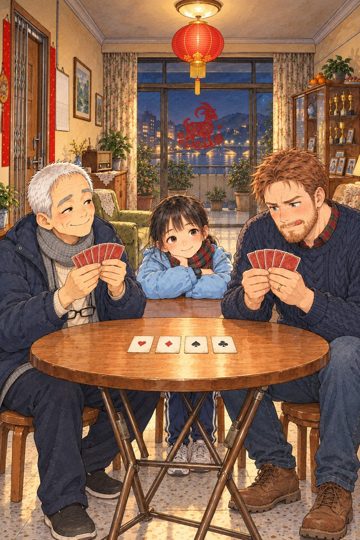
Chapter 4. One Little Neuron第四章 一个小小的神经元
A manga for grown-ups. Read it in English or Chinese.给大人看的漫画。可以用中文或英文读。
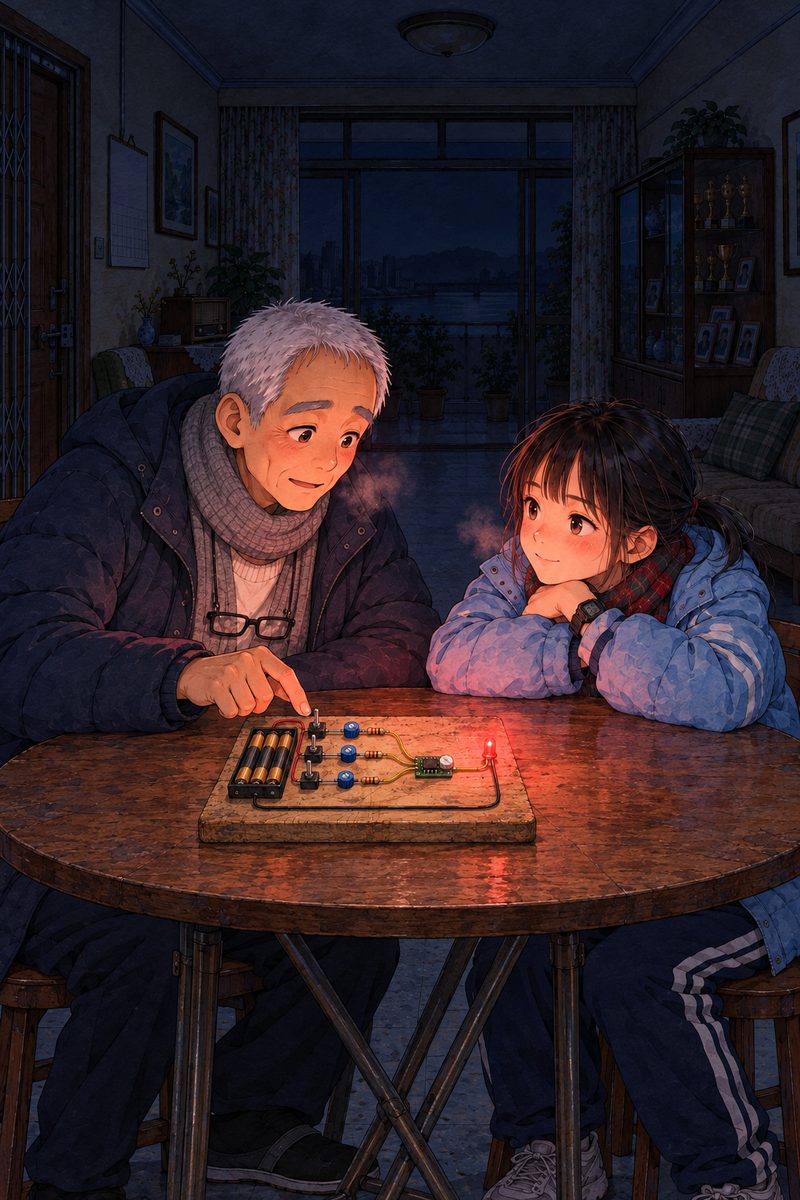
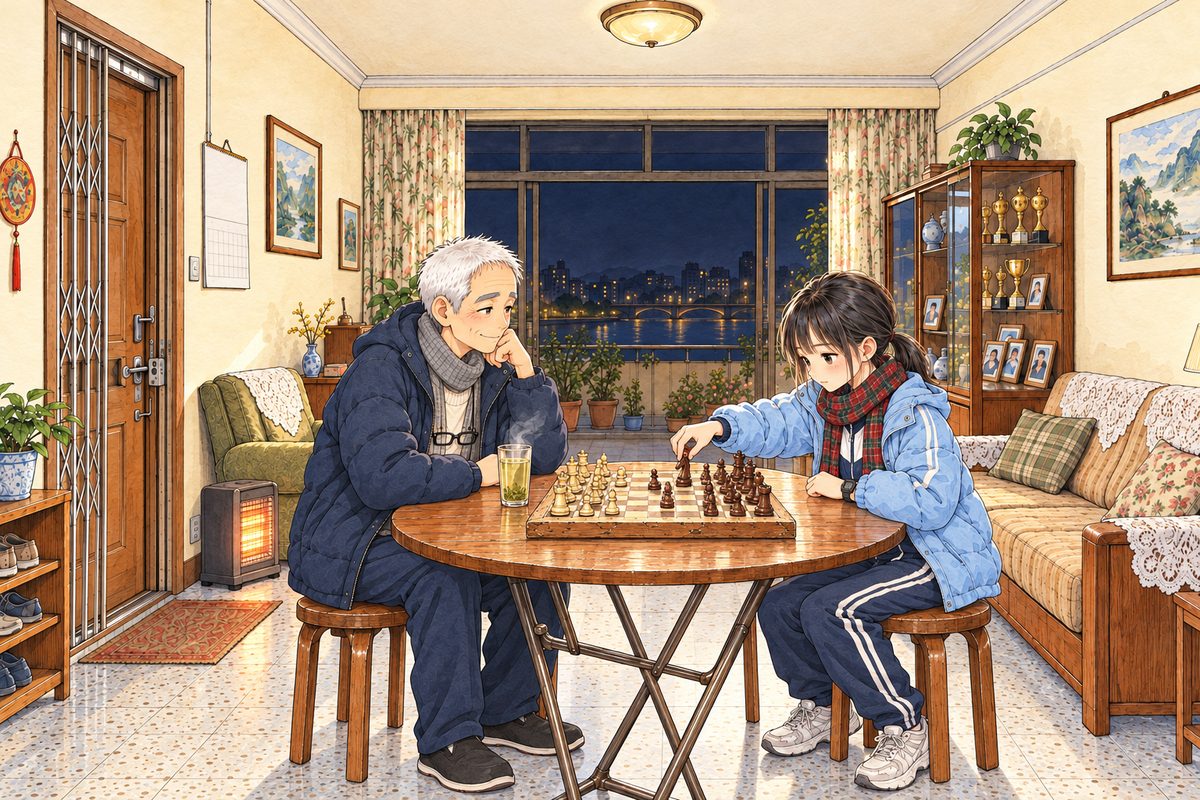
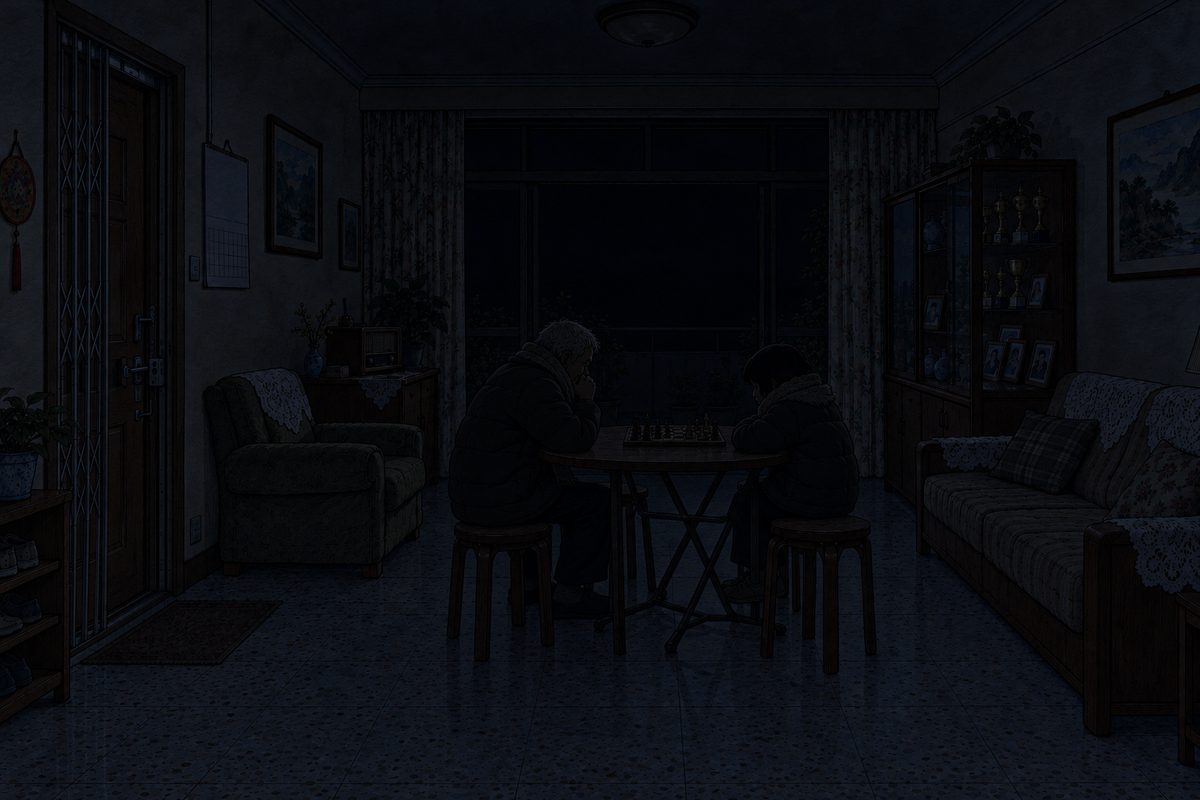
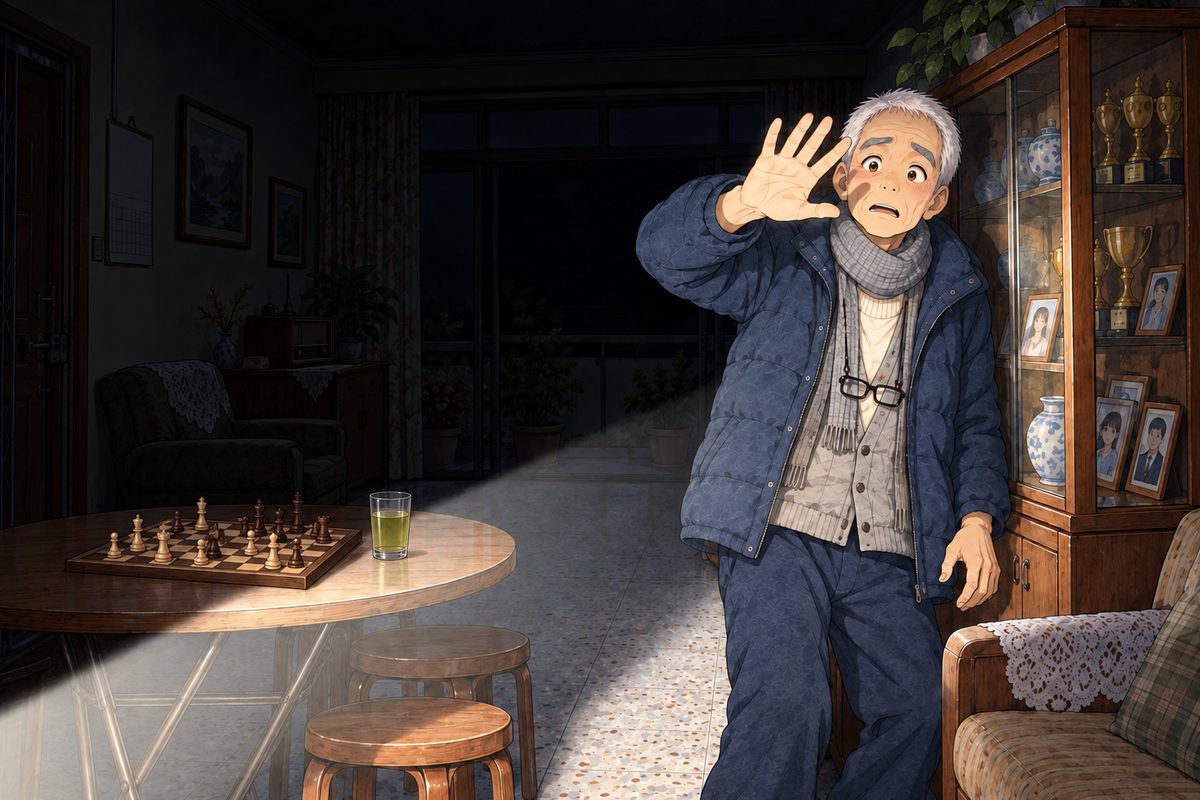
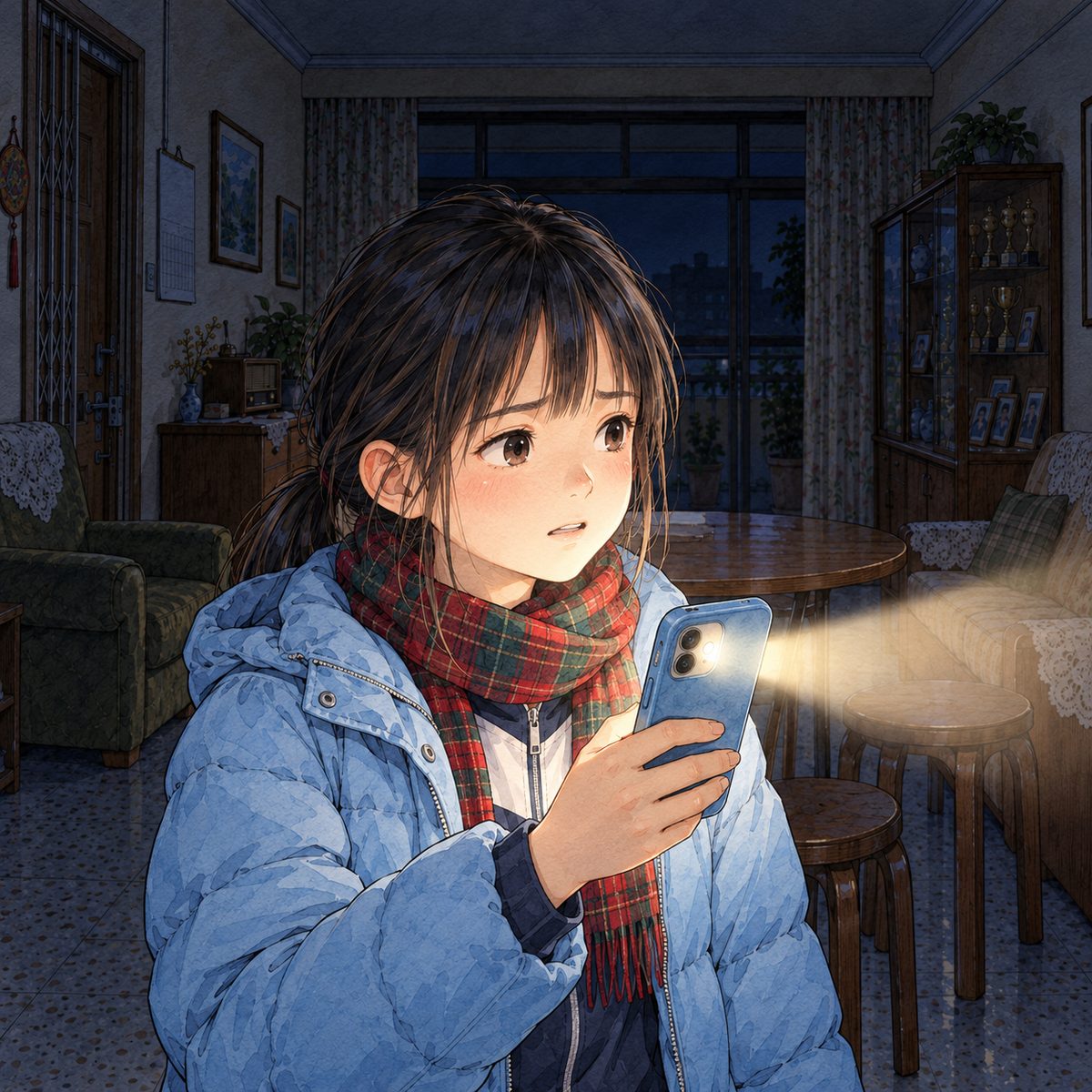
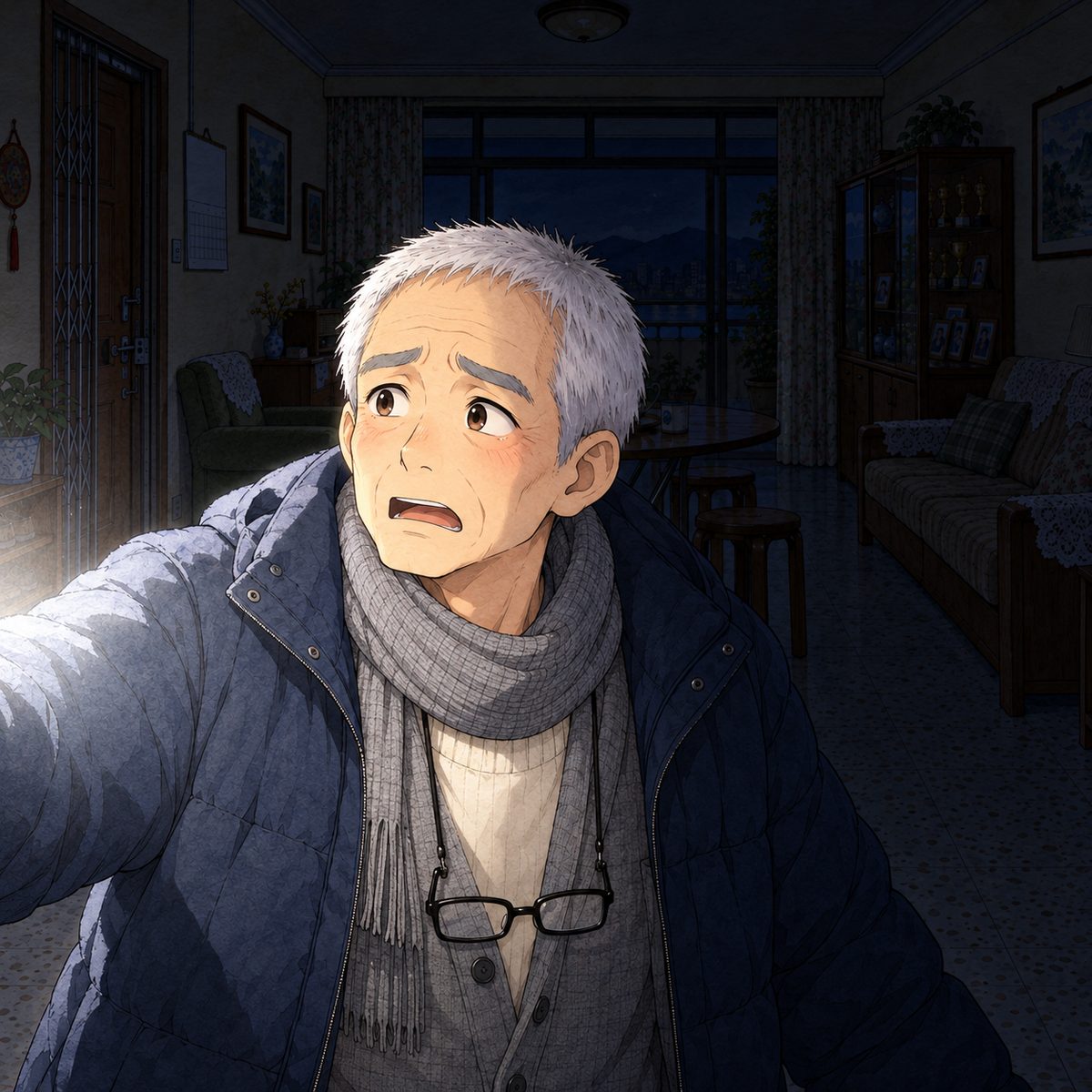
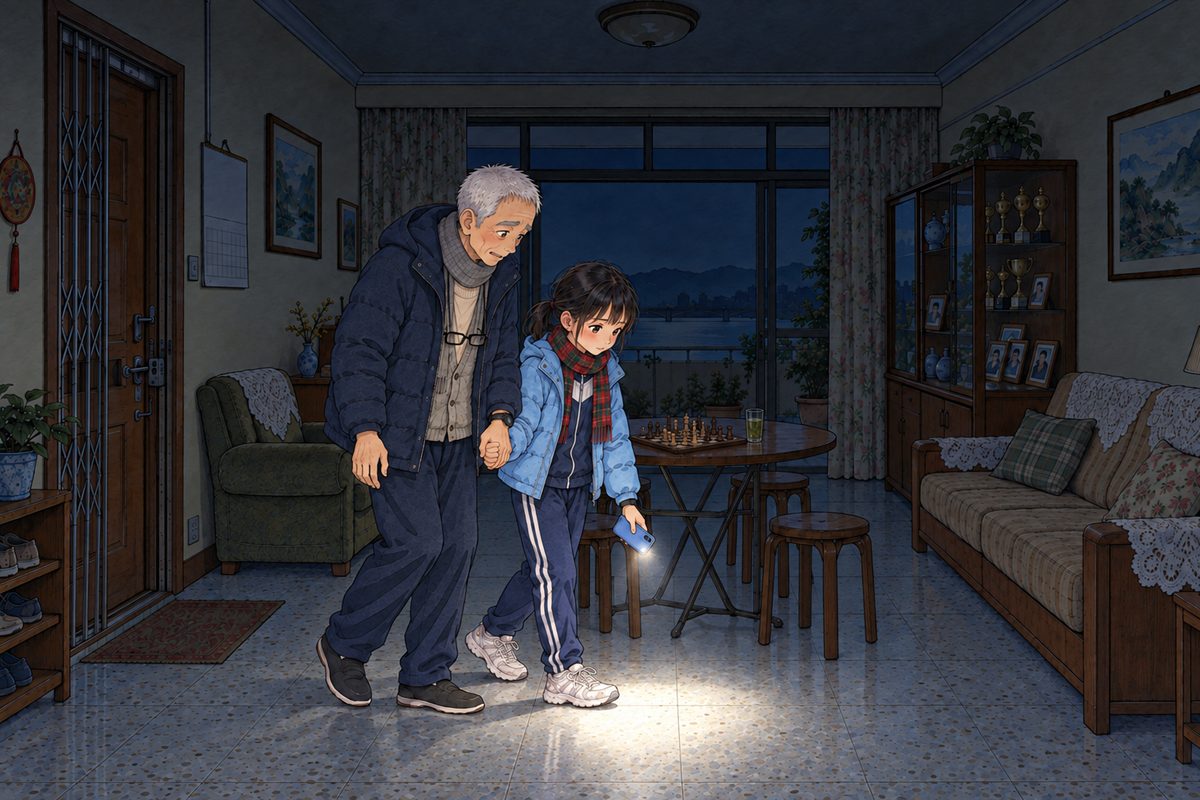

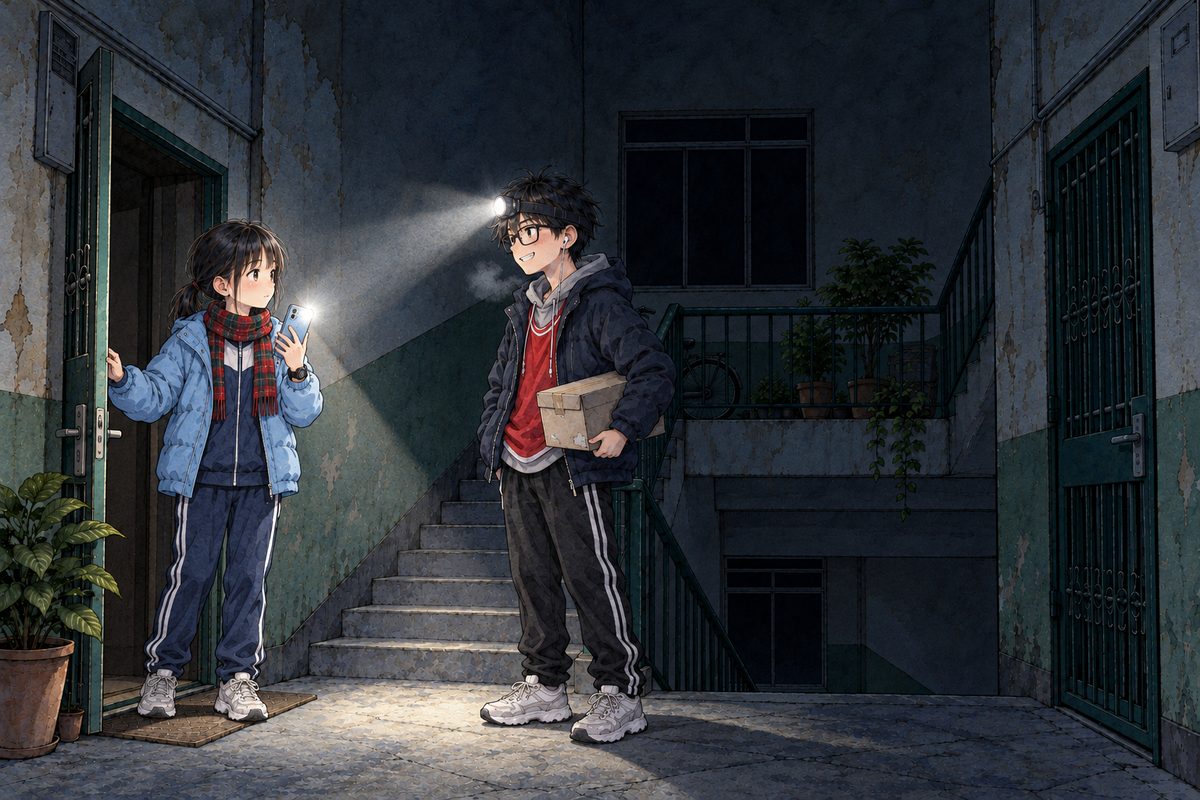
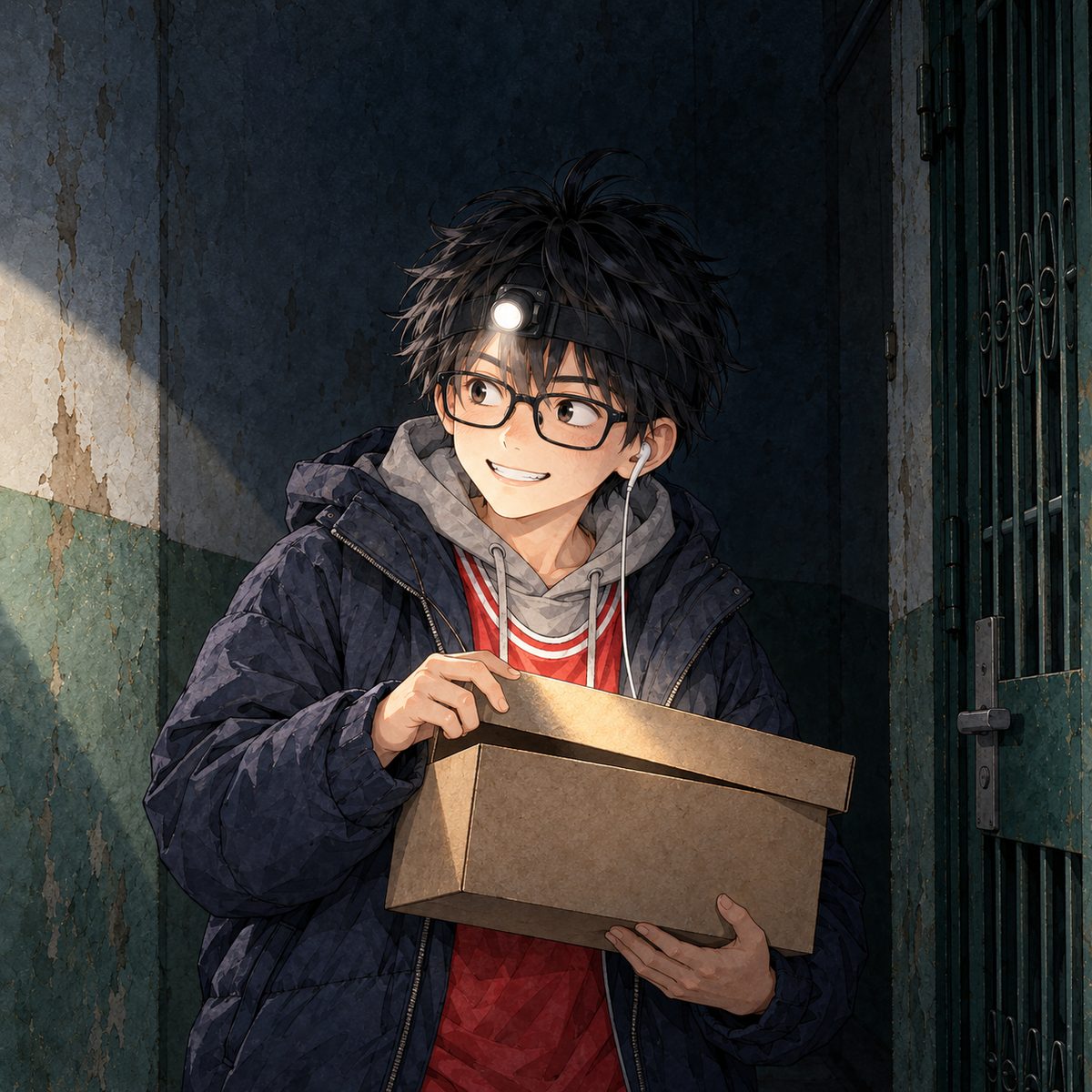

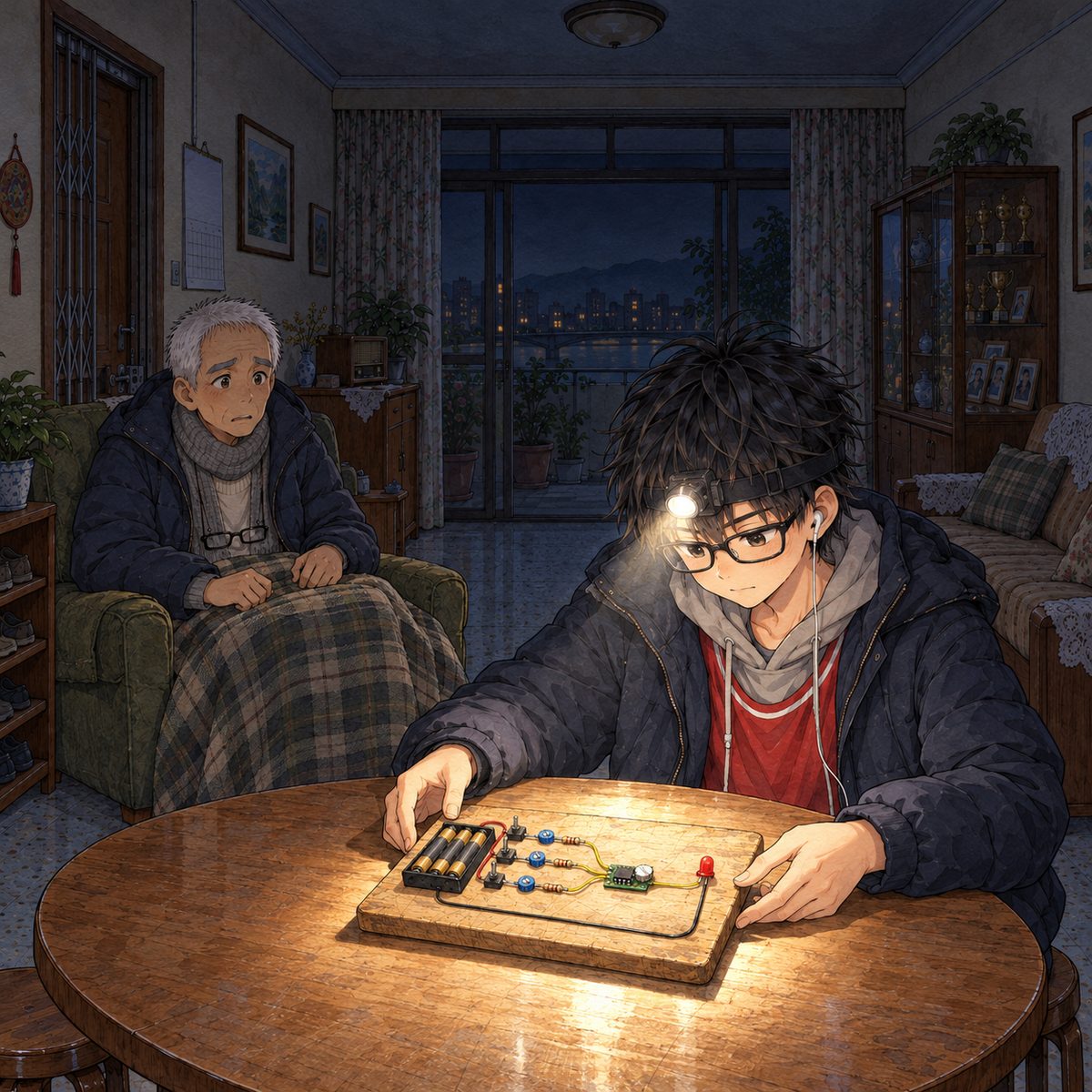
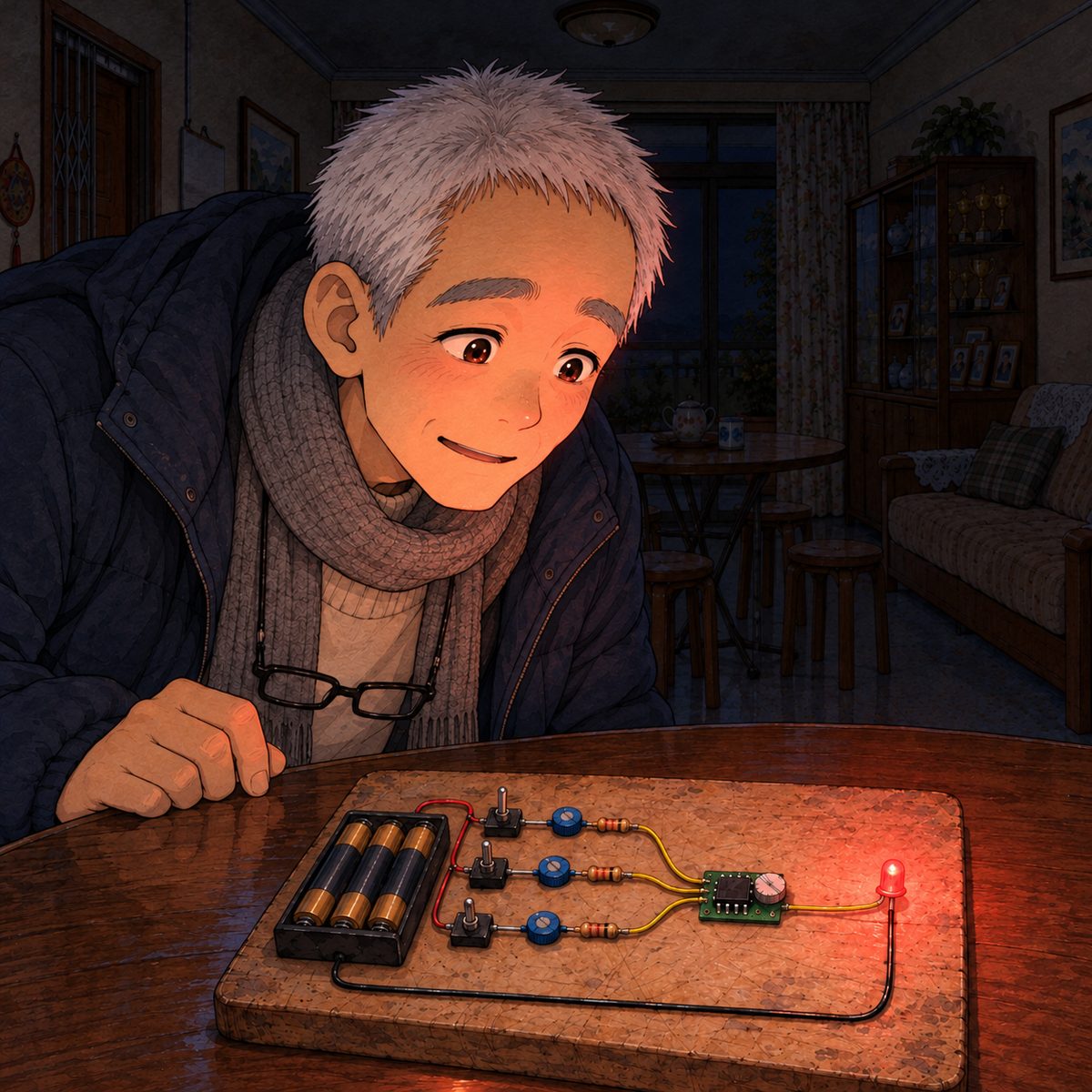
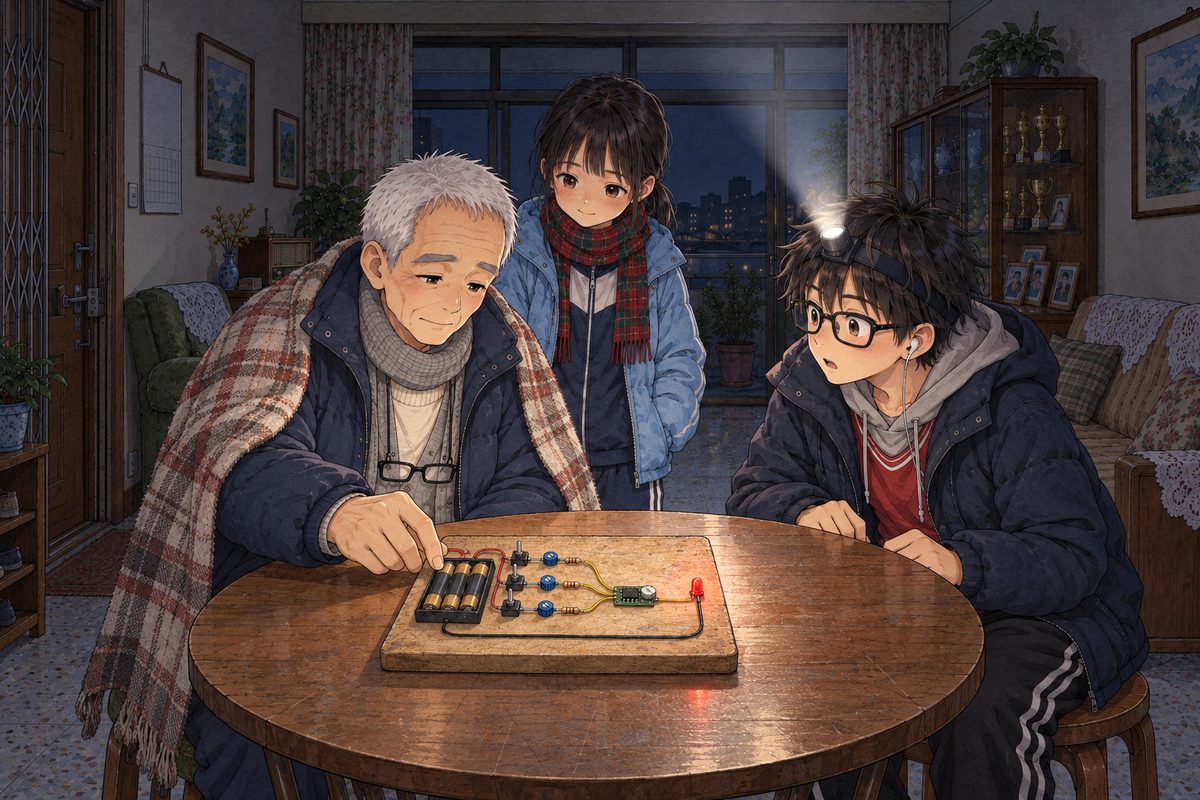
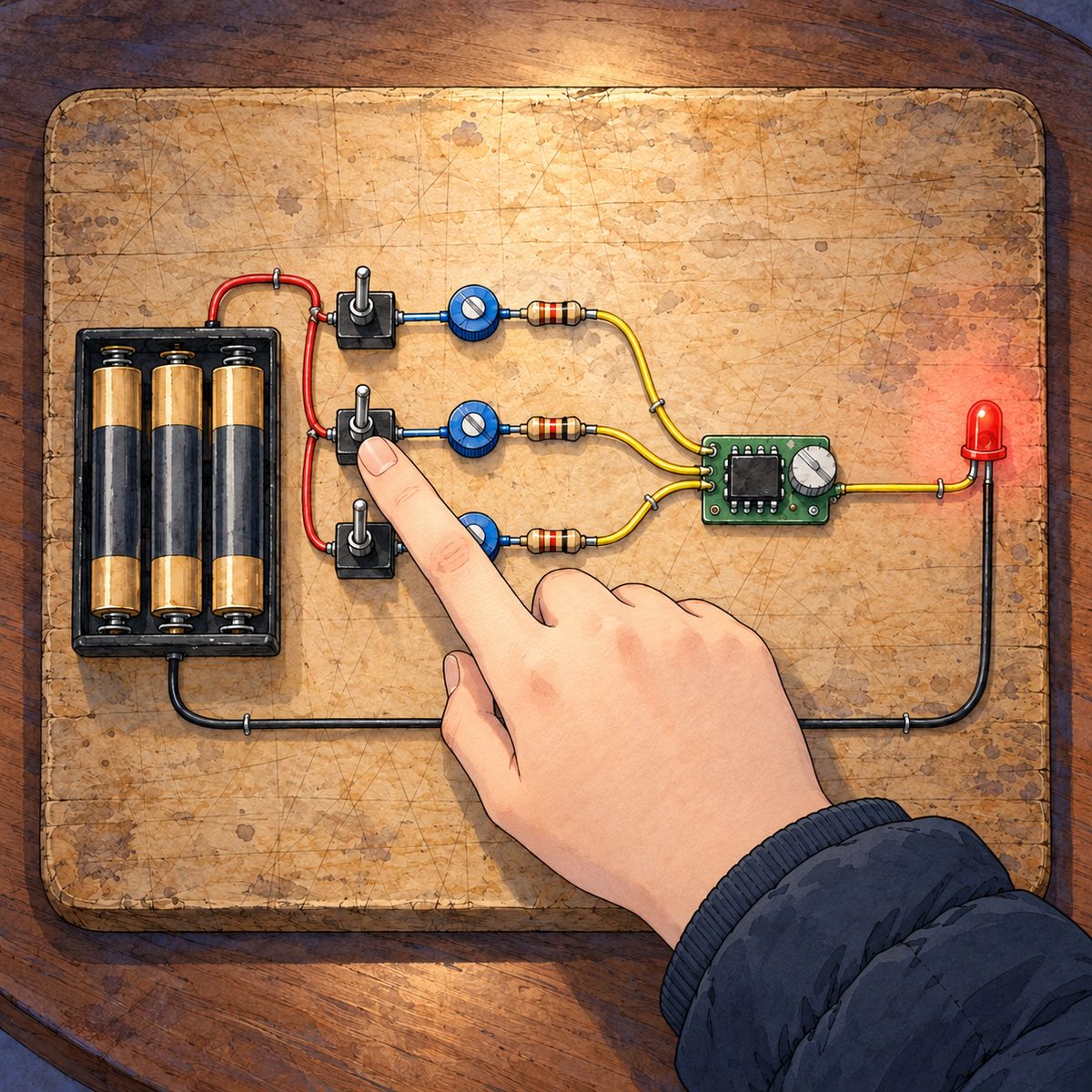
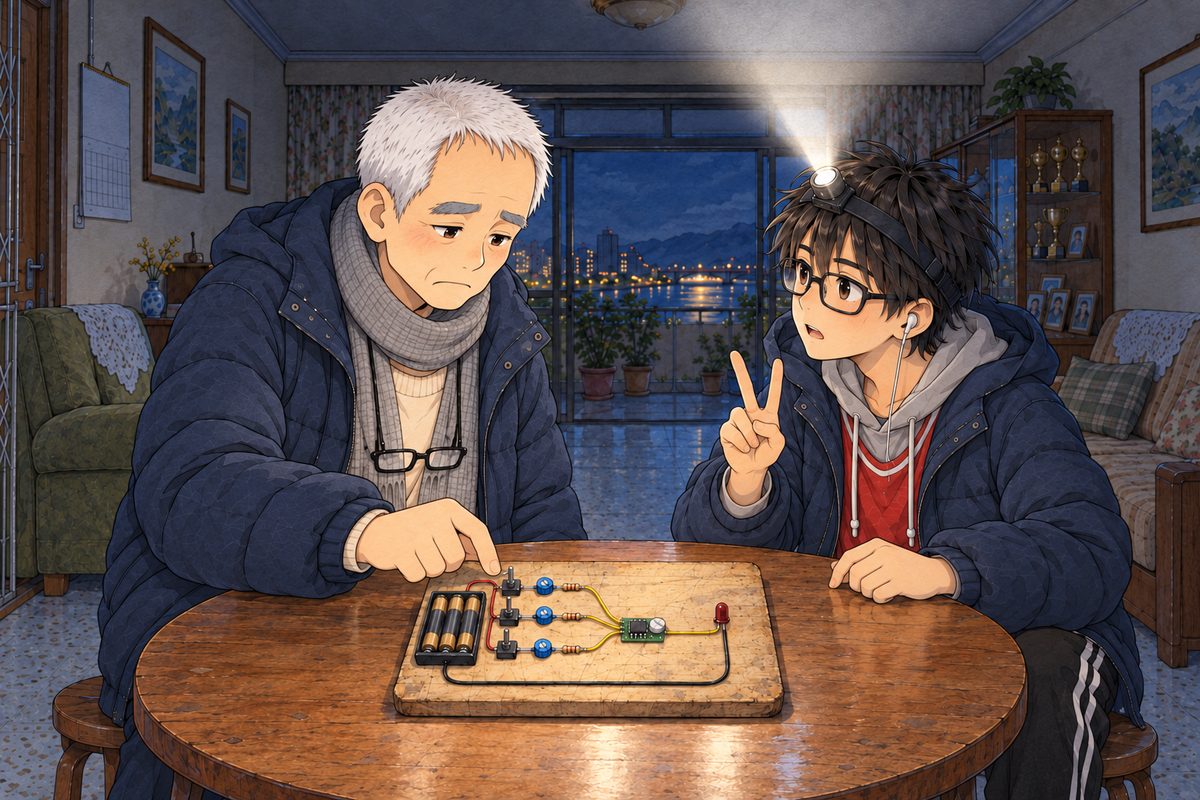
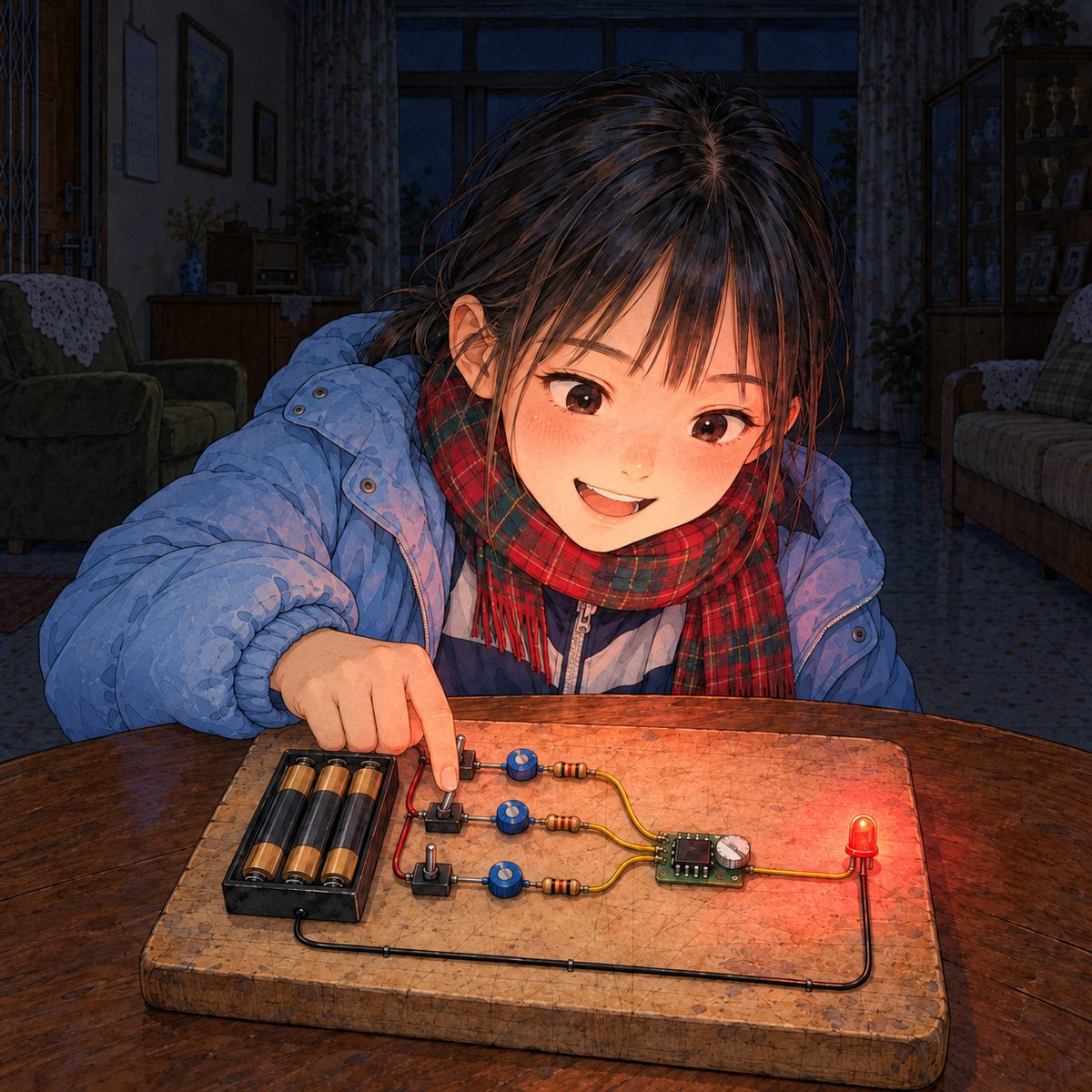
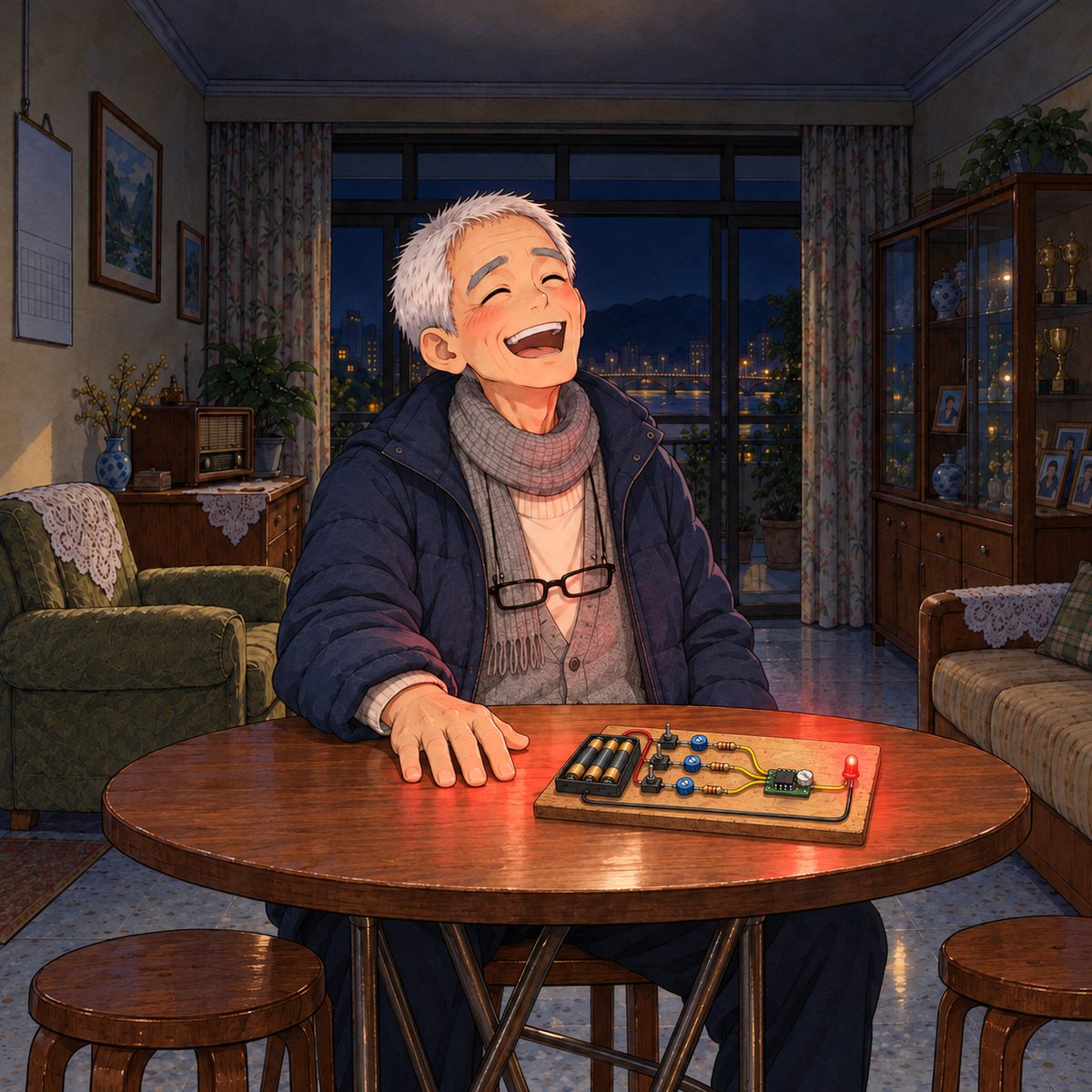
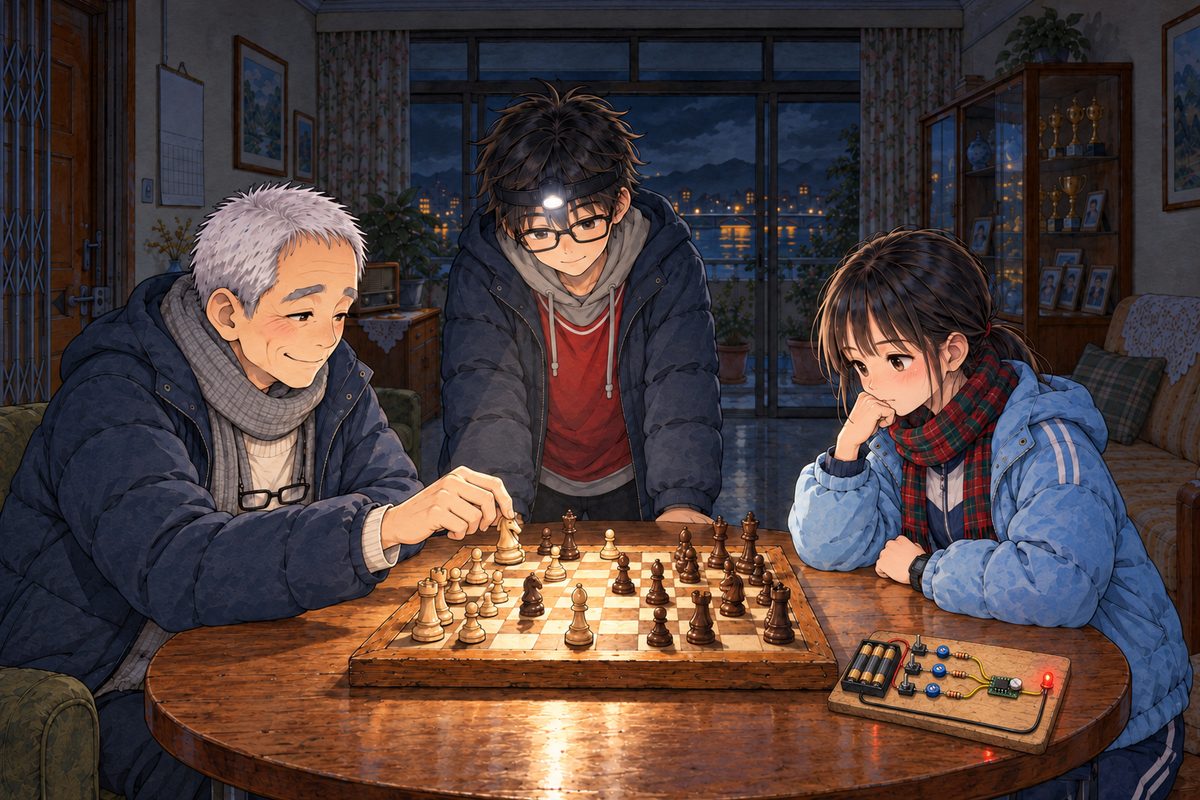
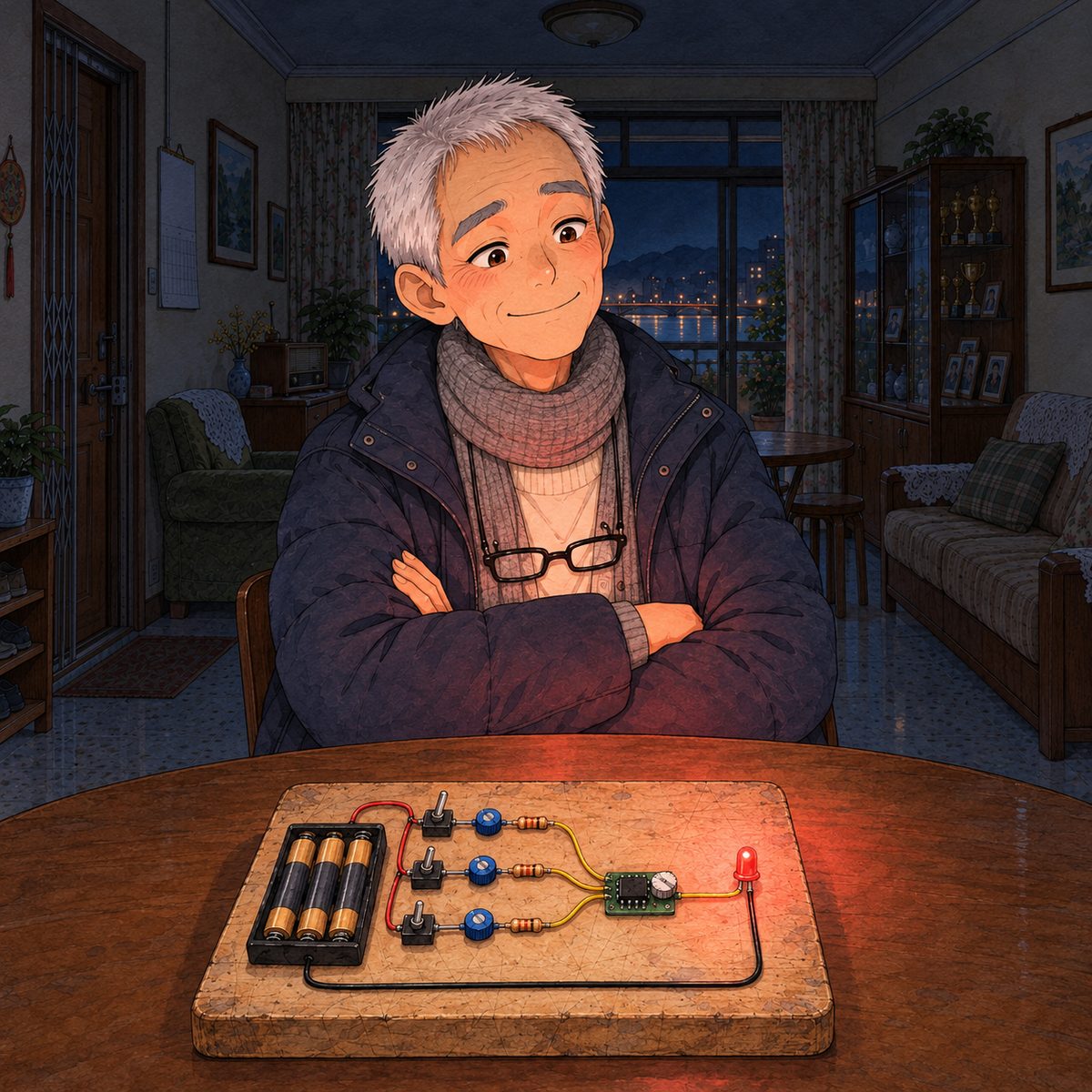
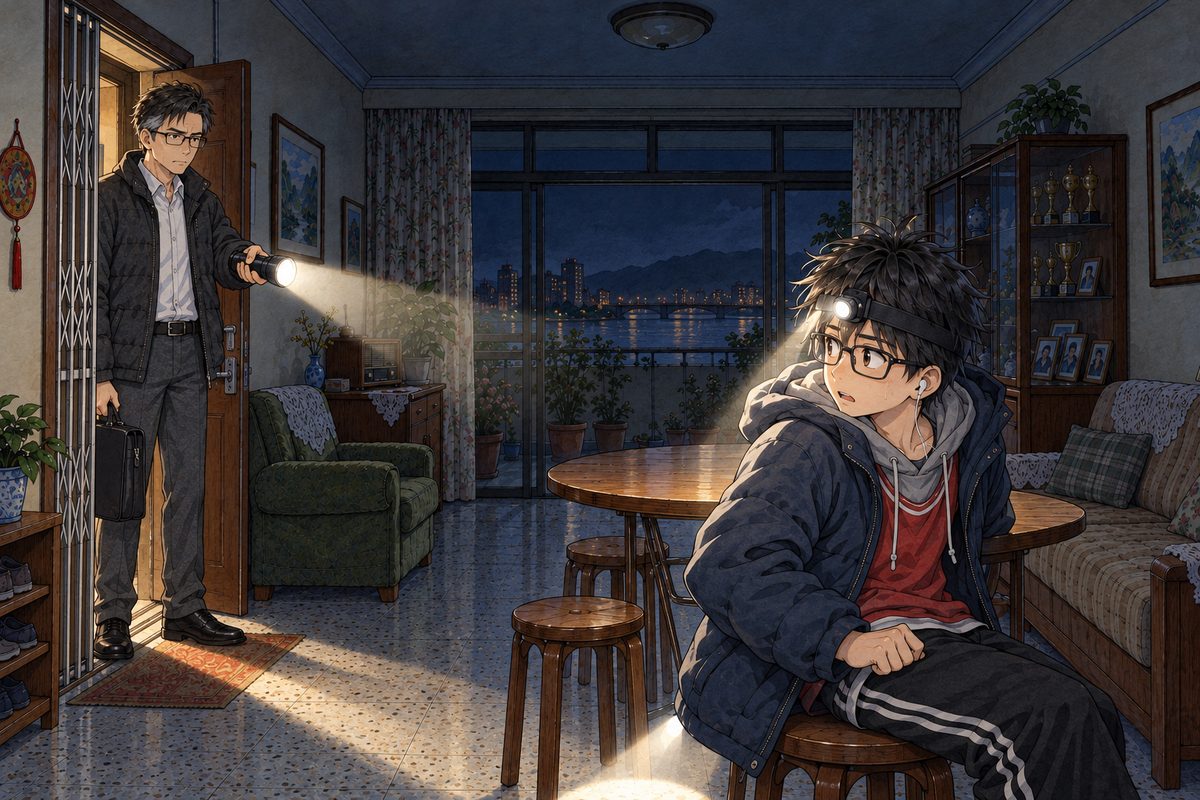
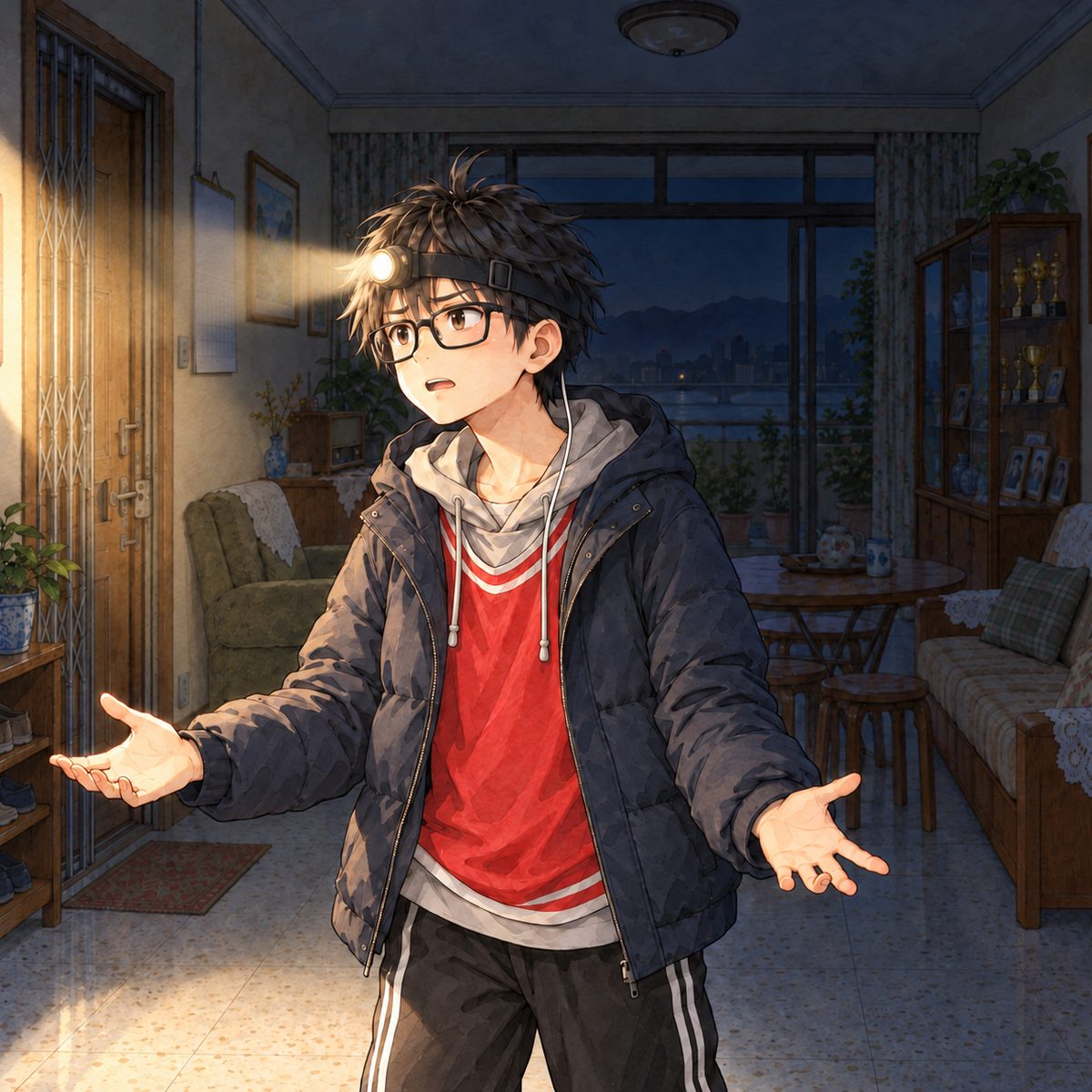
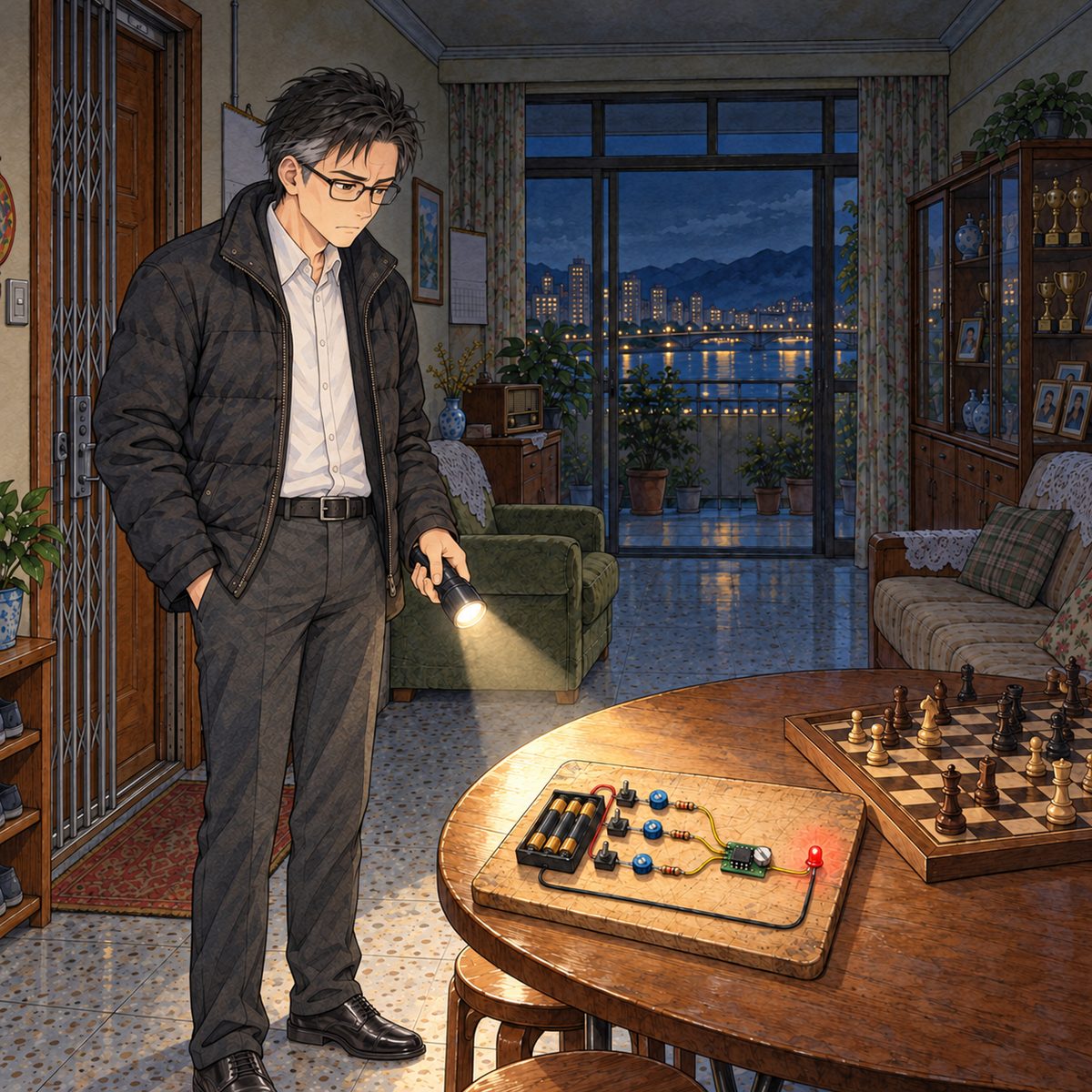
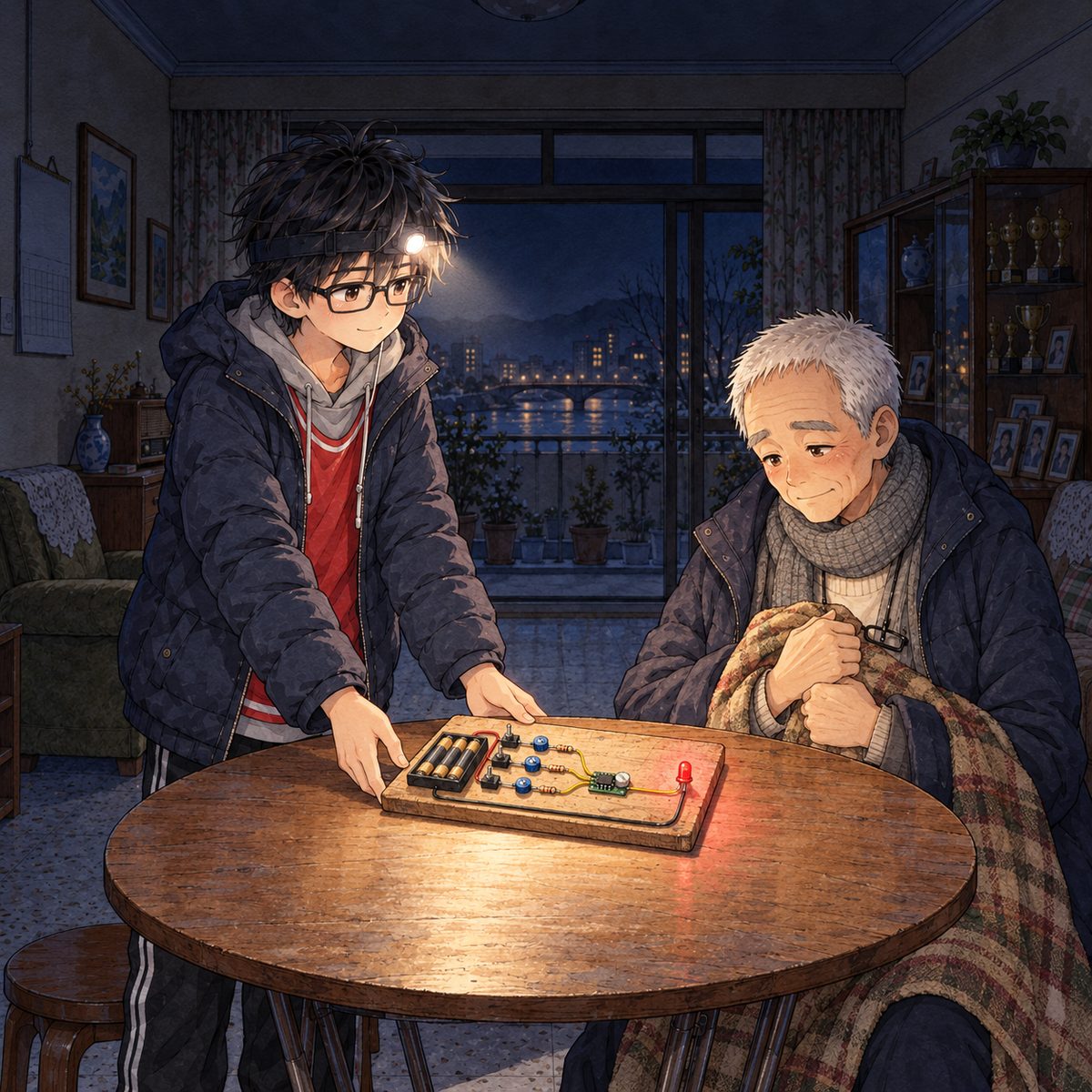
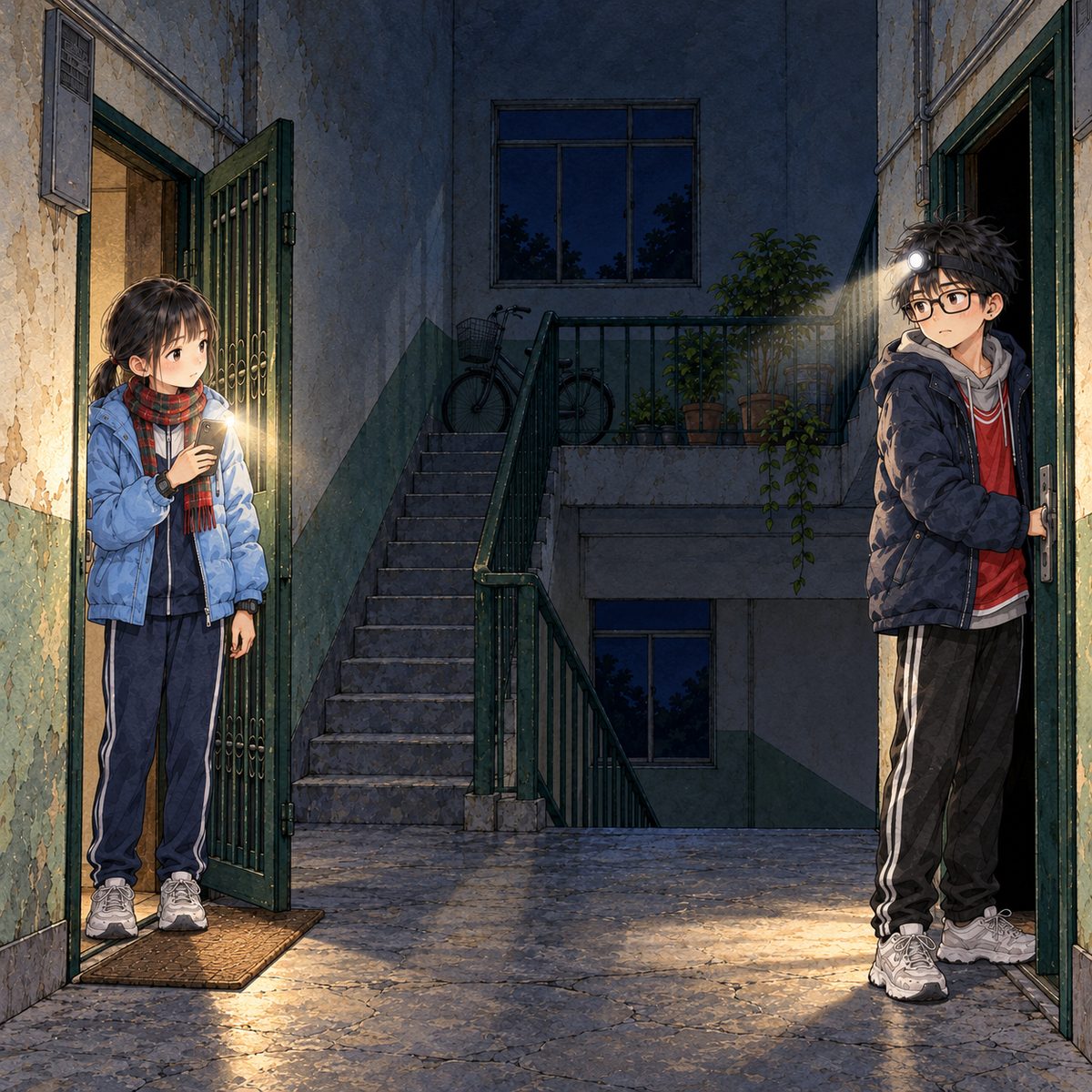
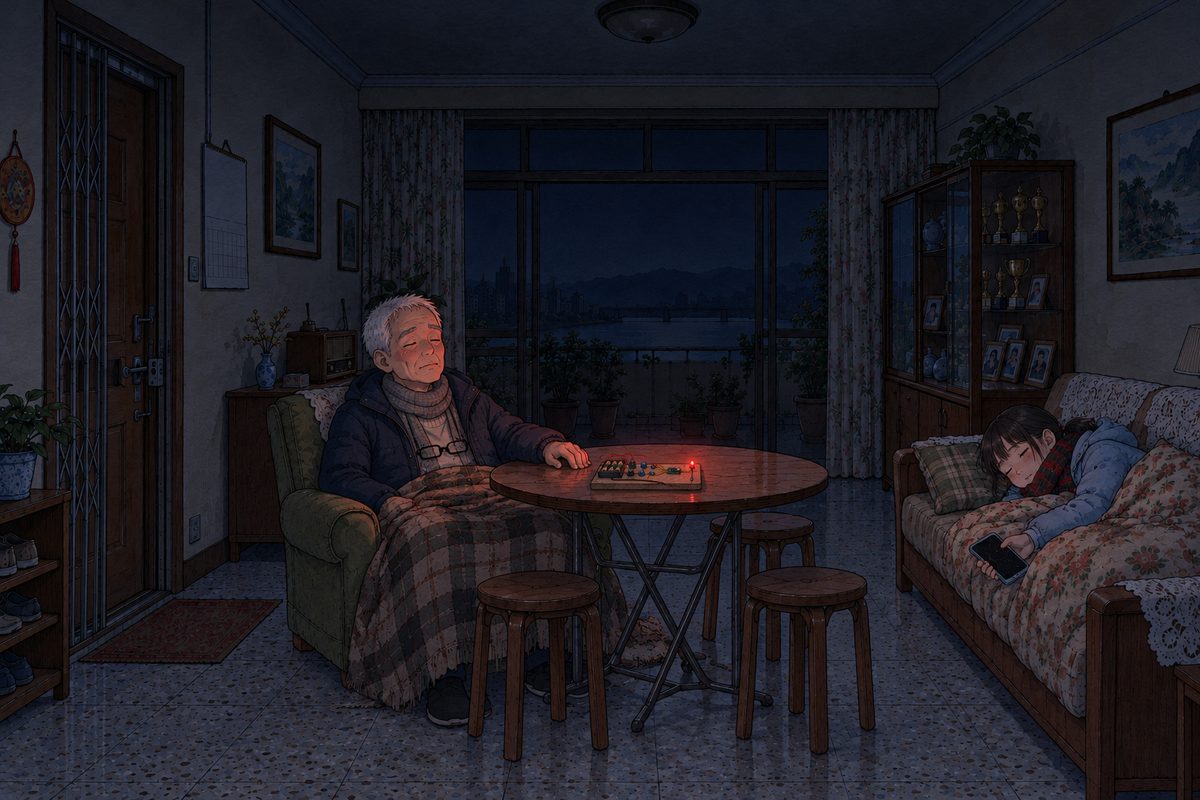



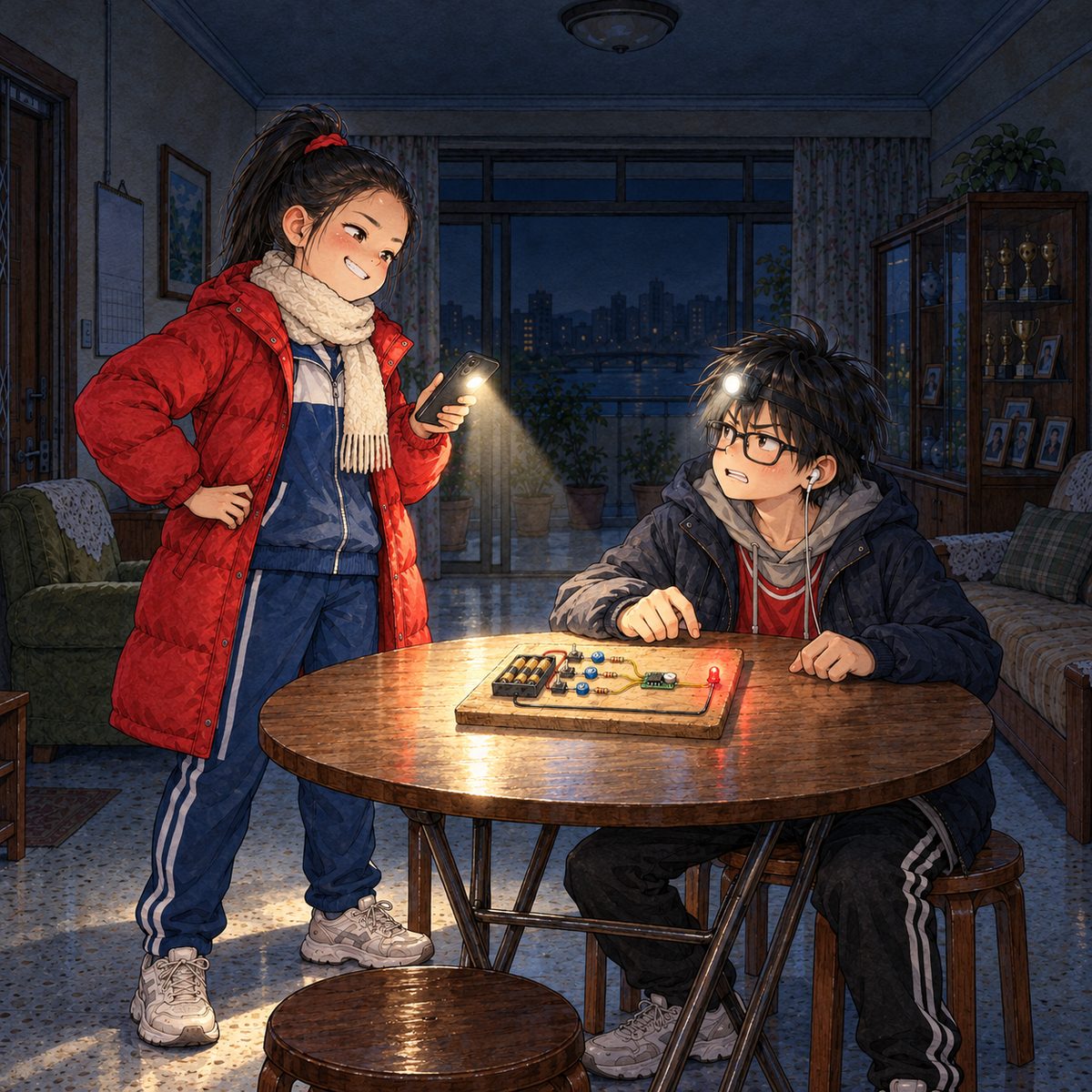
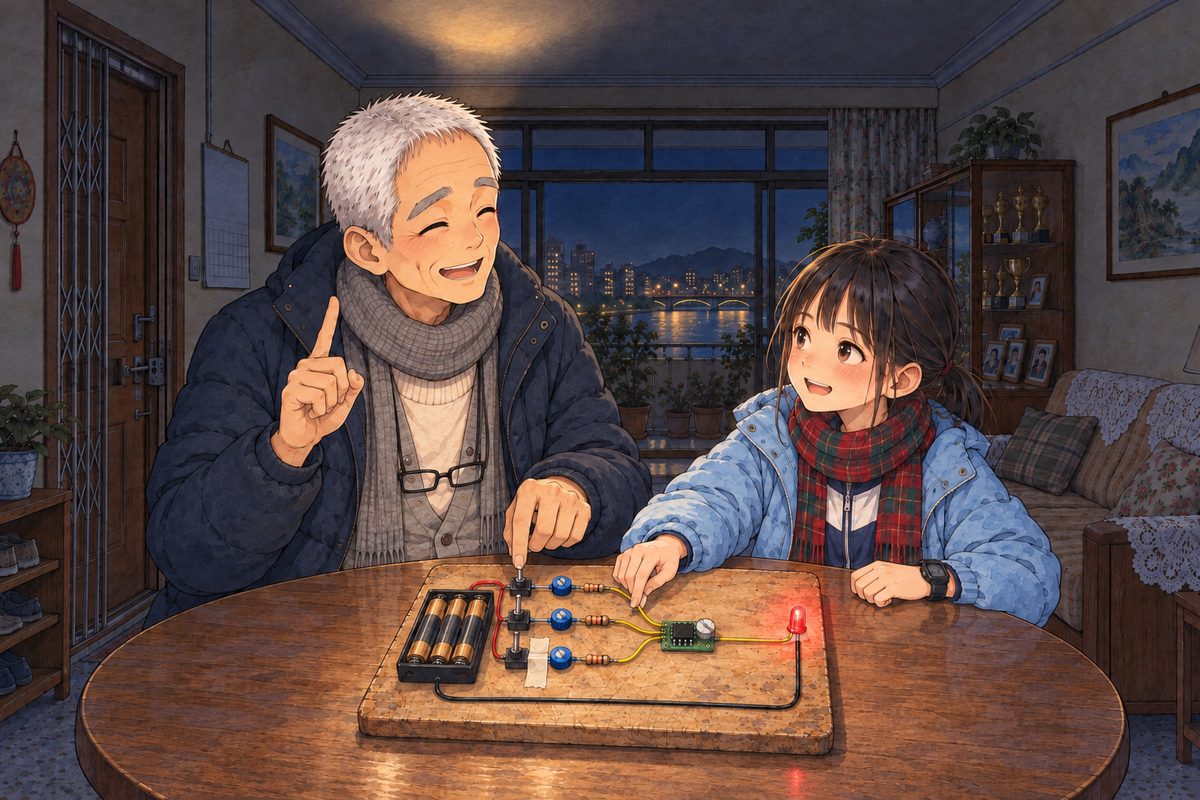
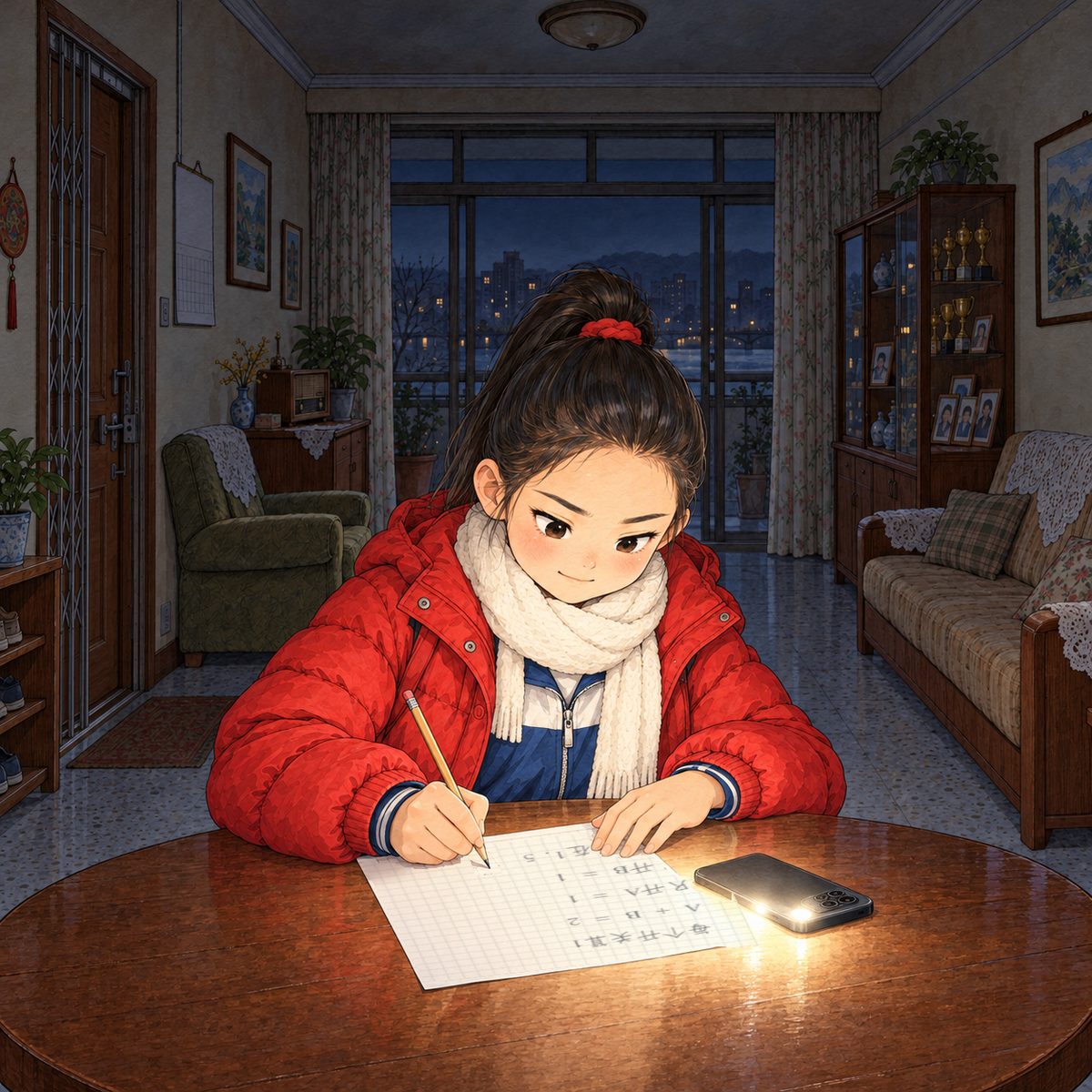
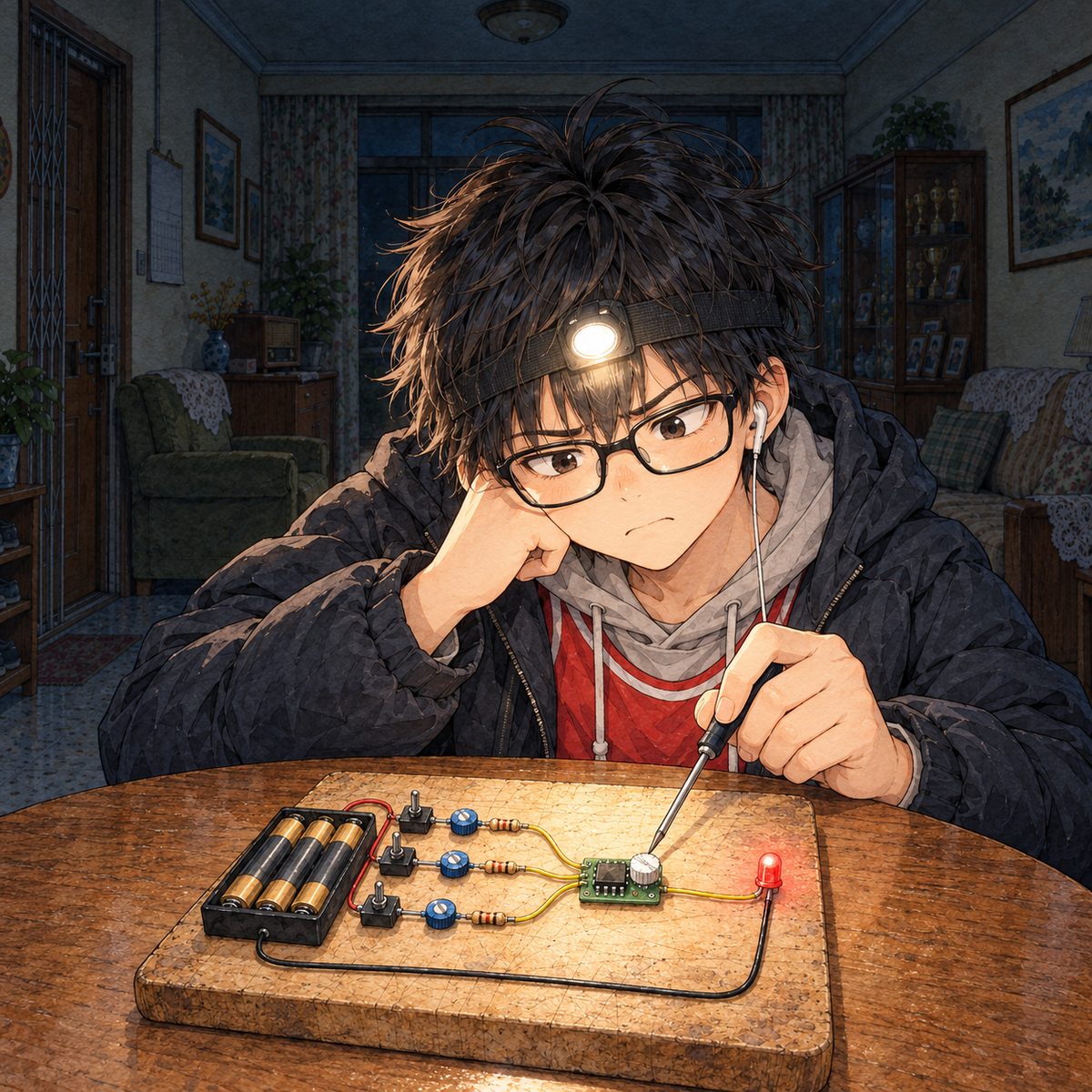
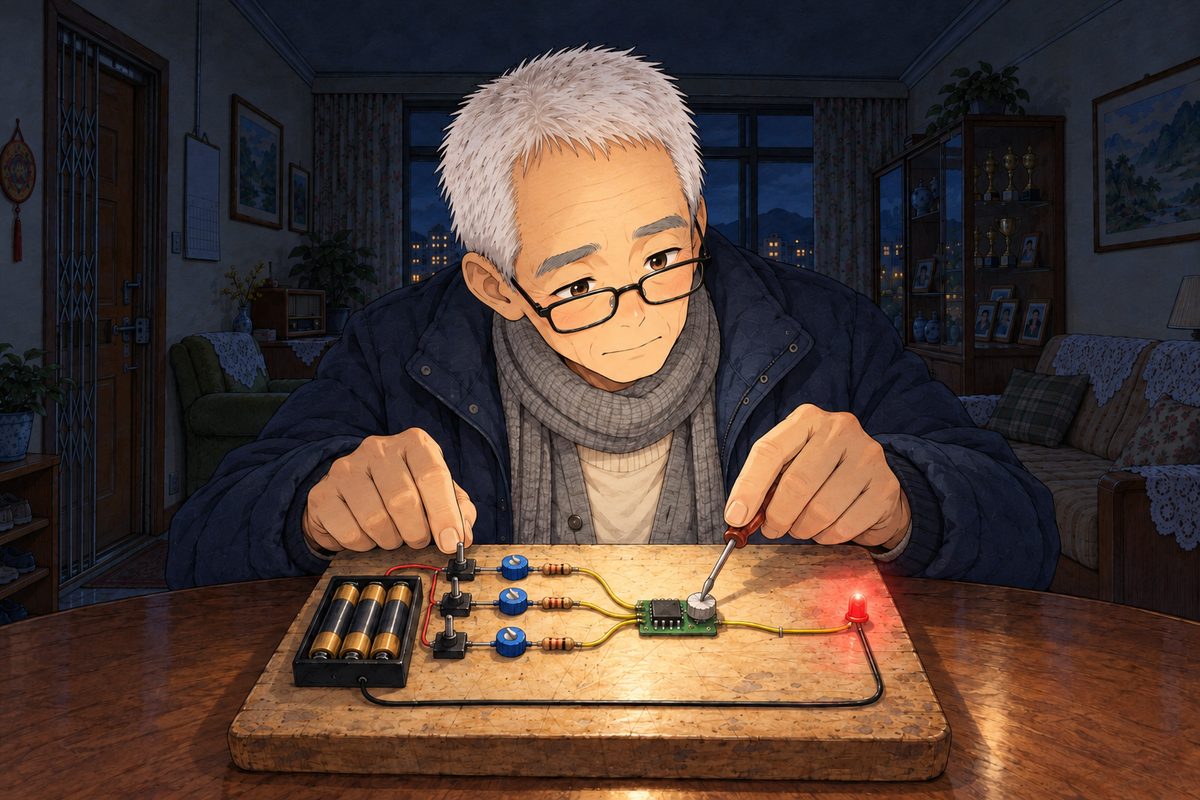
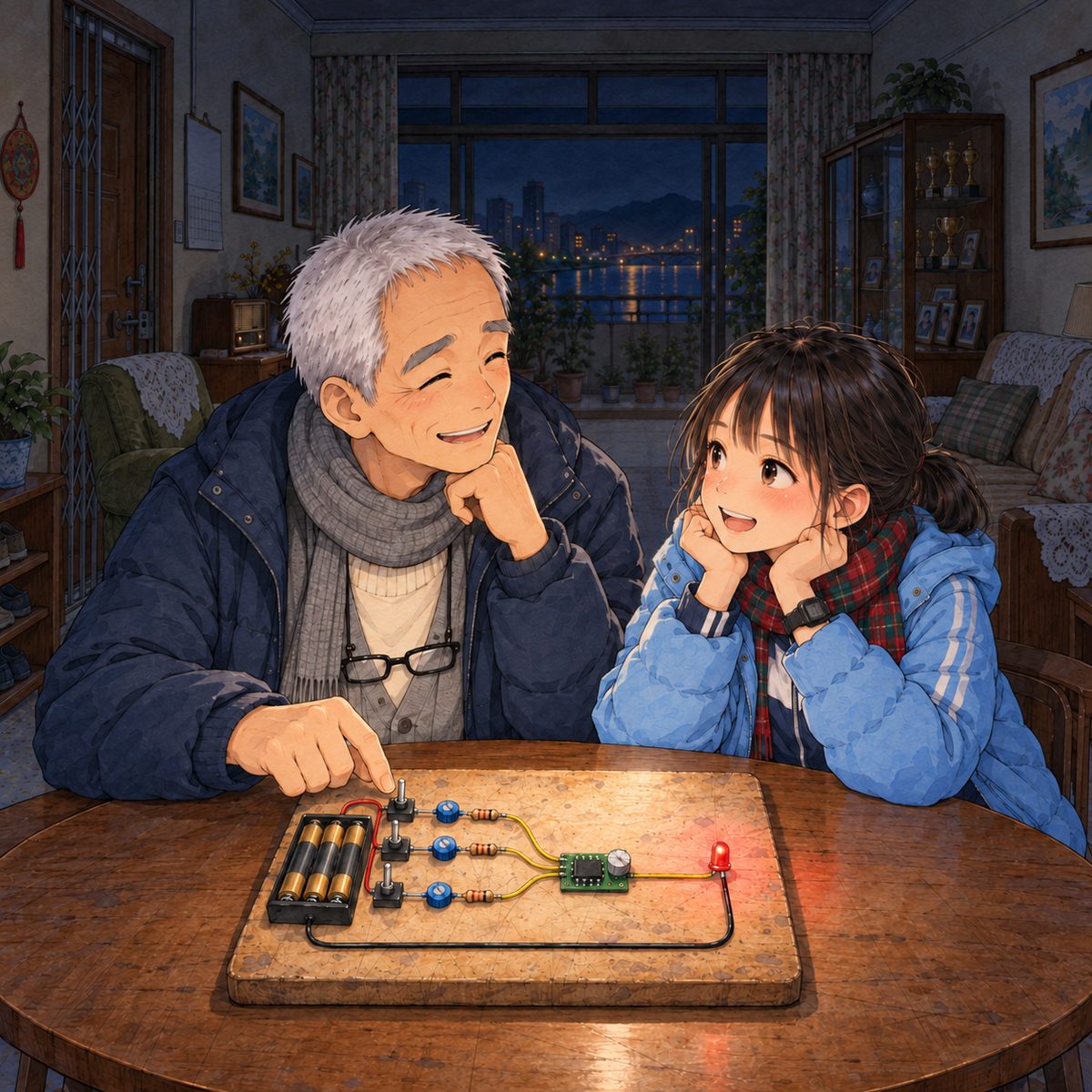
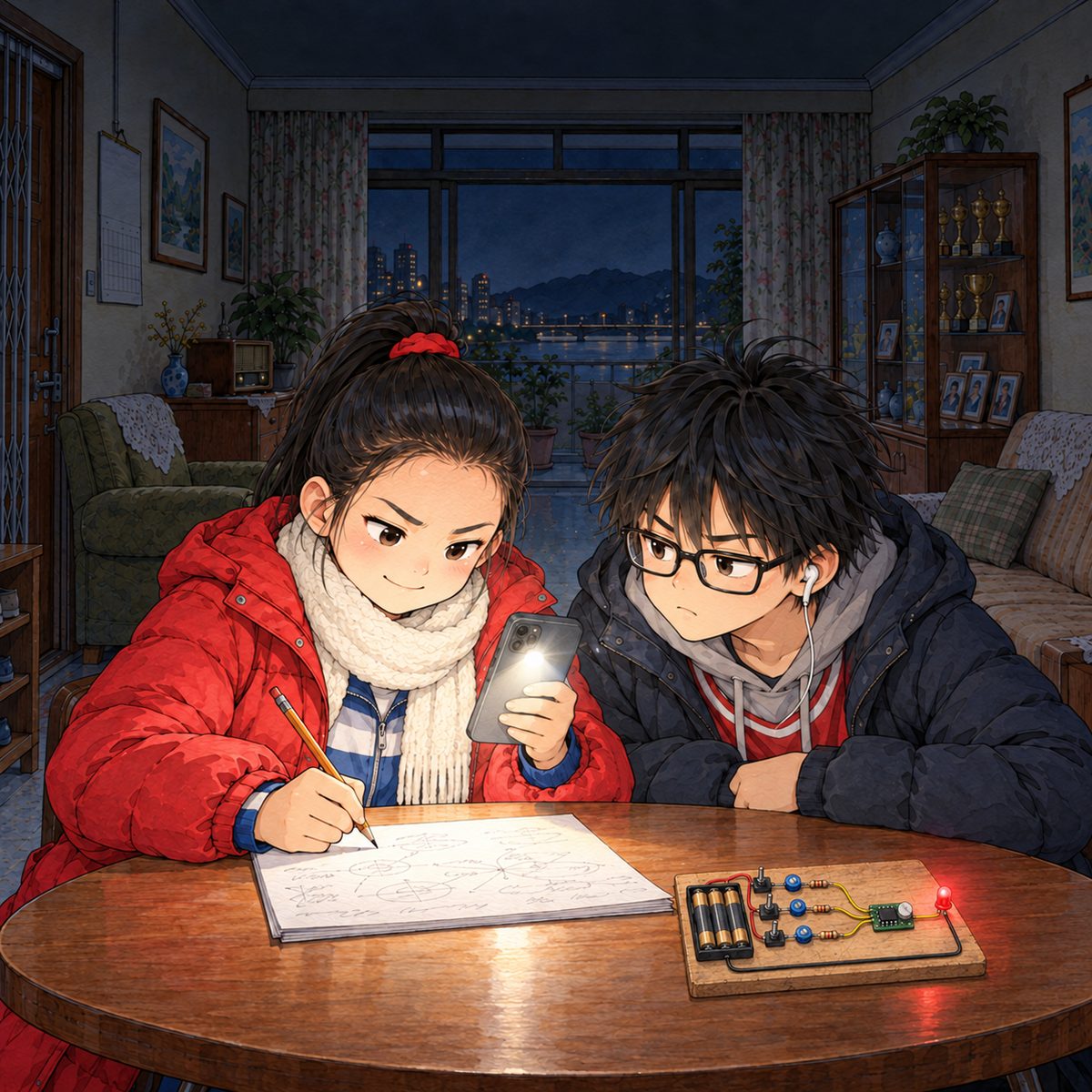

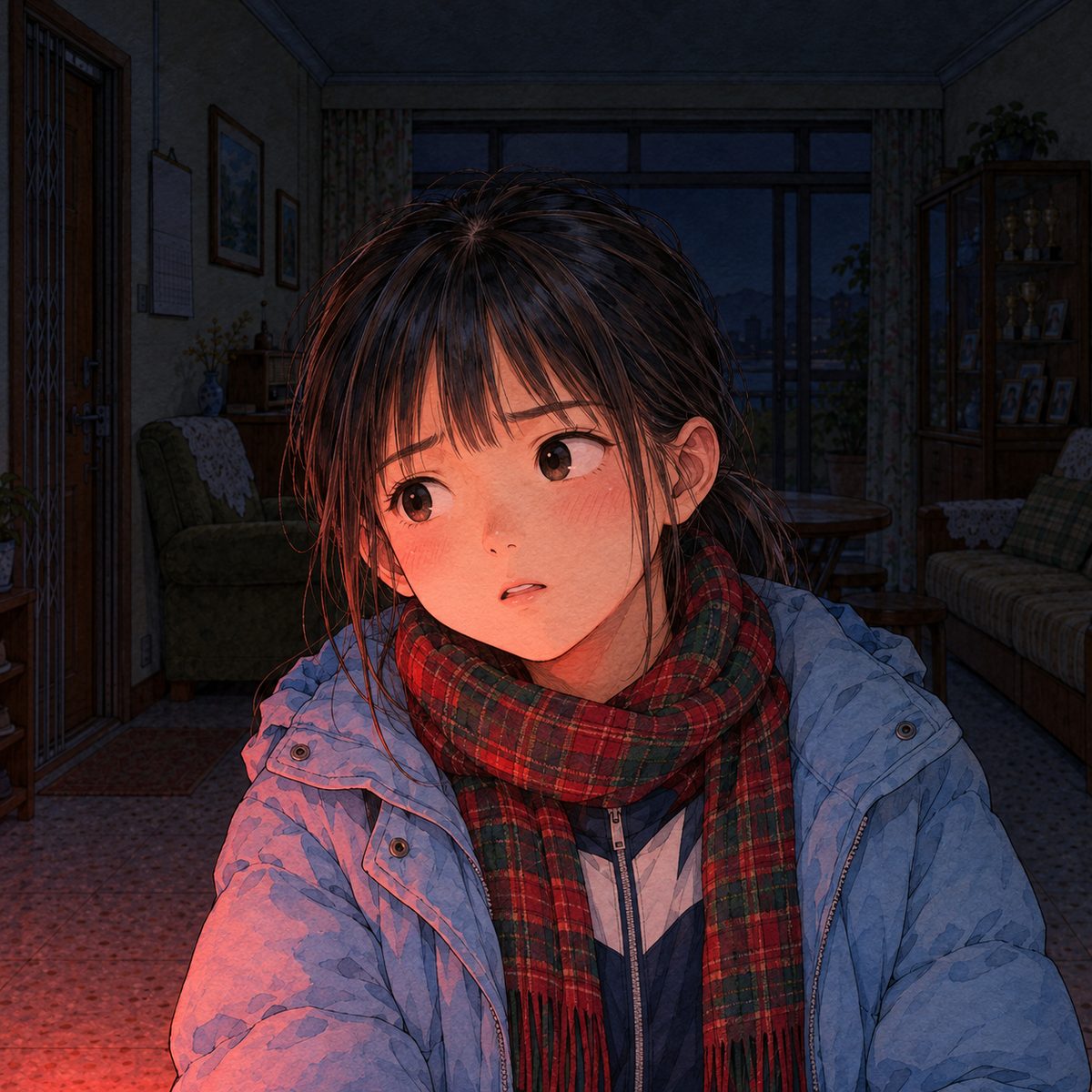
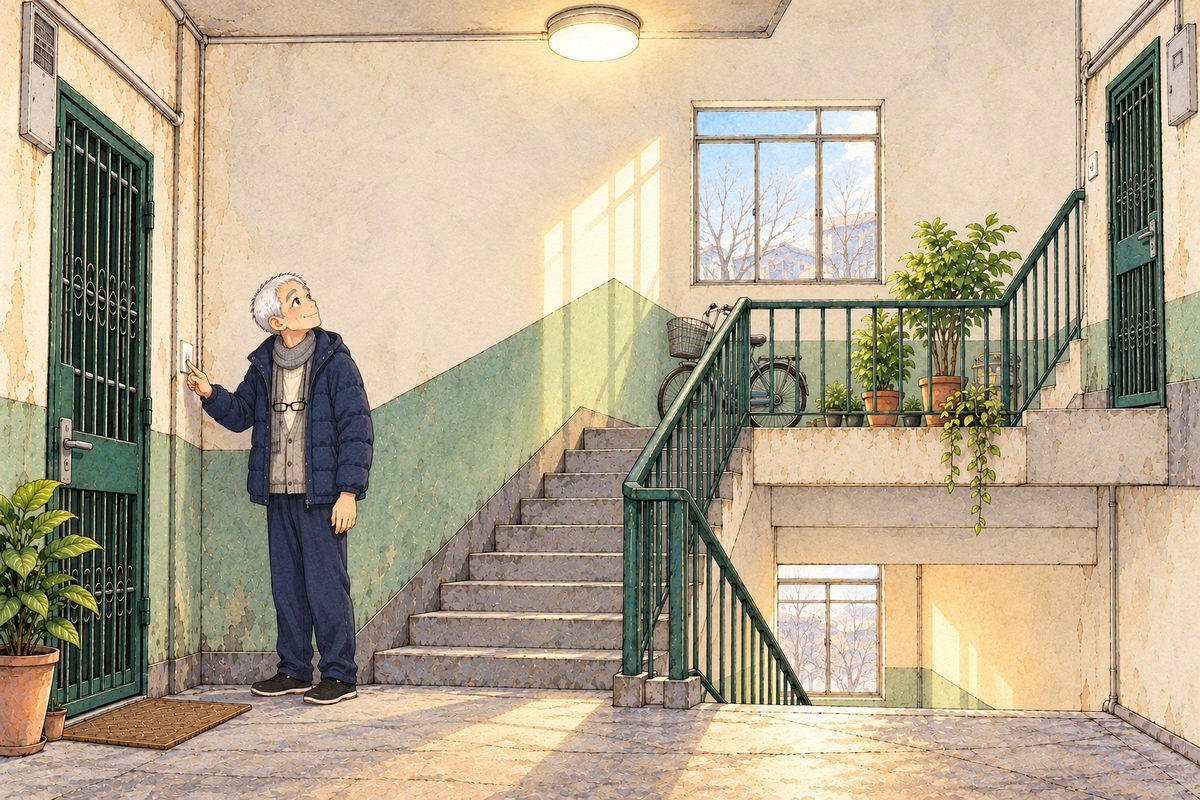
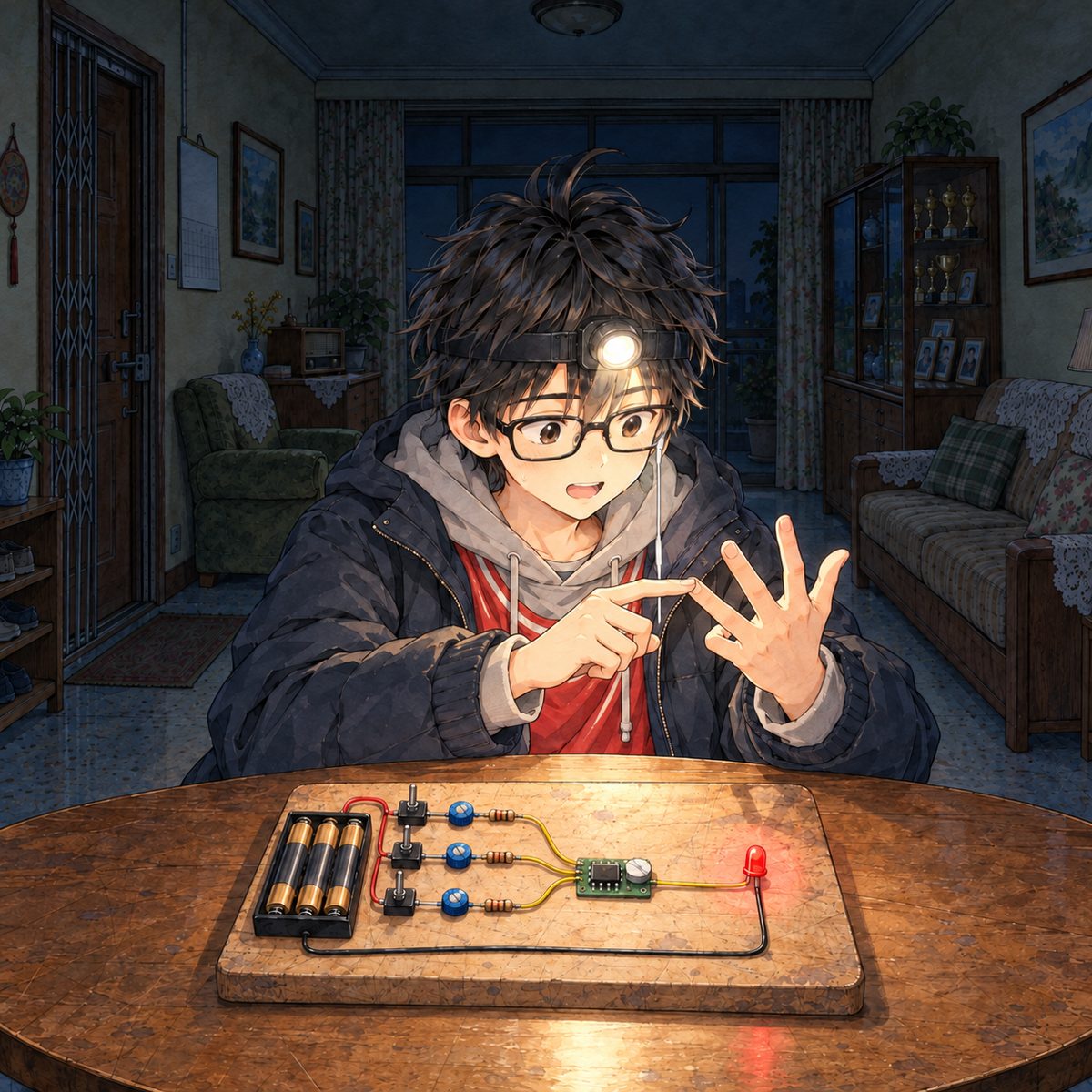
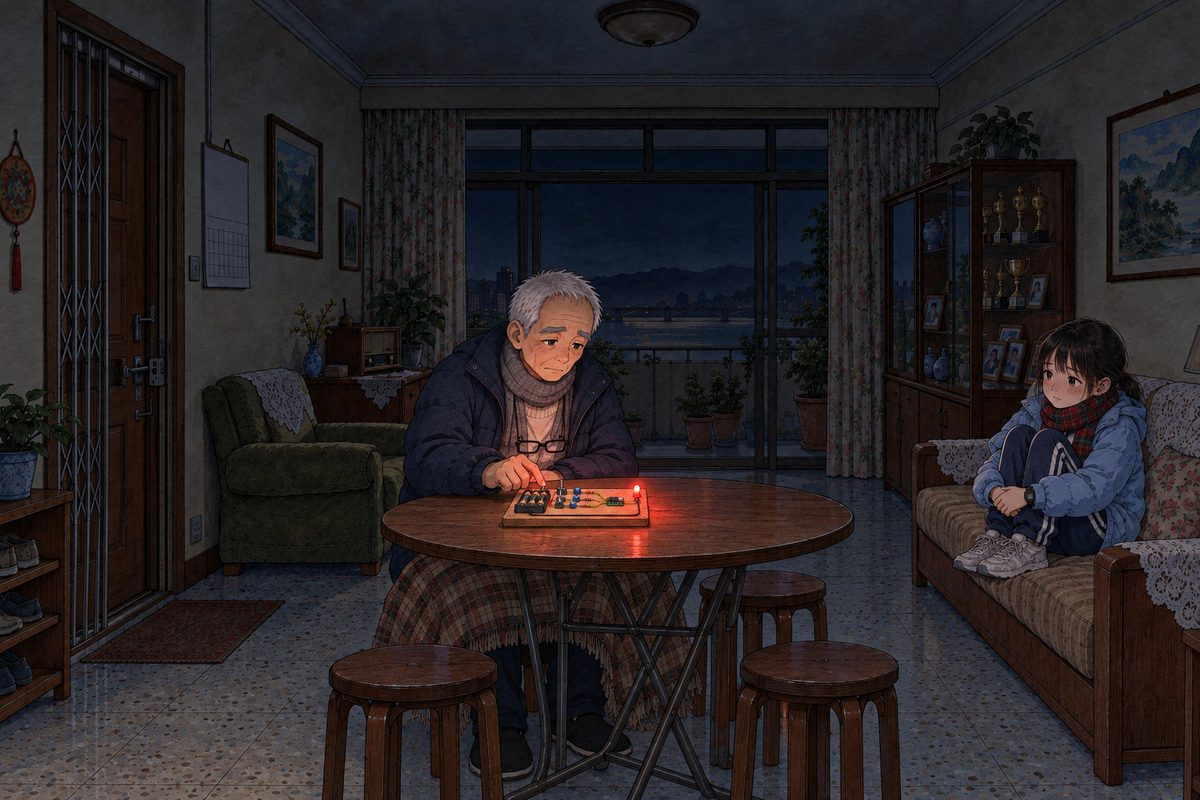
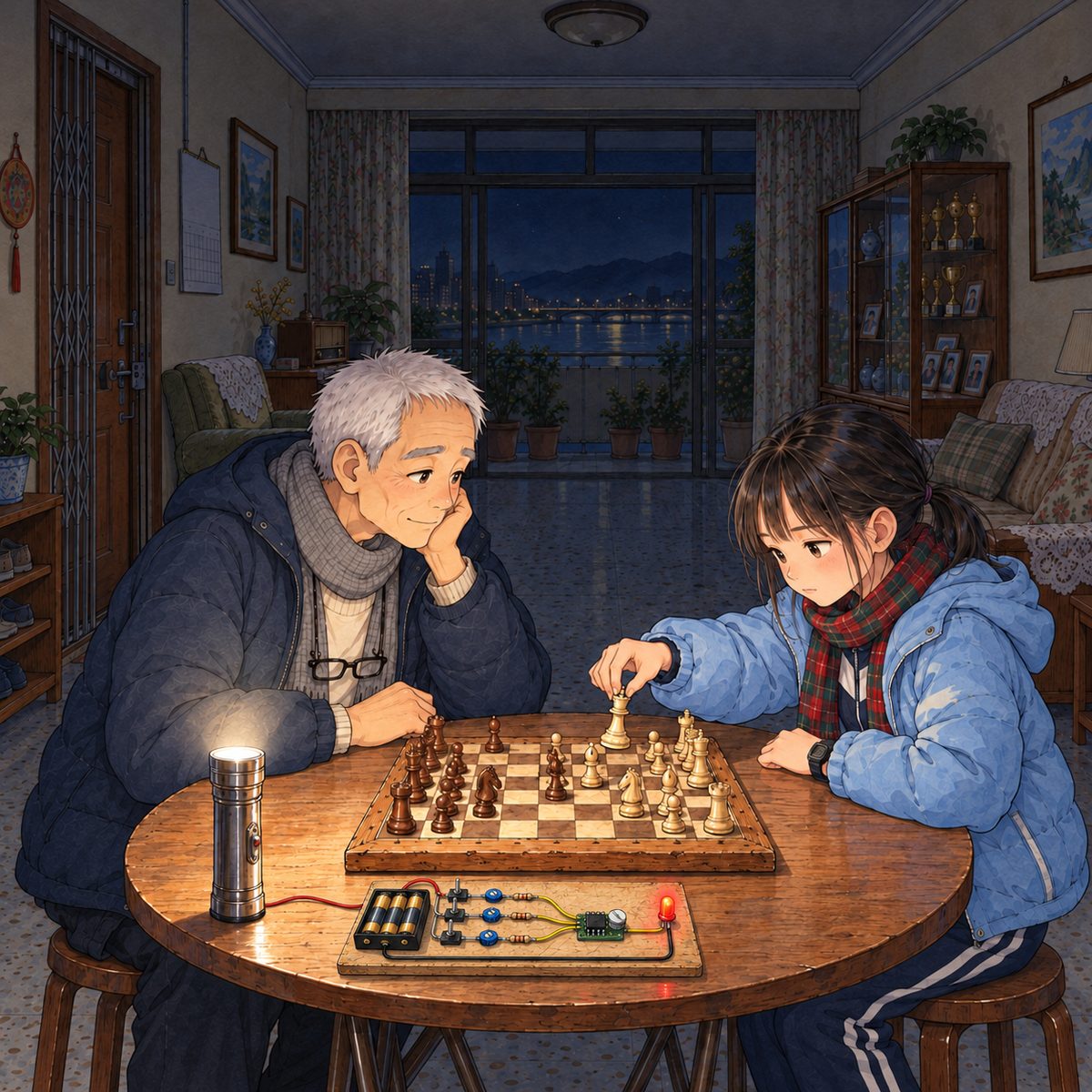
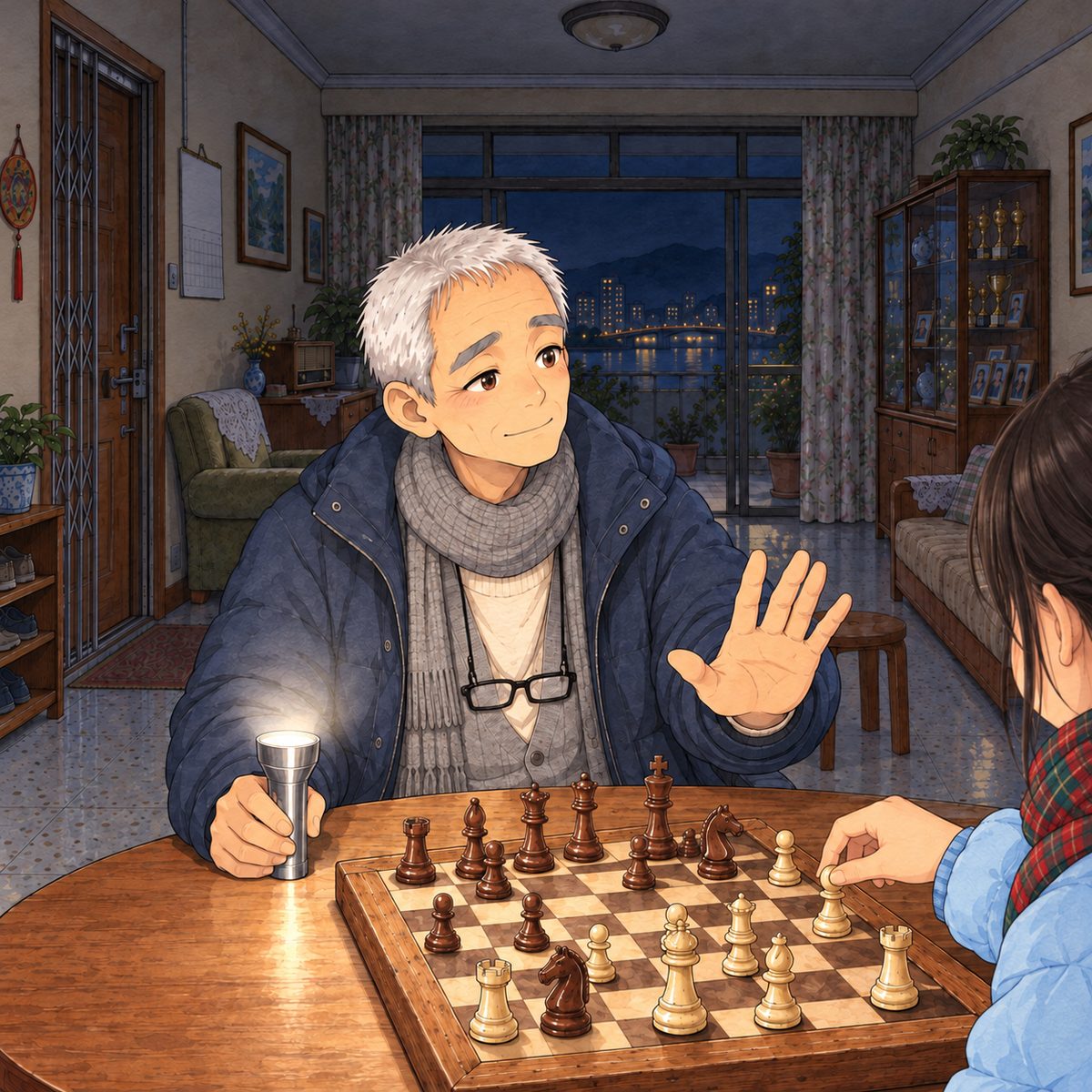
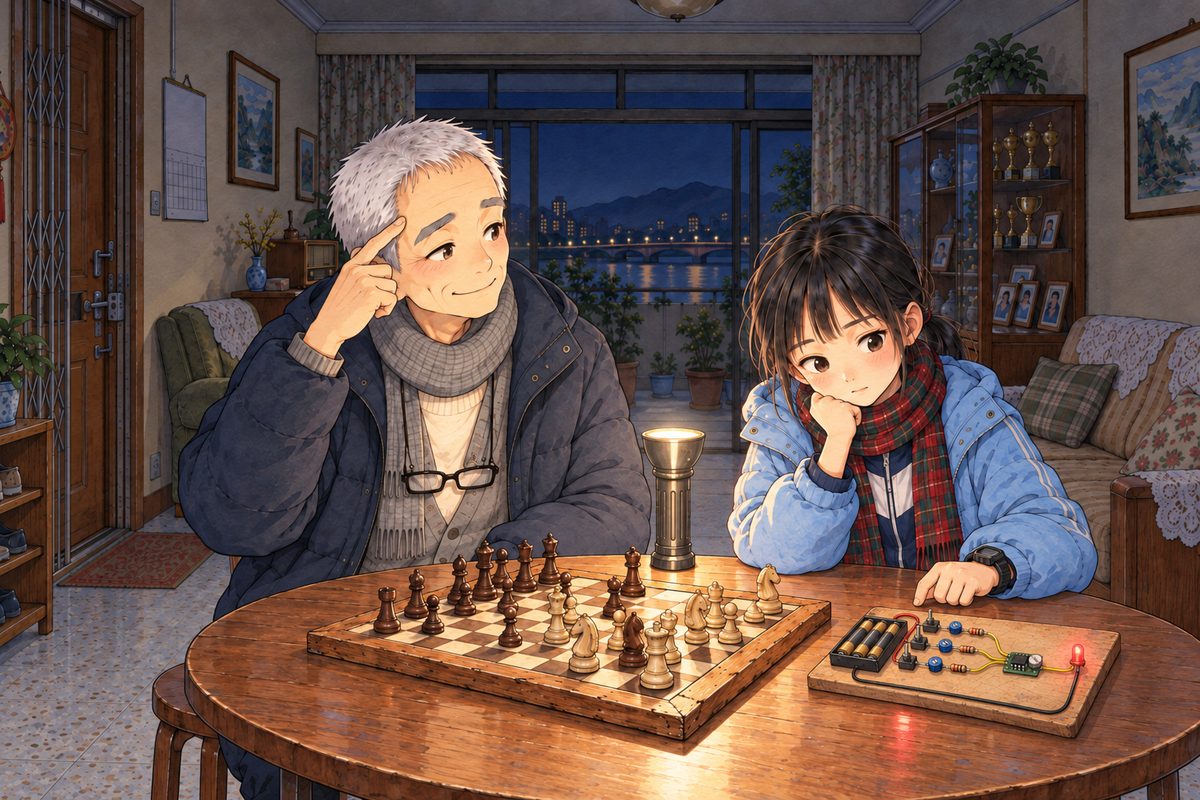
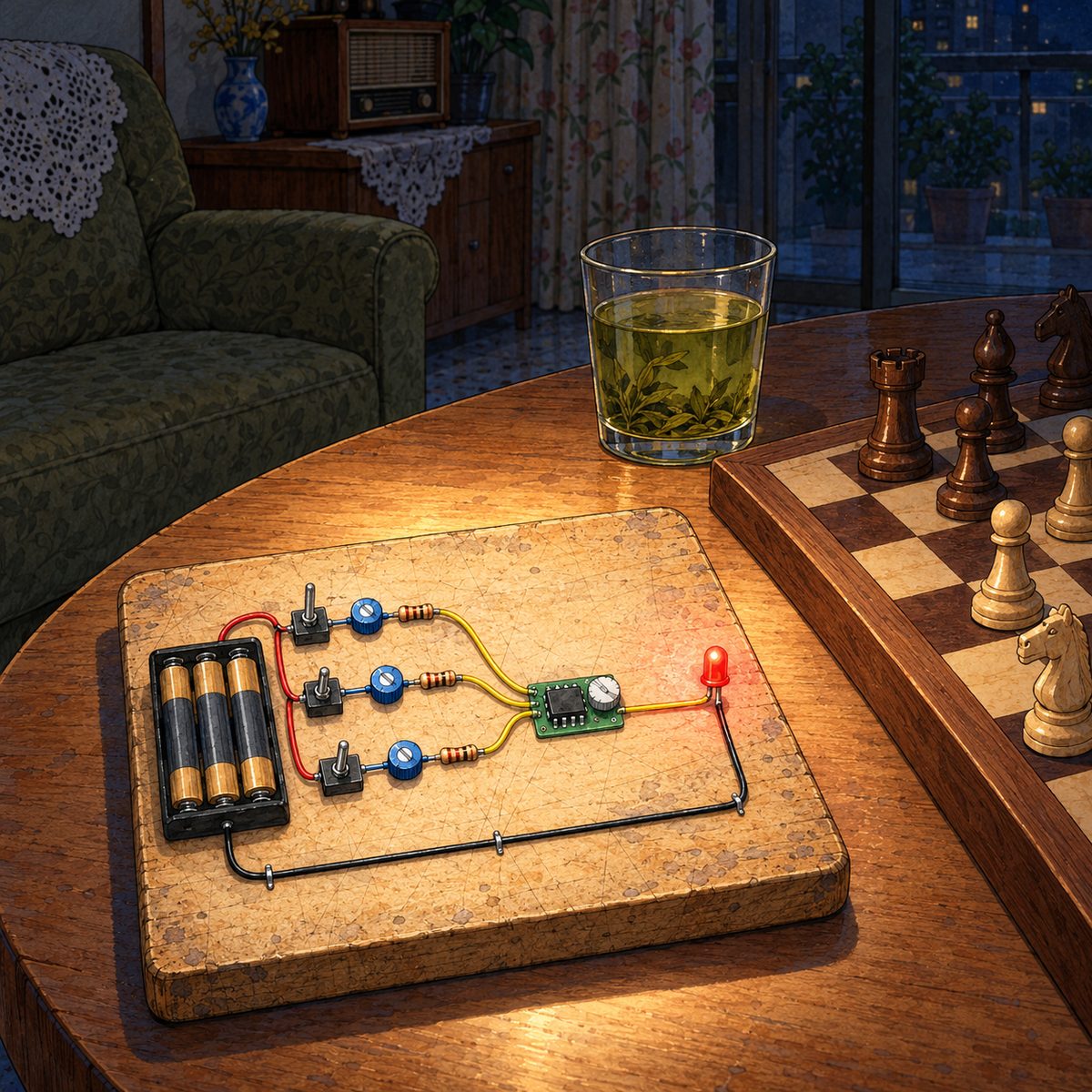
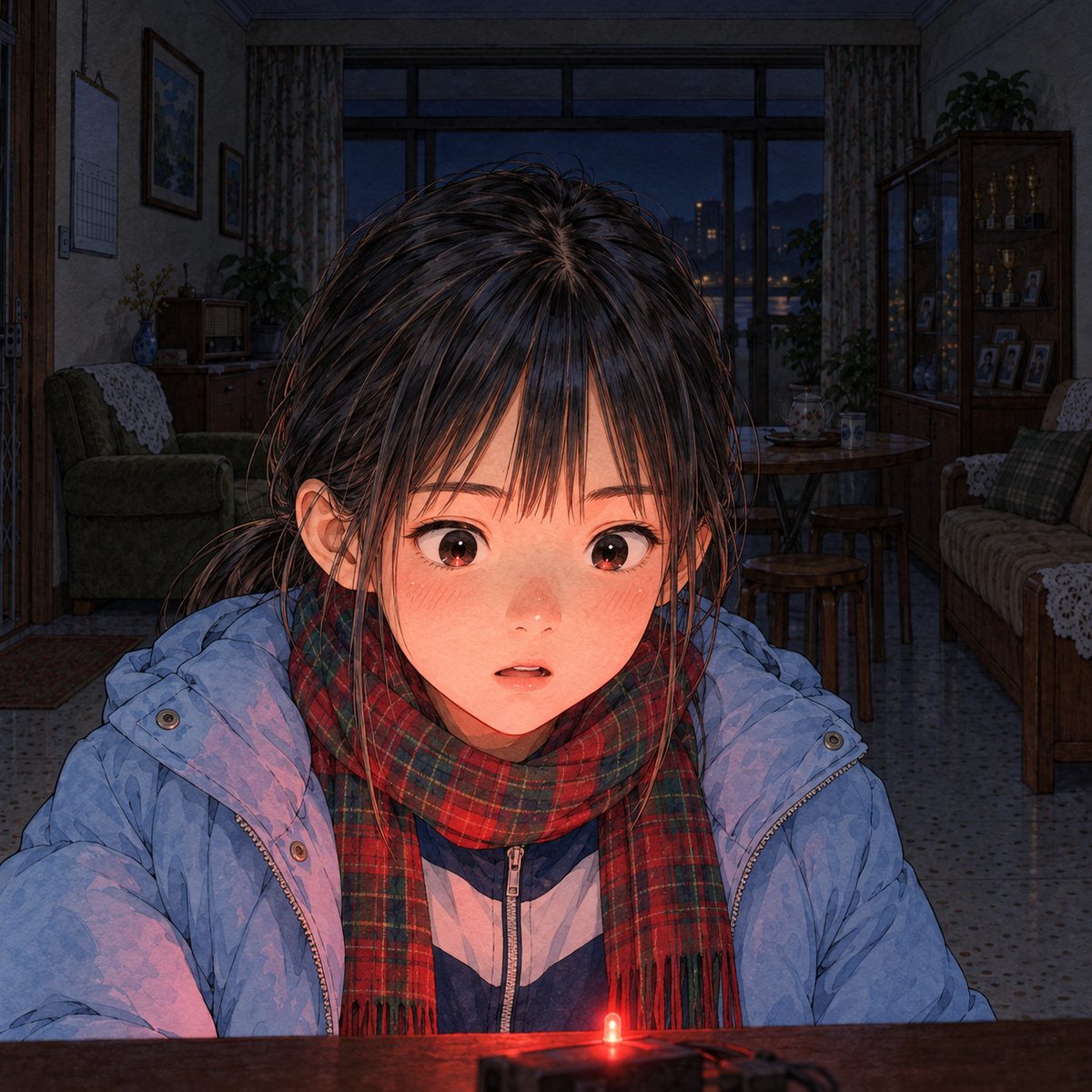
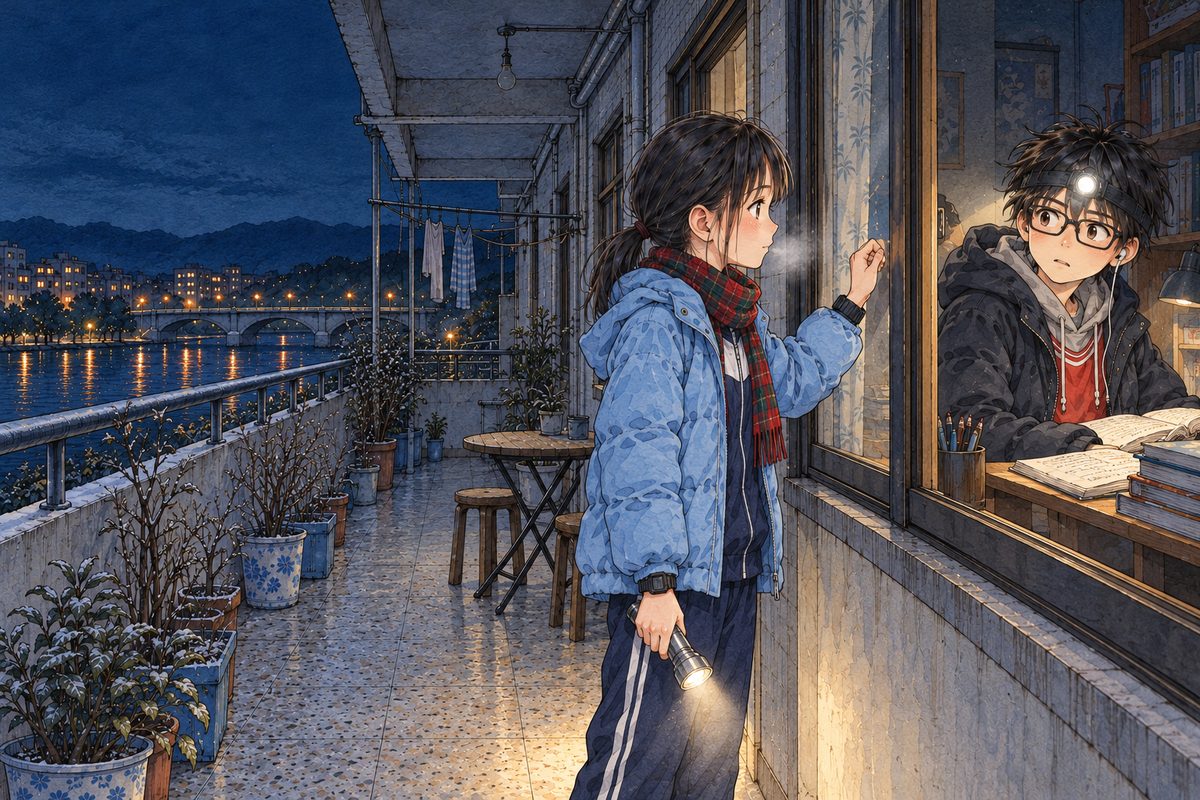

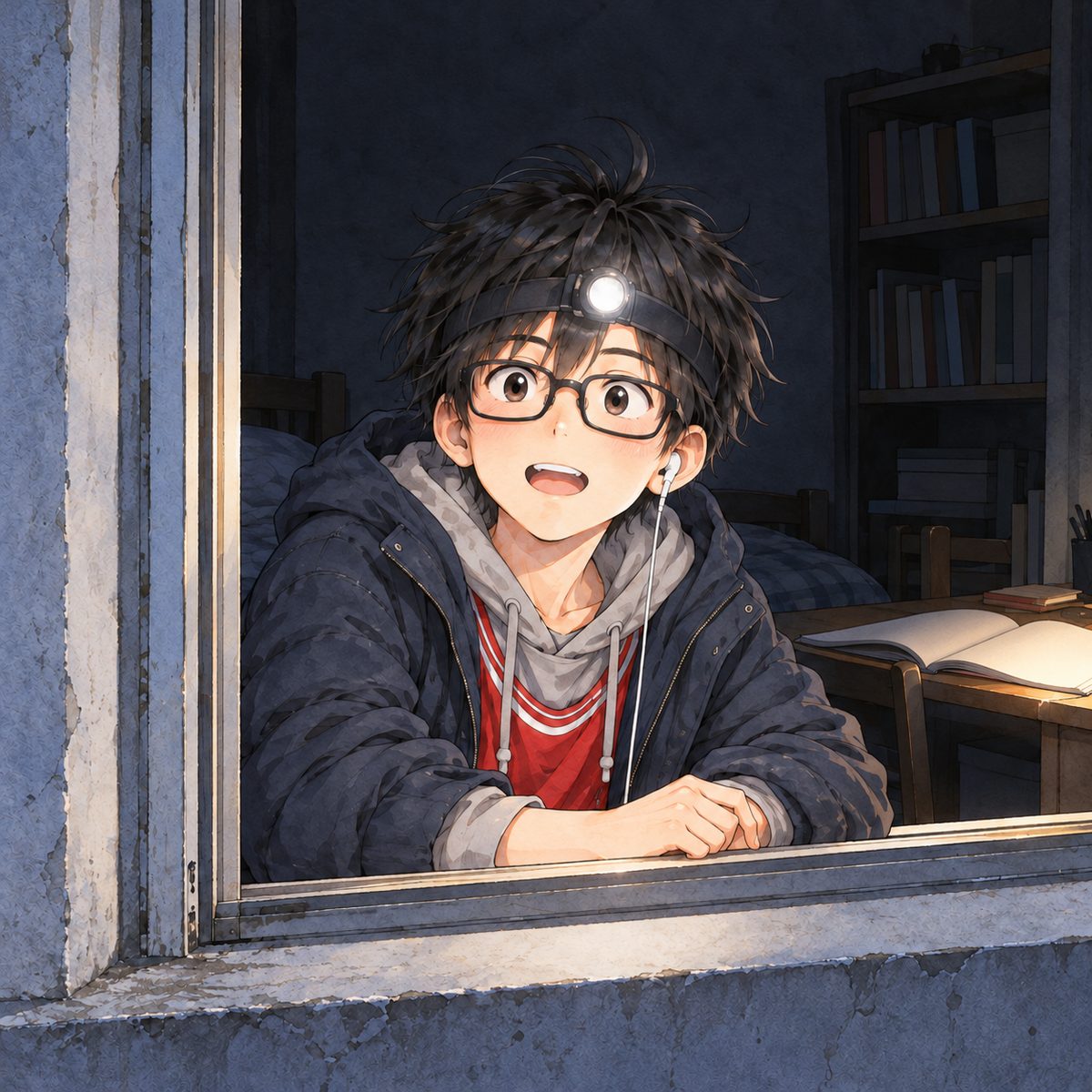
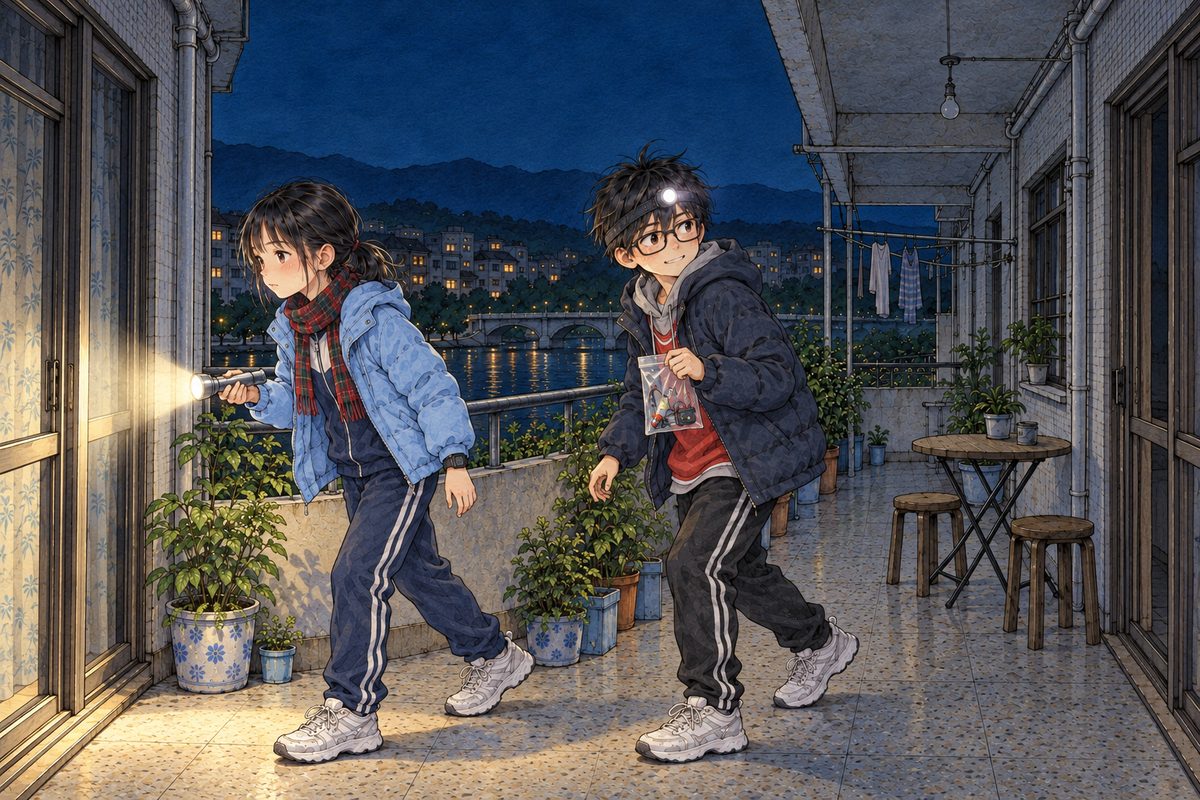
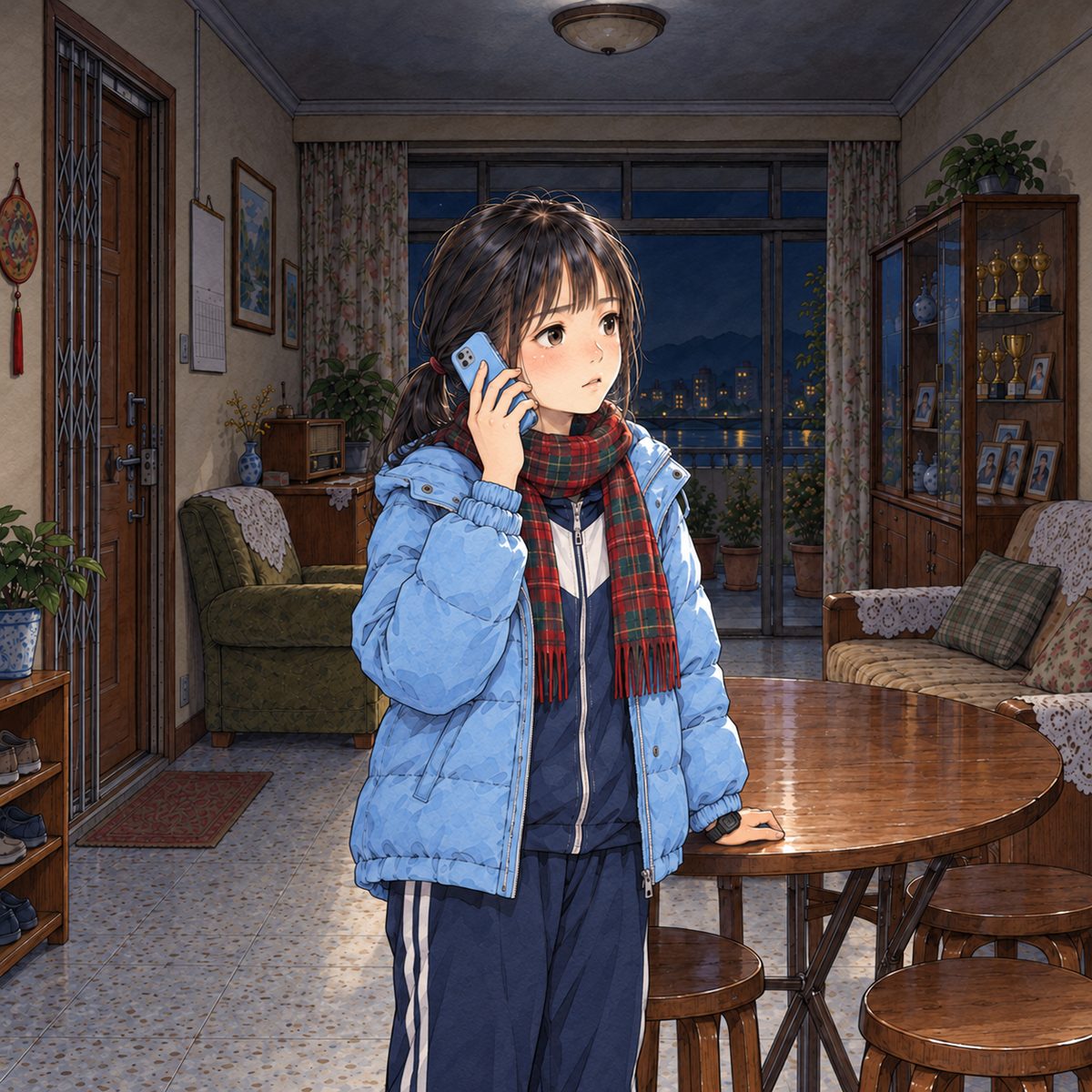
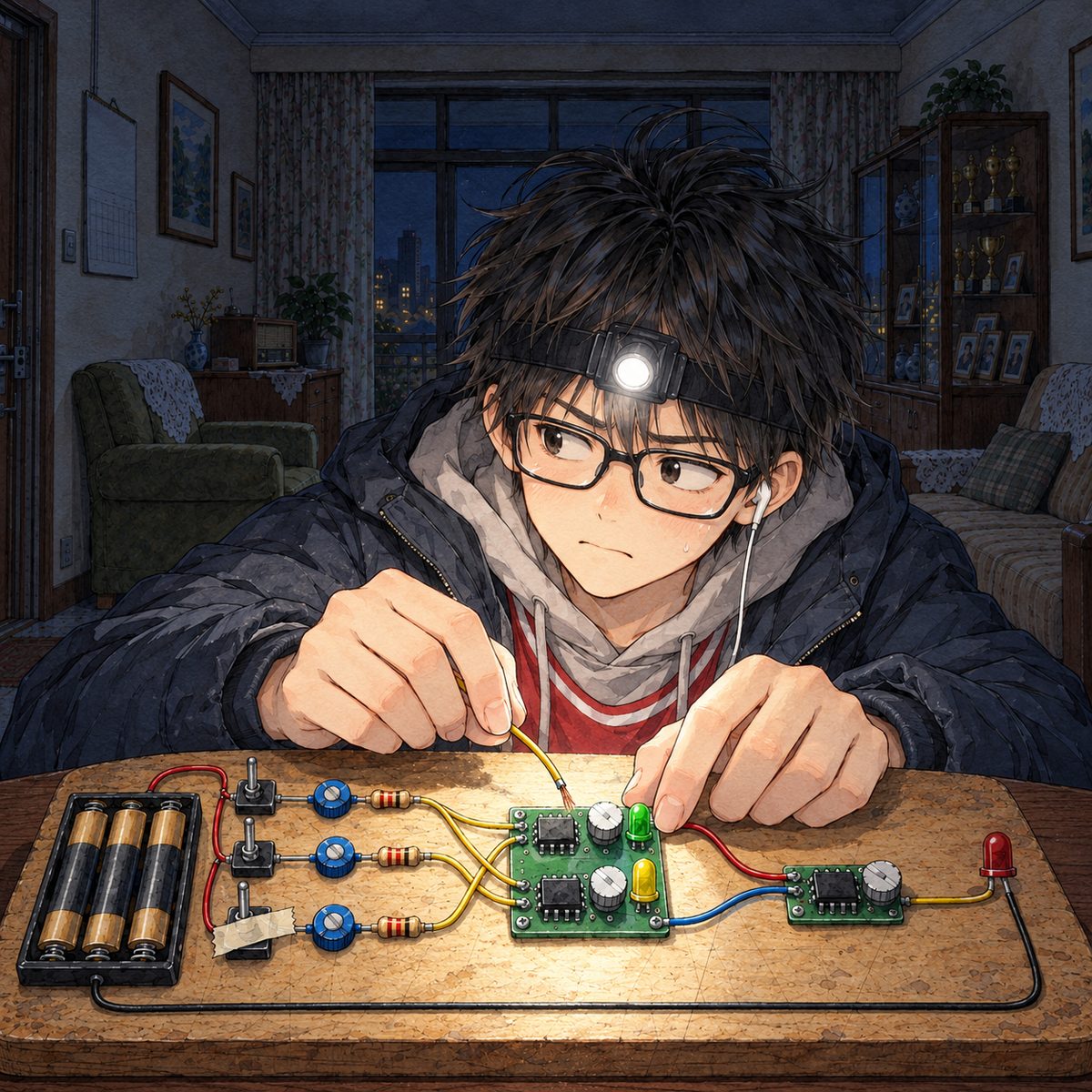
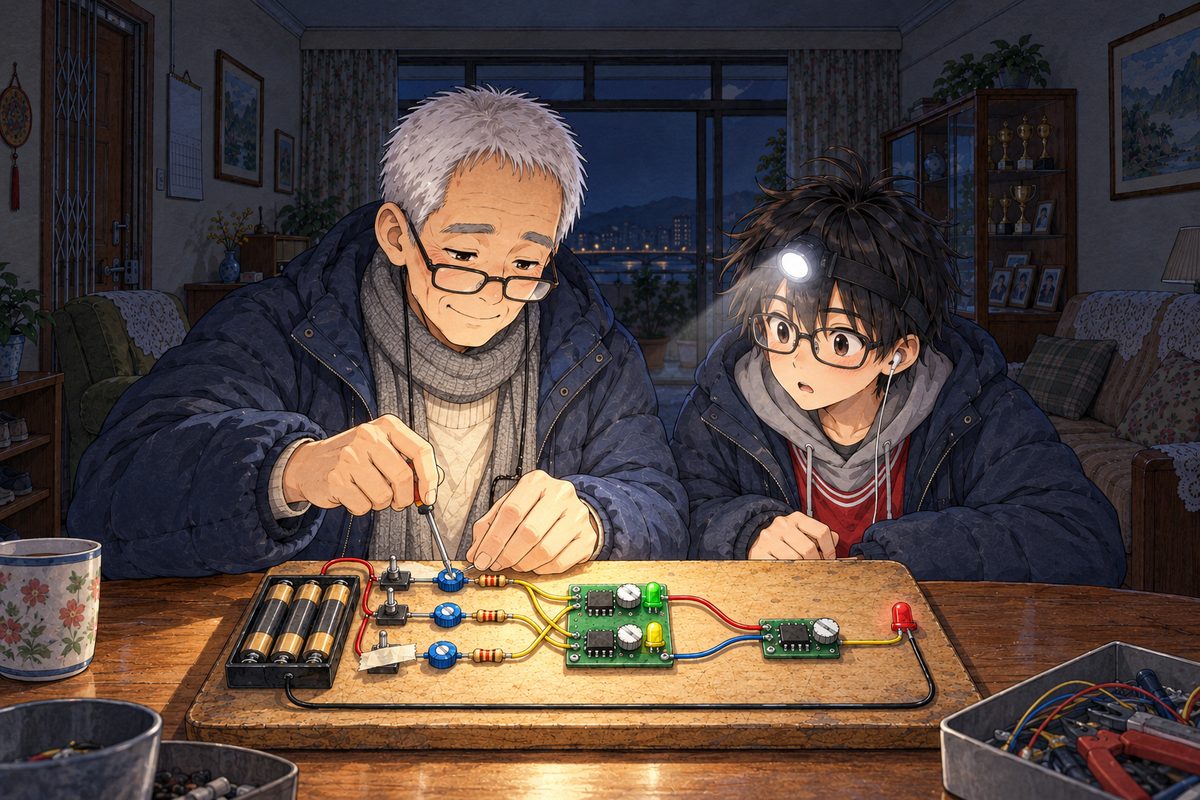
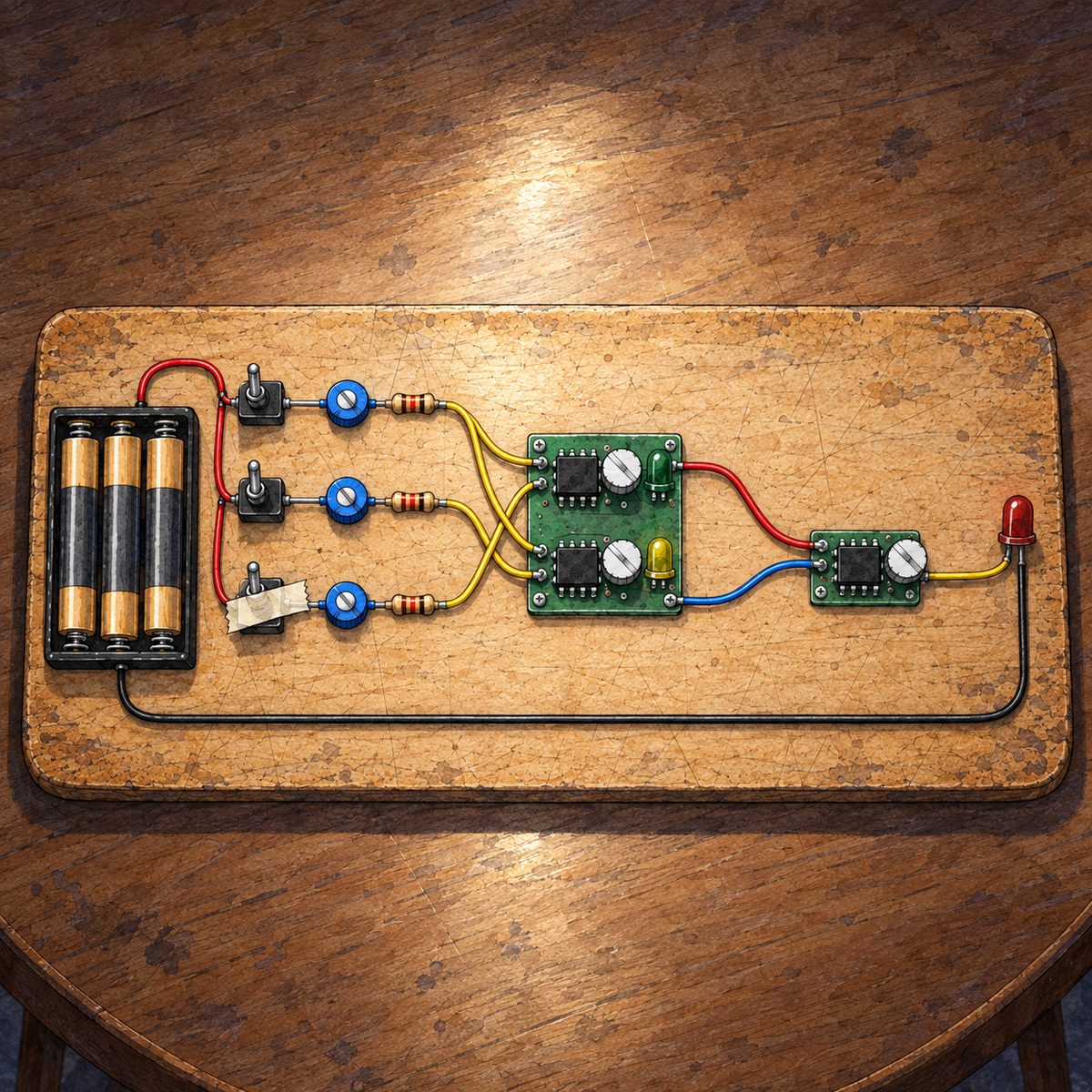
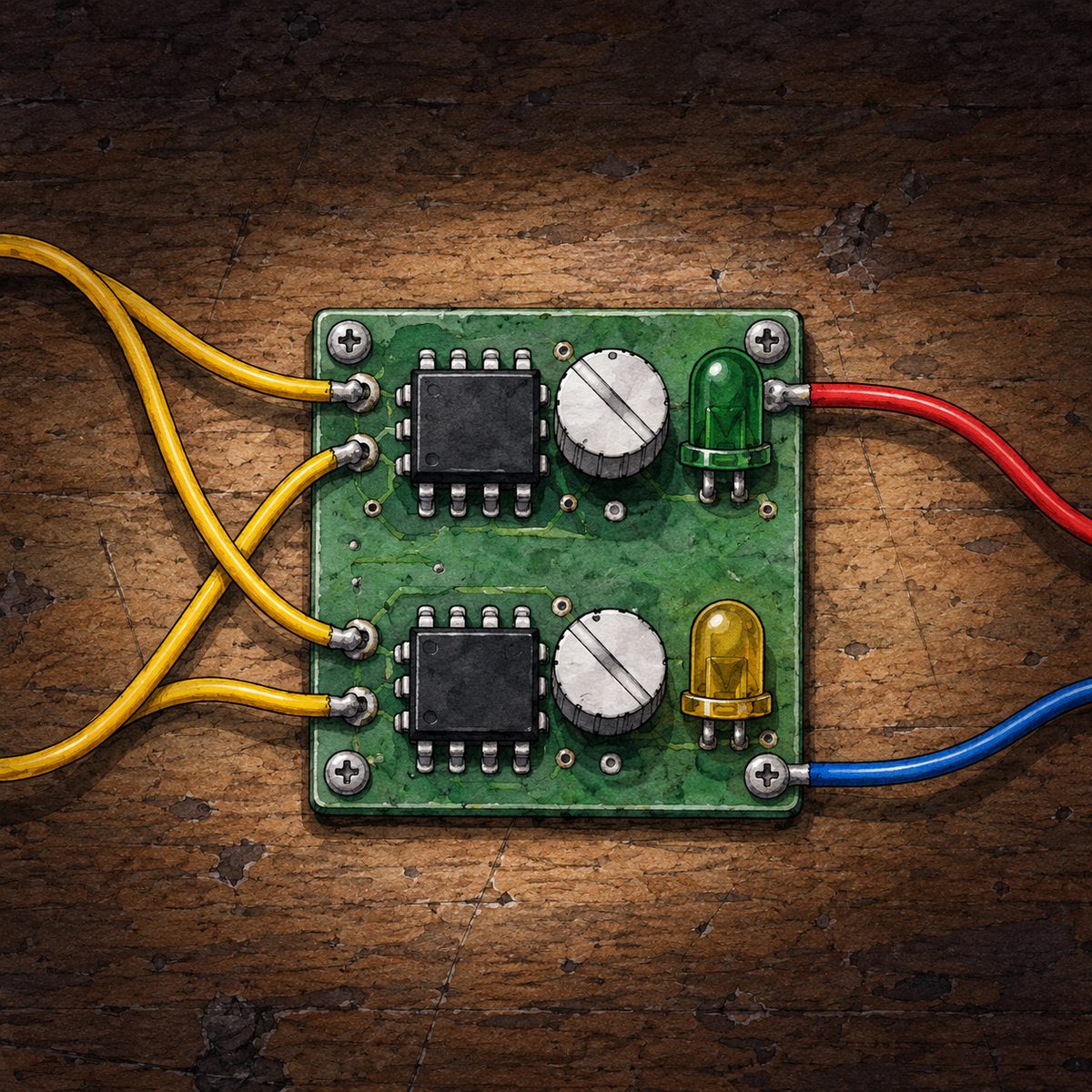
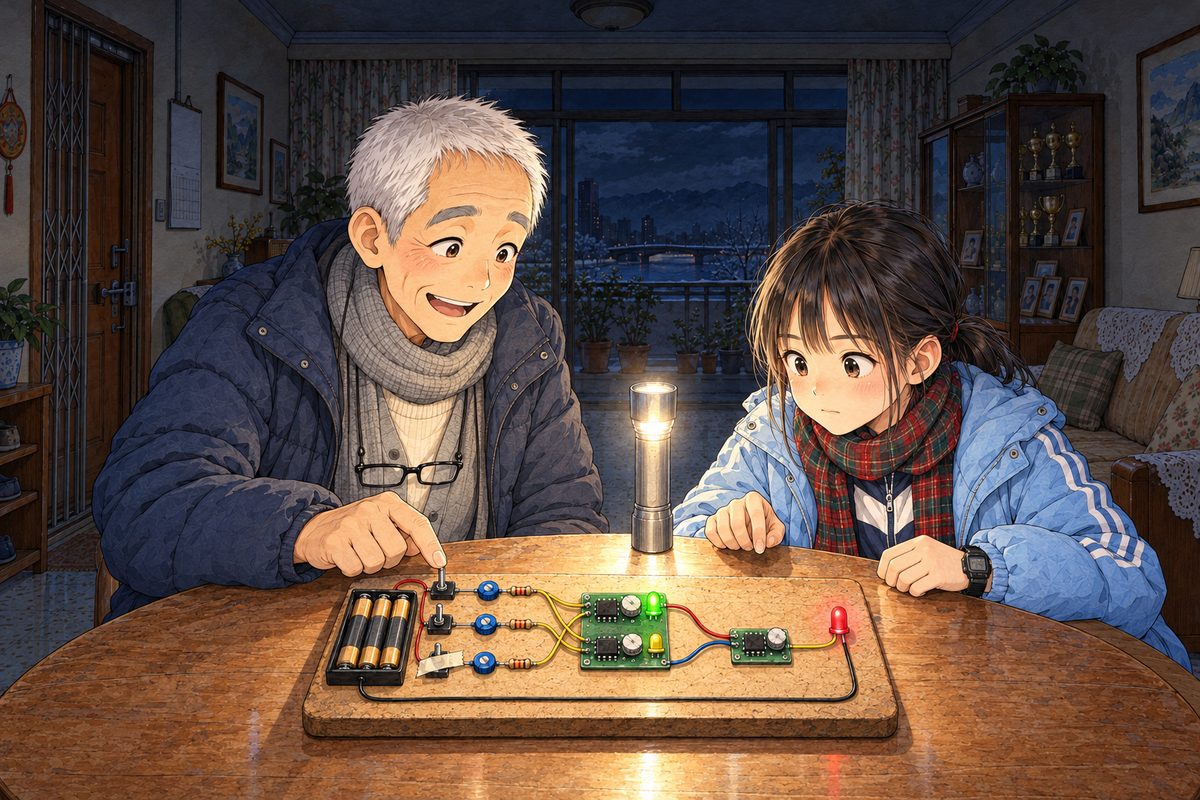
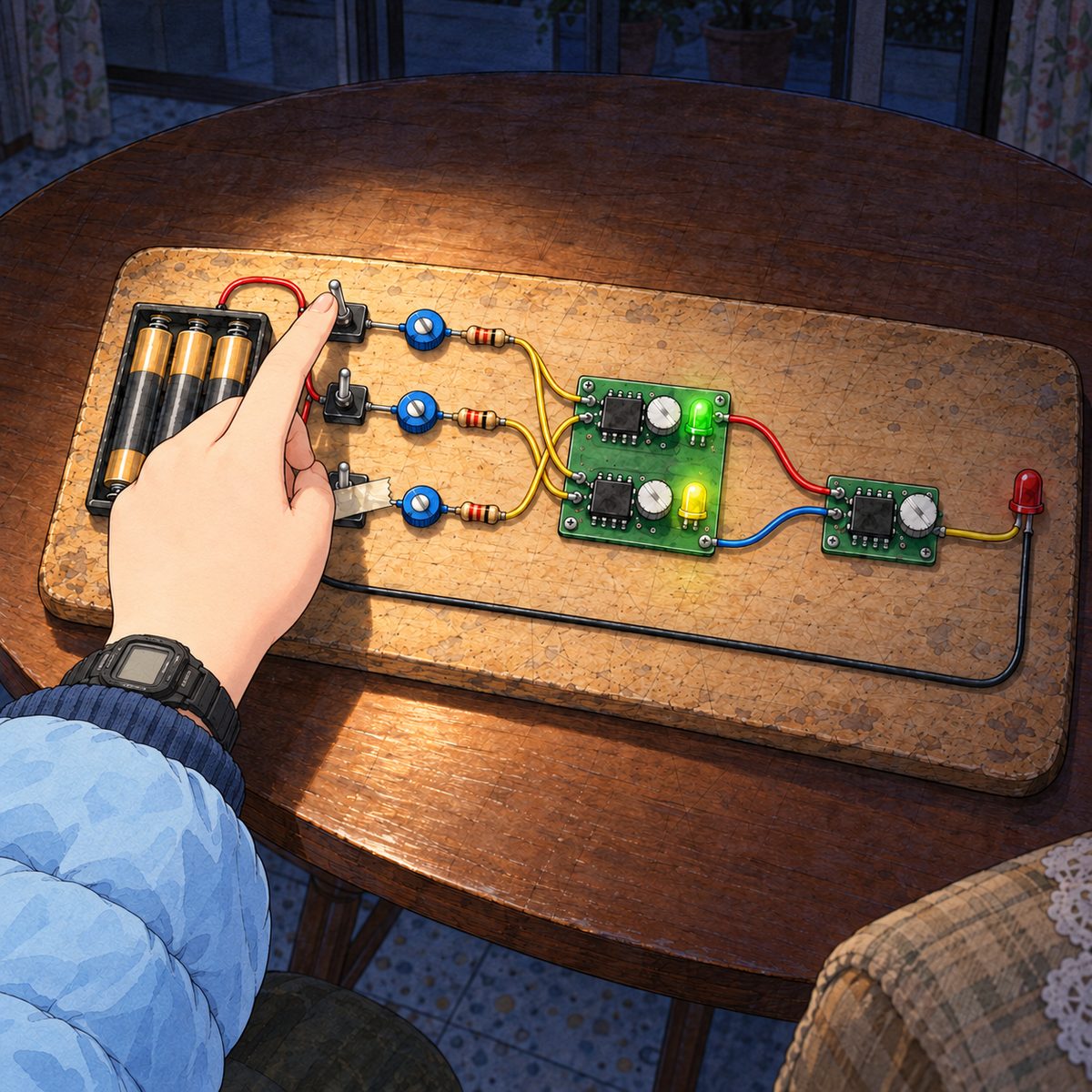


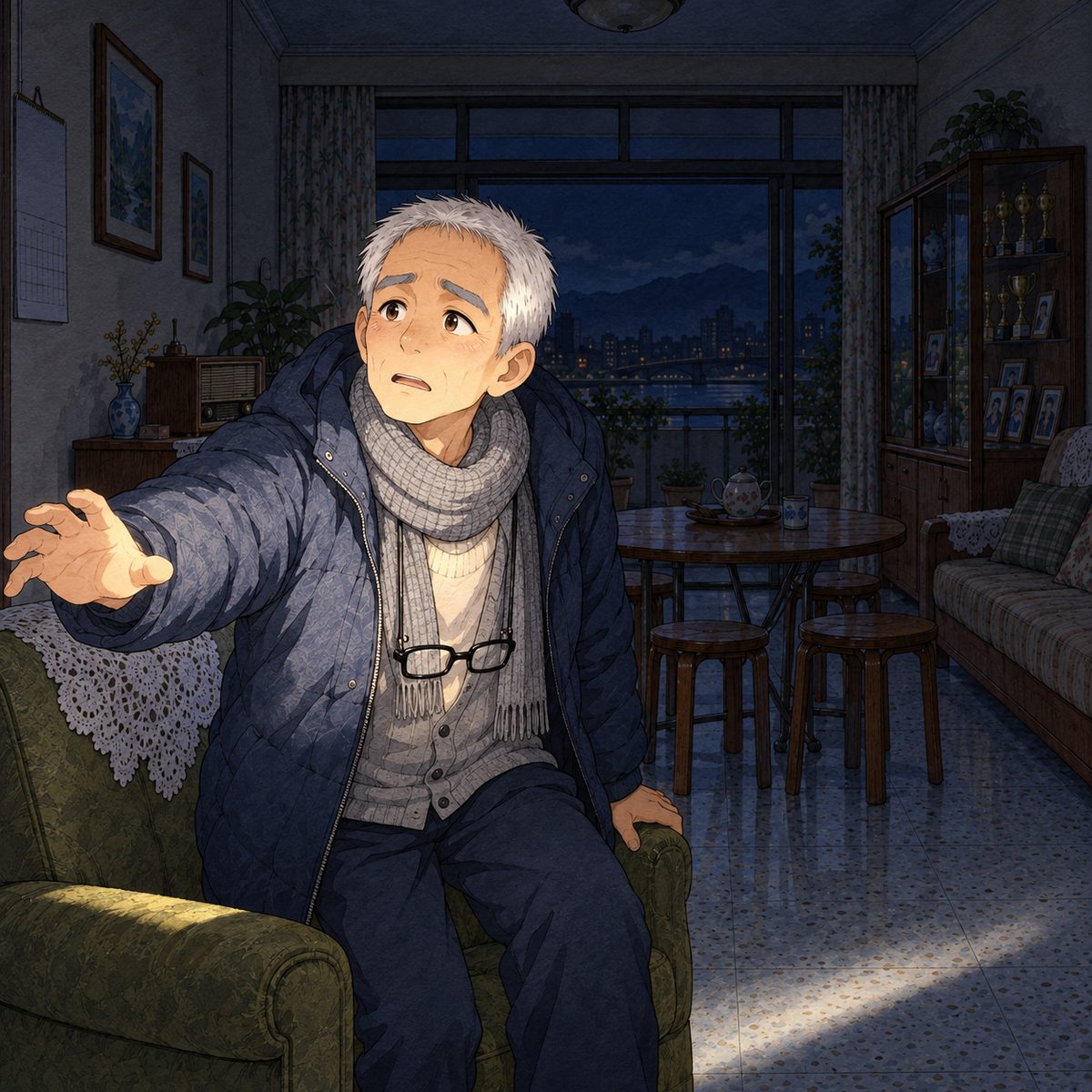
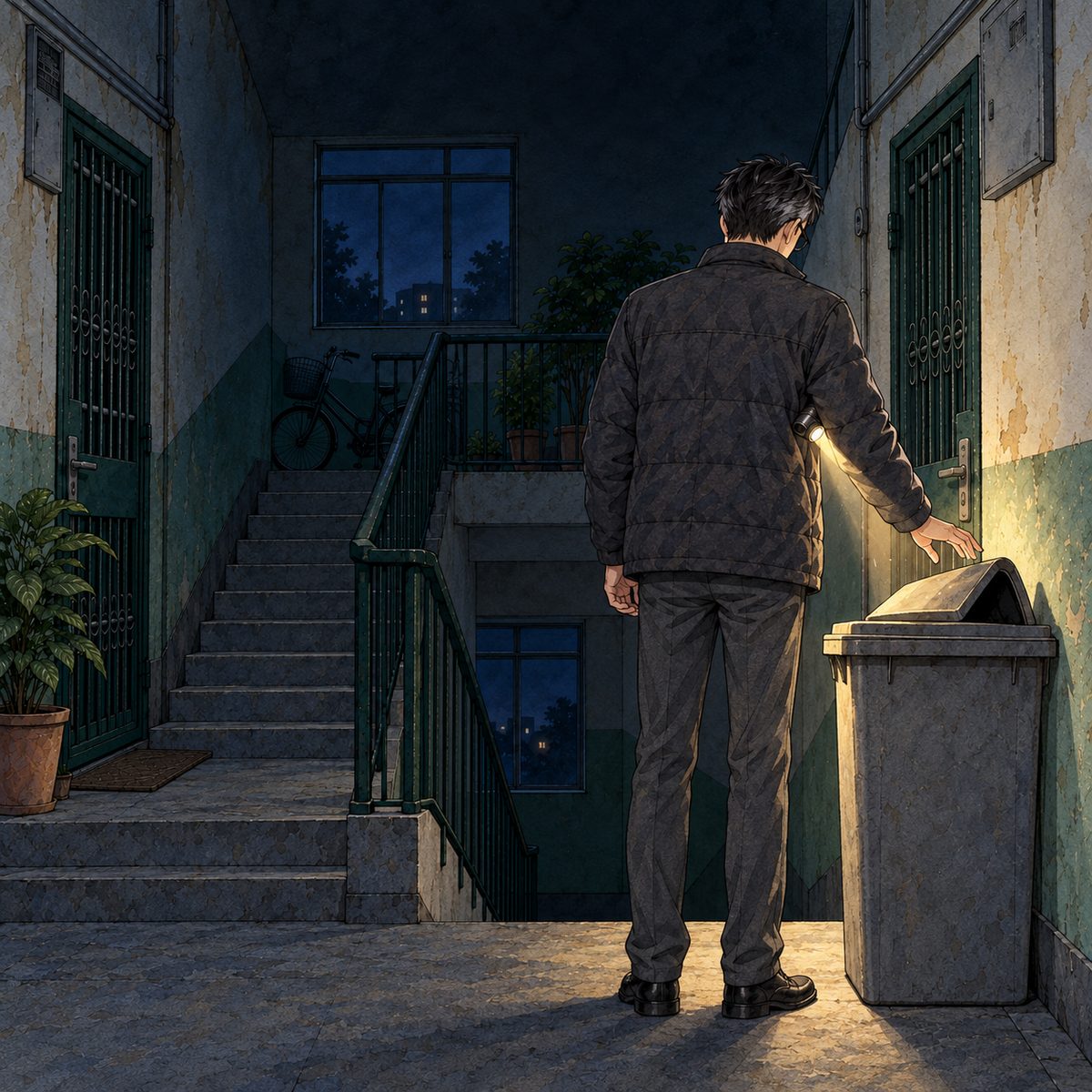
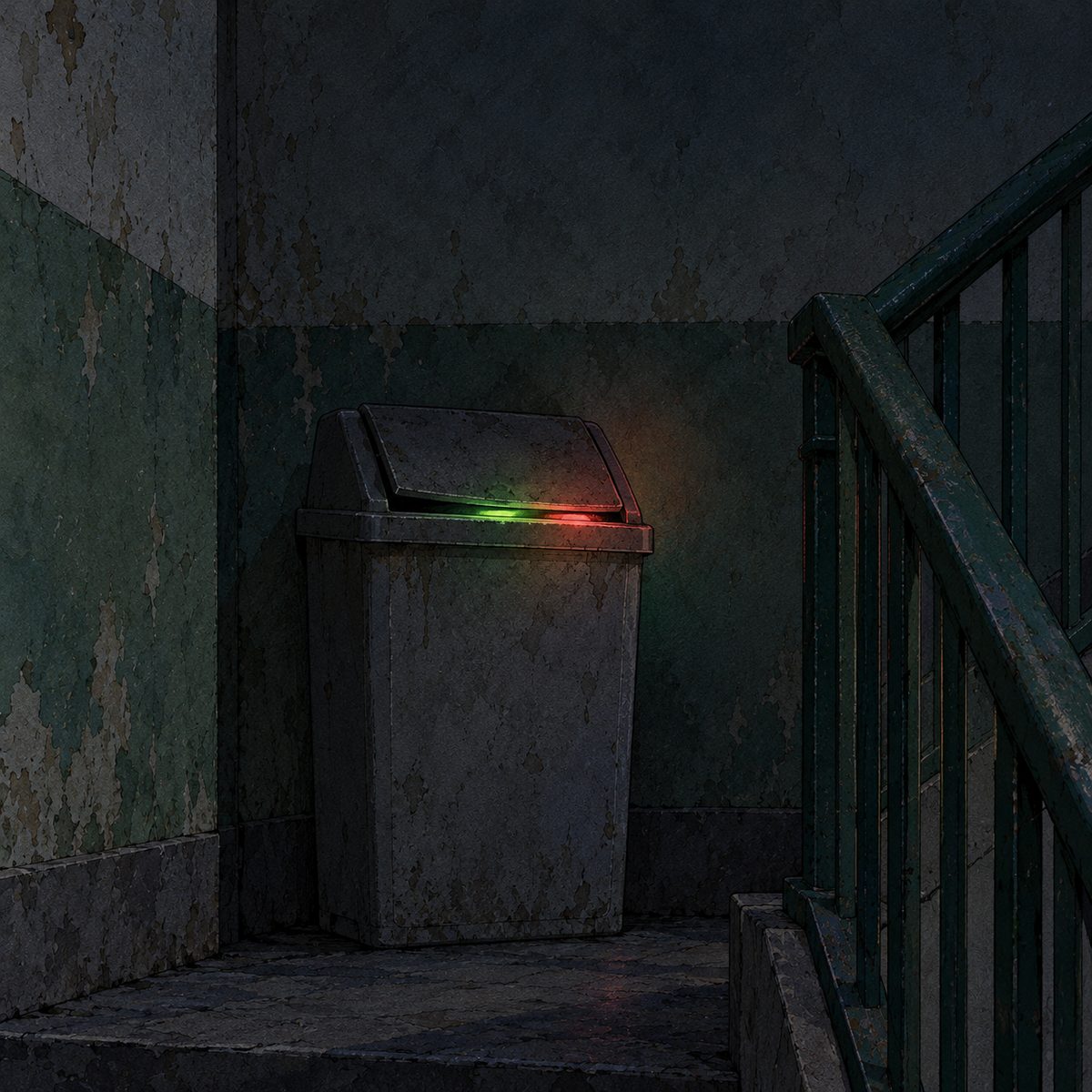
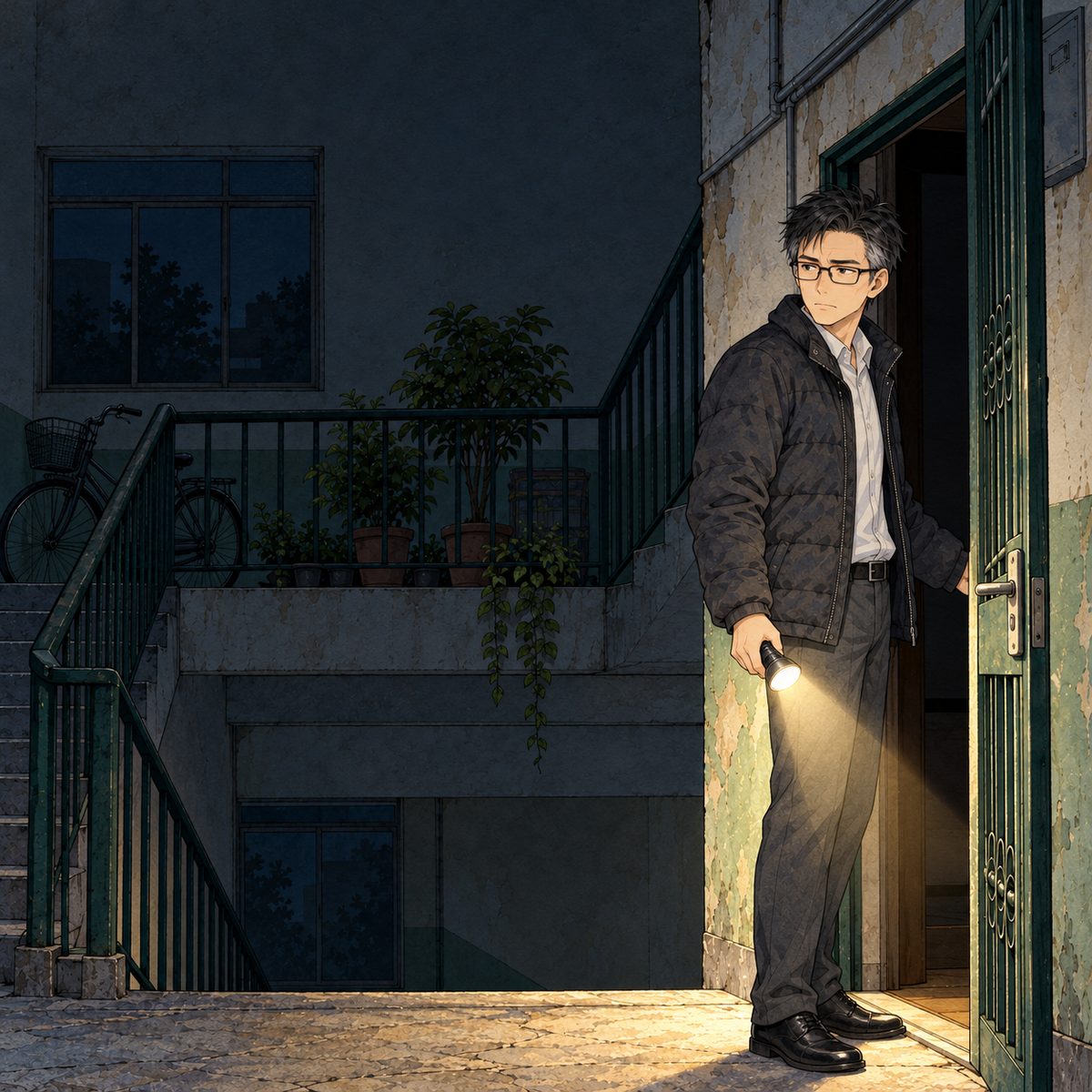
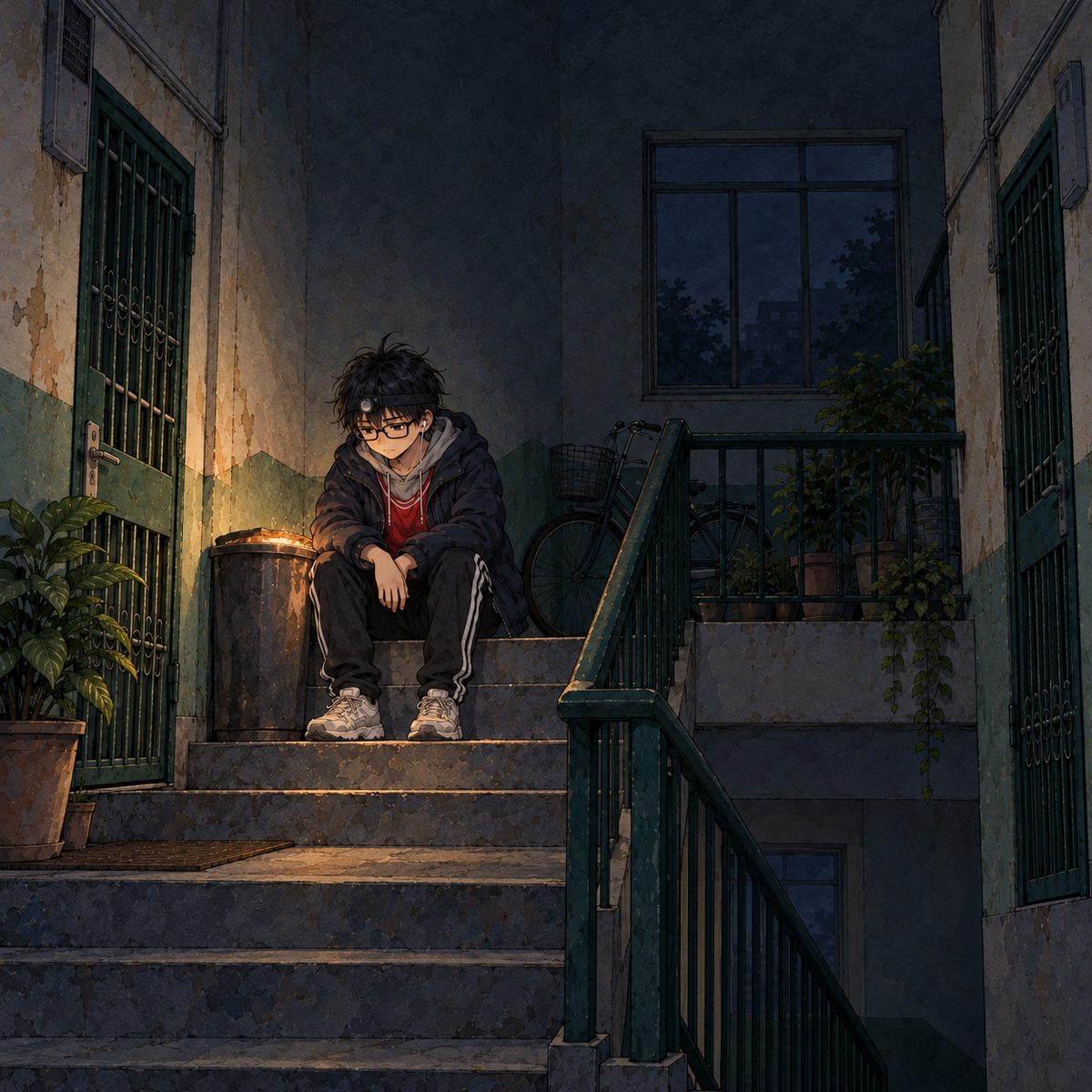
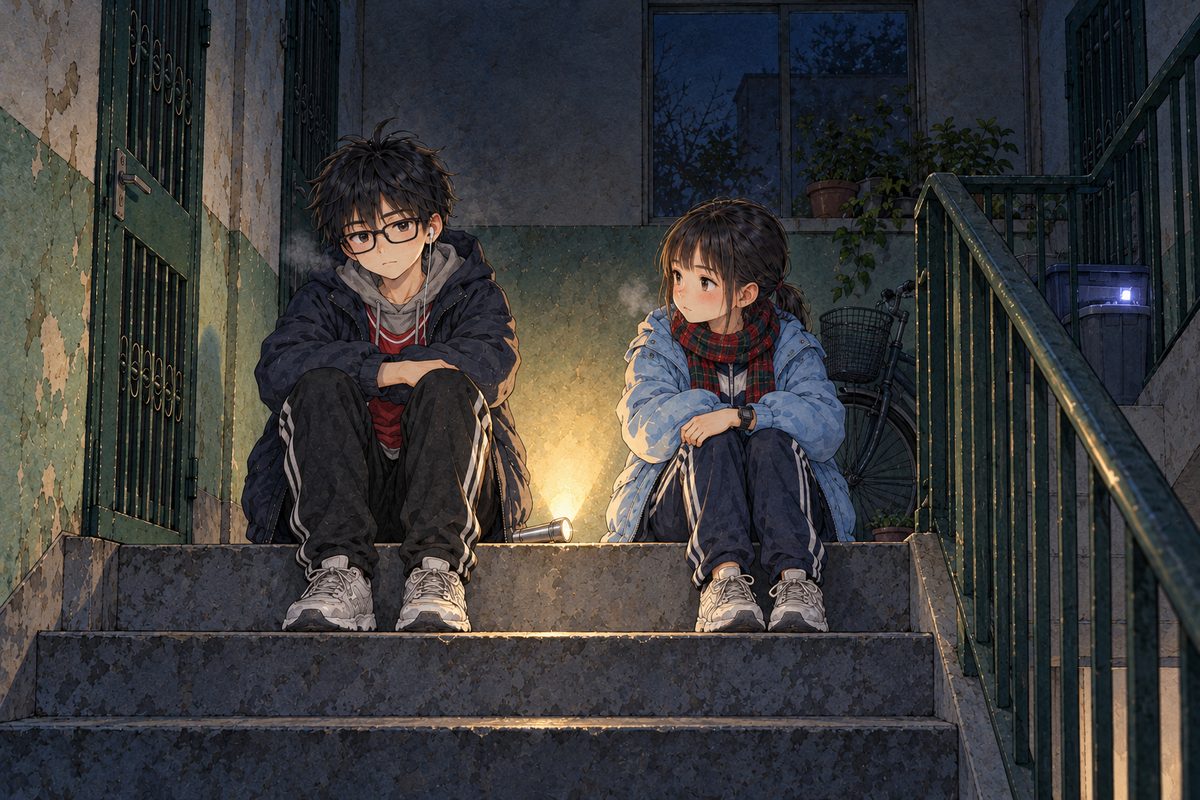

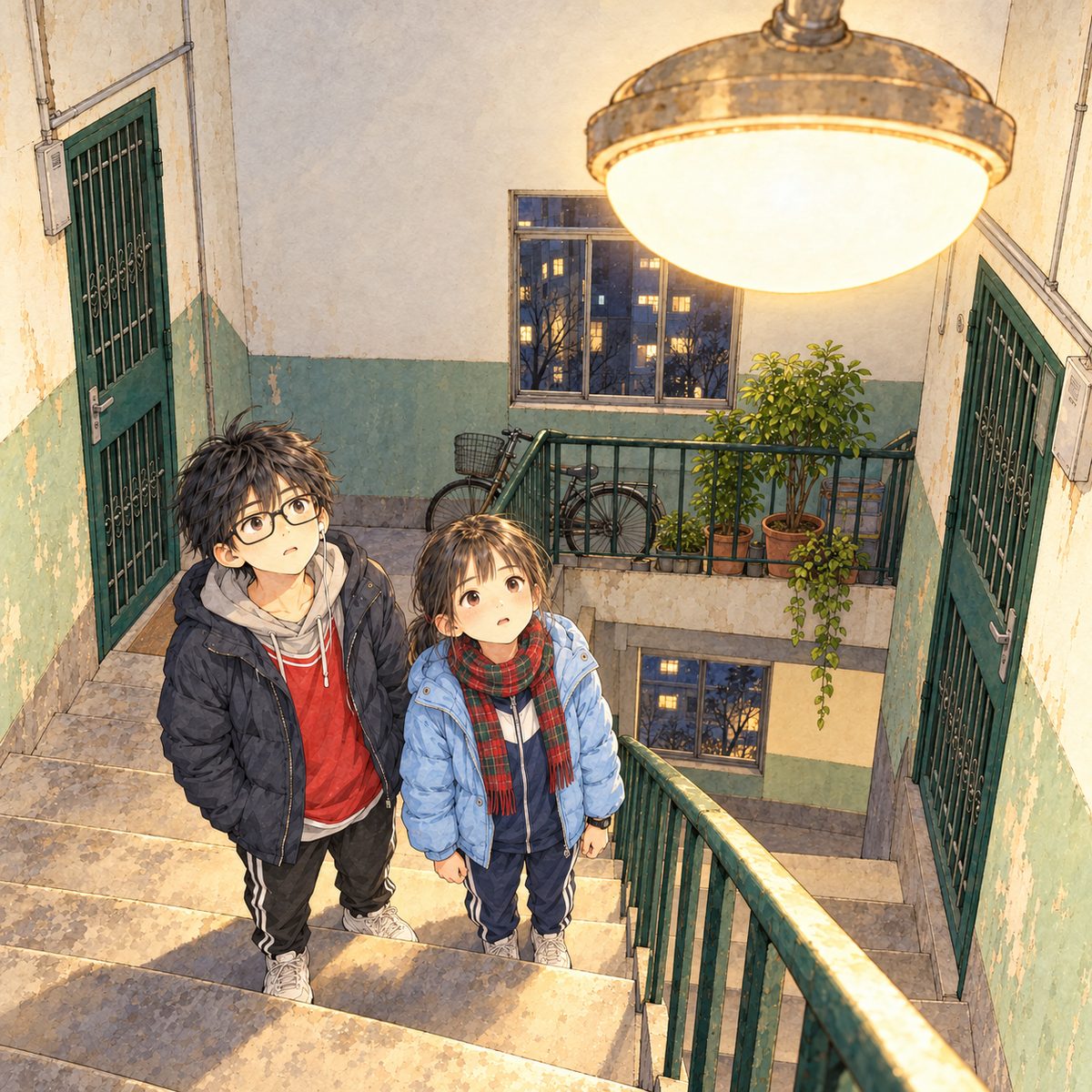
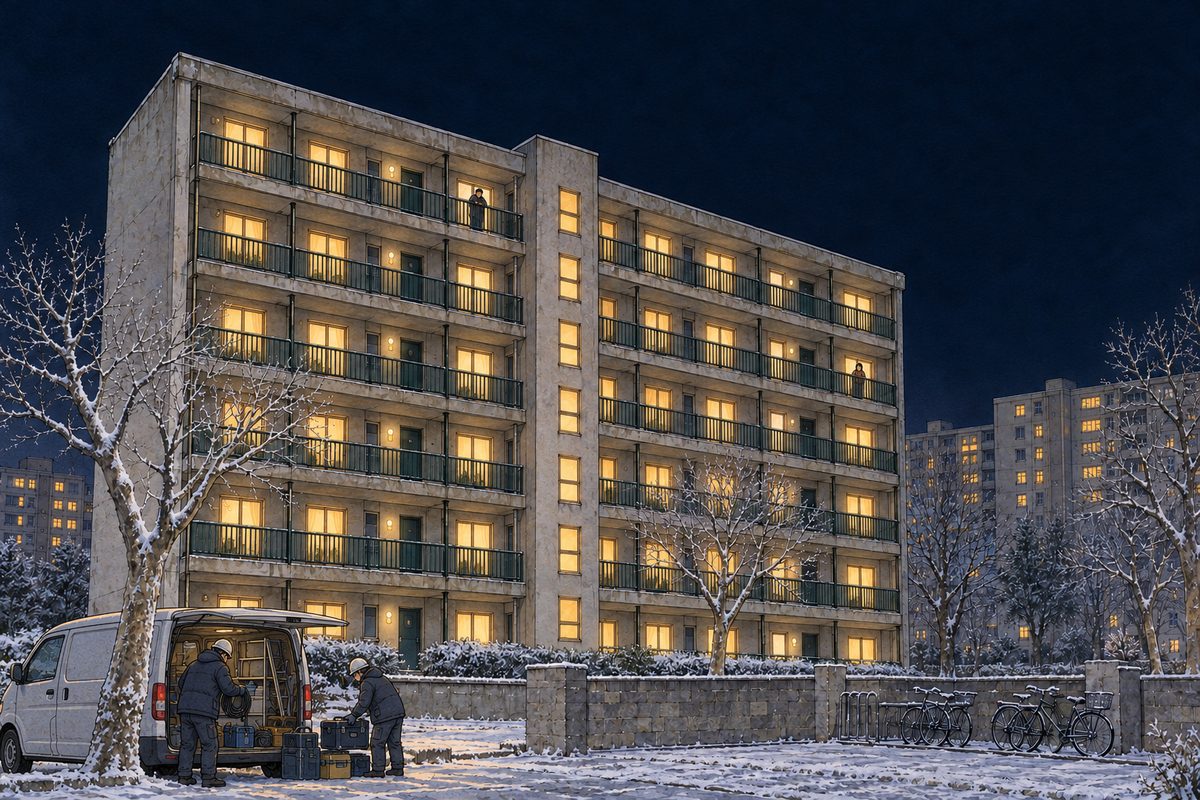
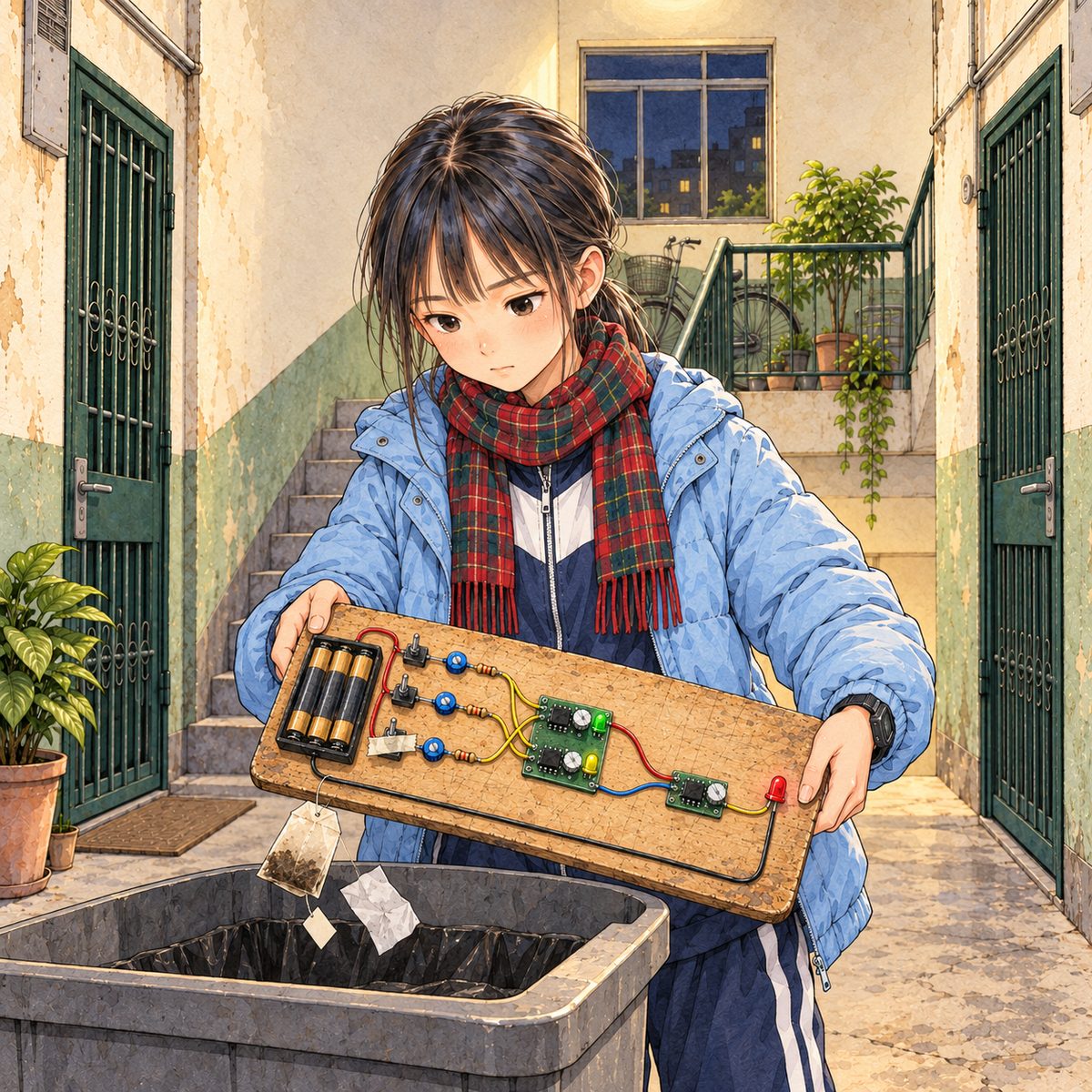
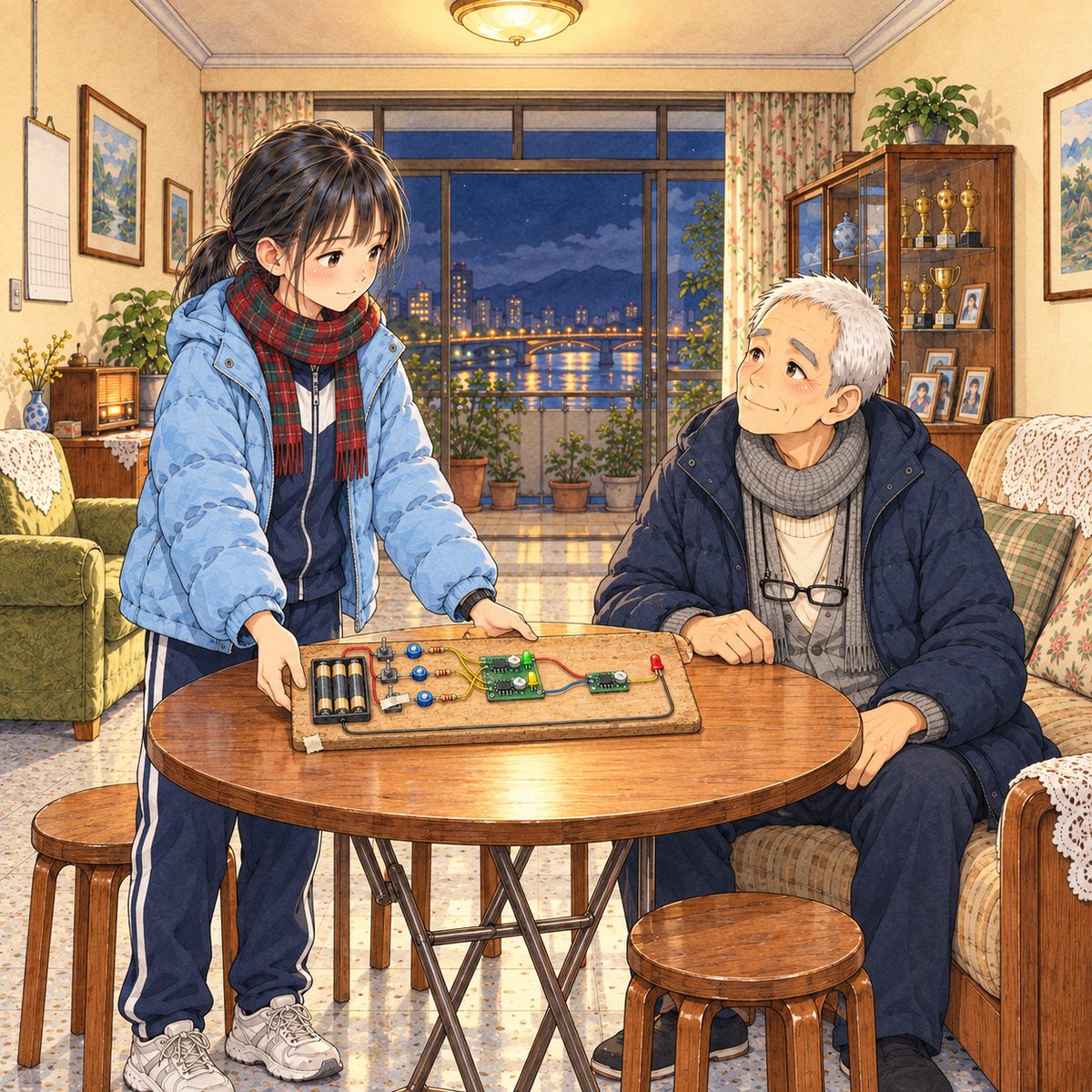
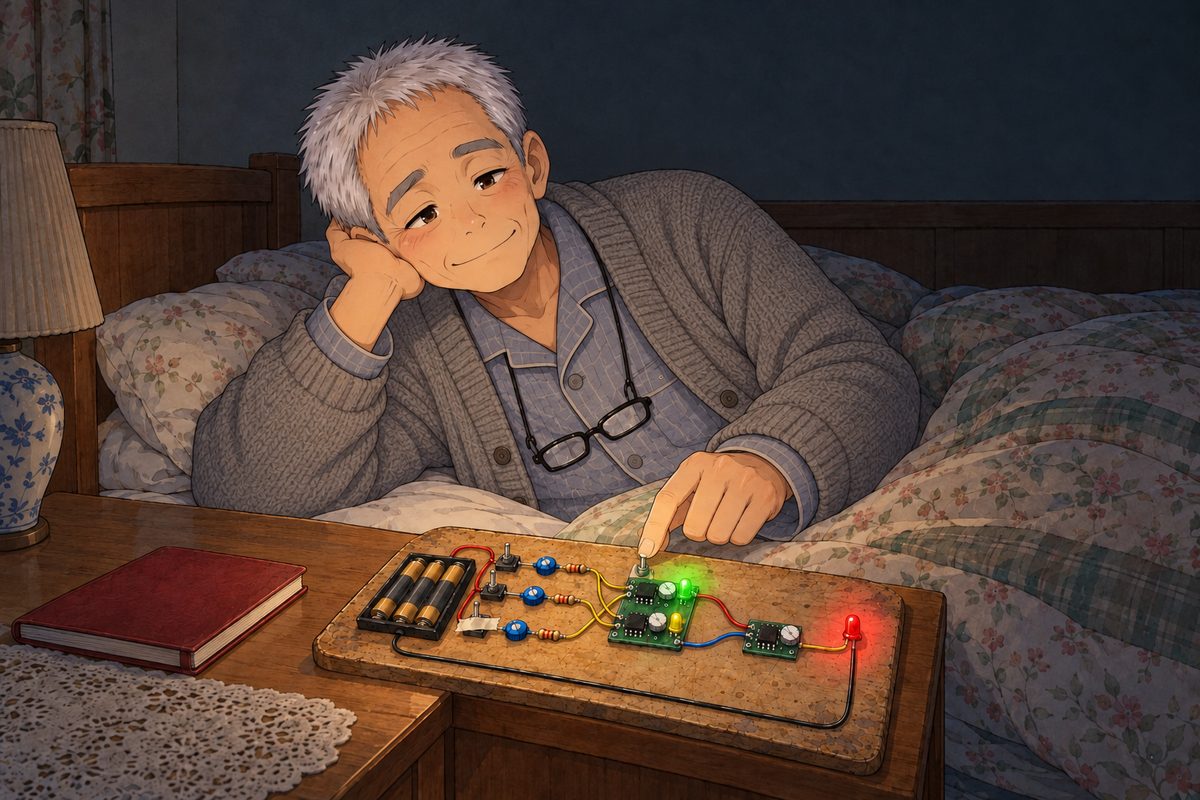
Some of this chapter was left to the pictures, so the dark nights could stay quiet. Here it is in words.
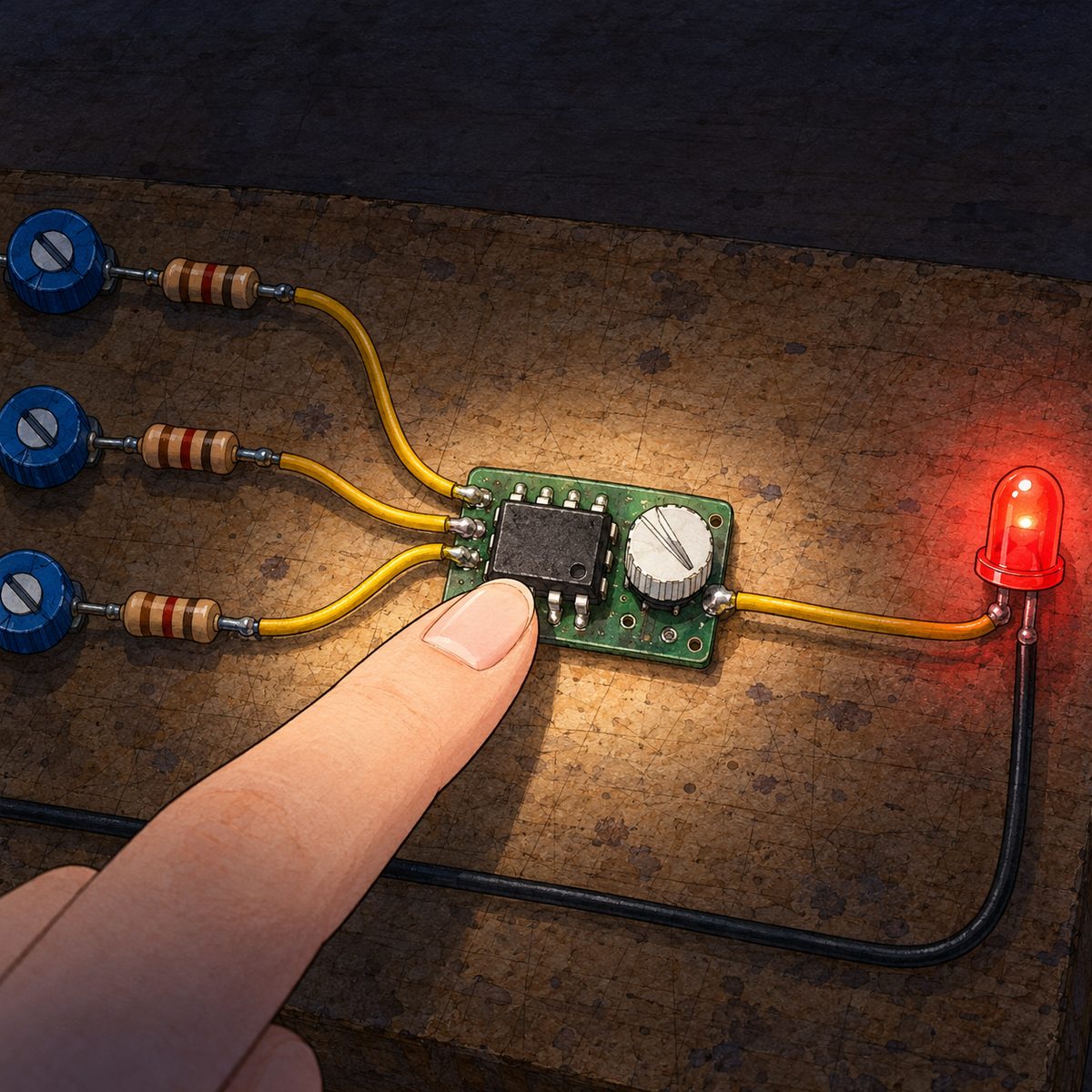
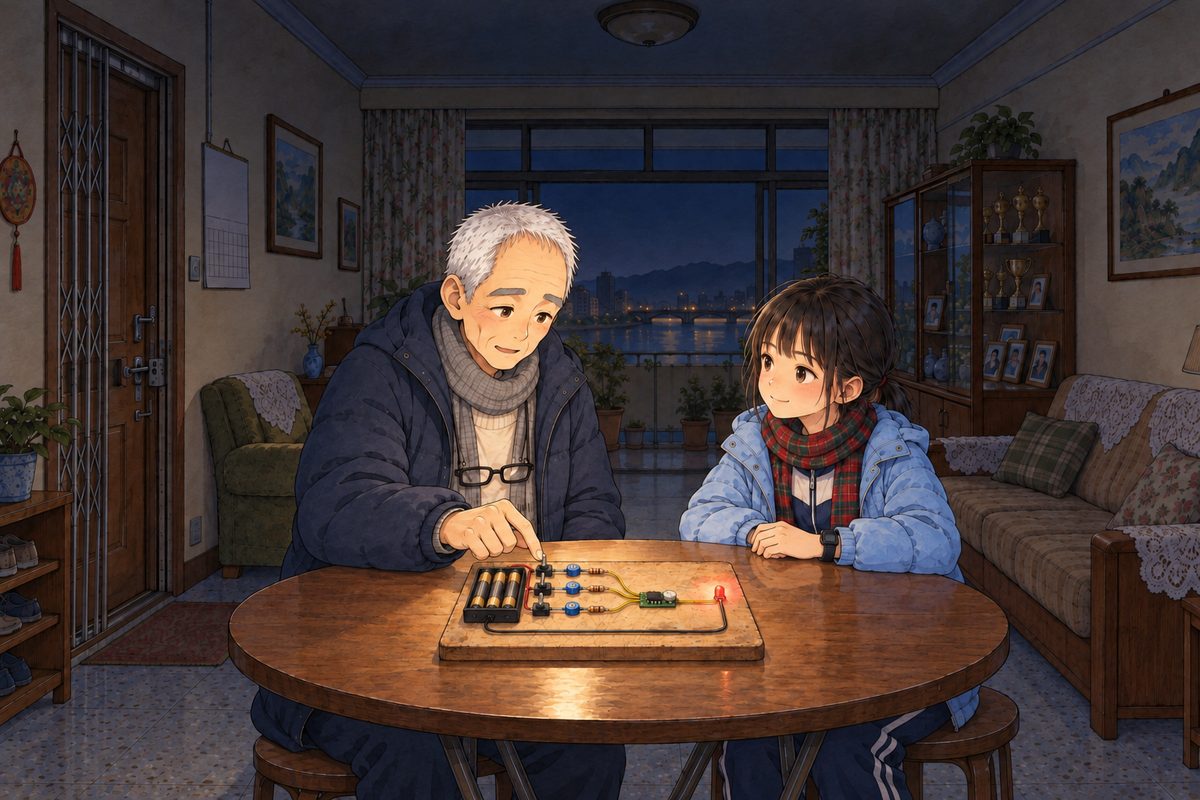
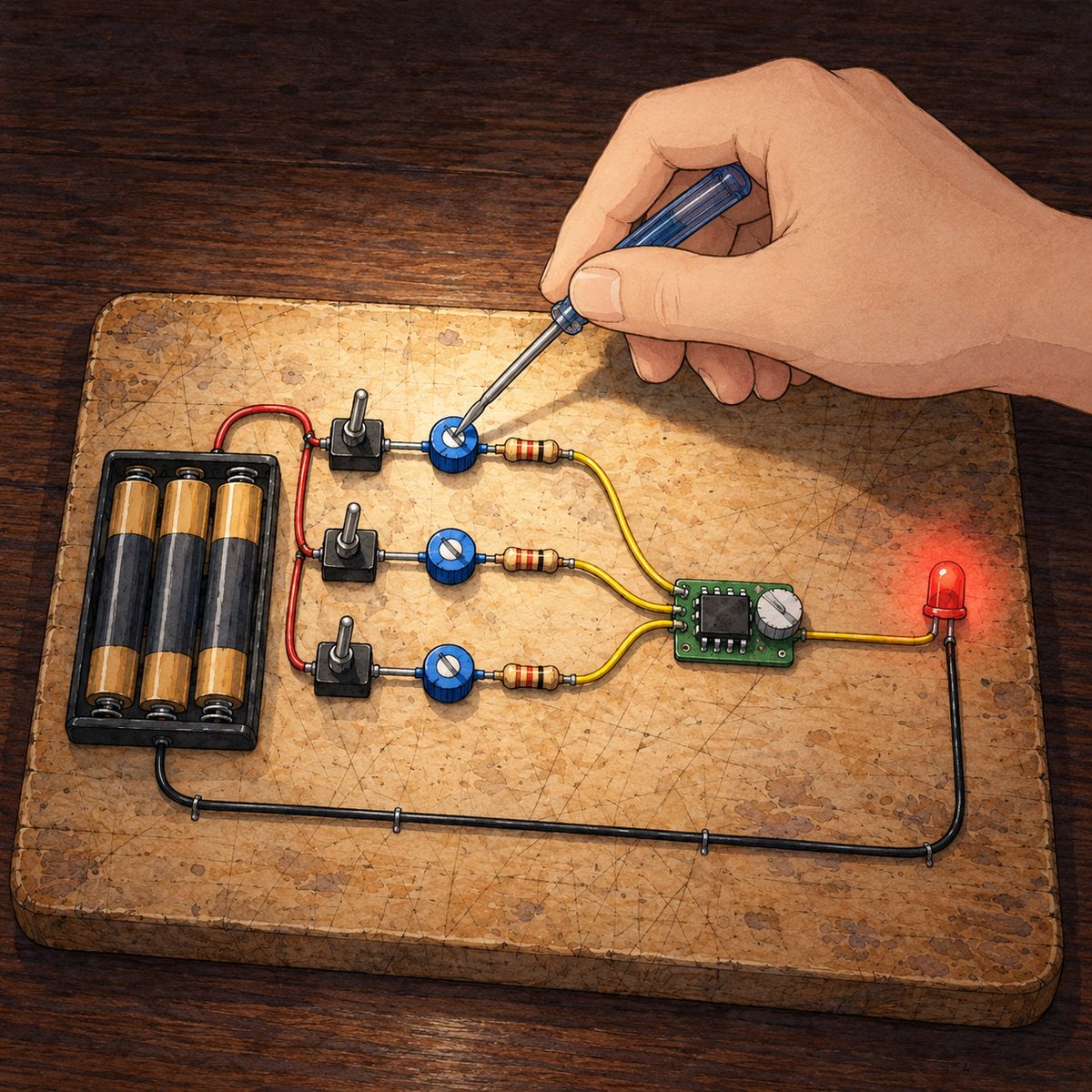
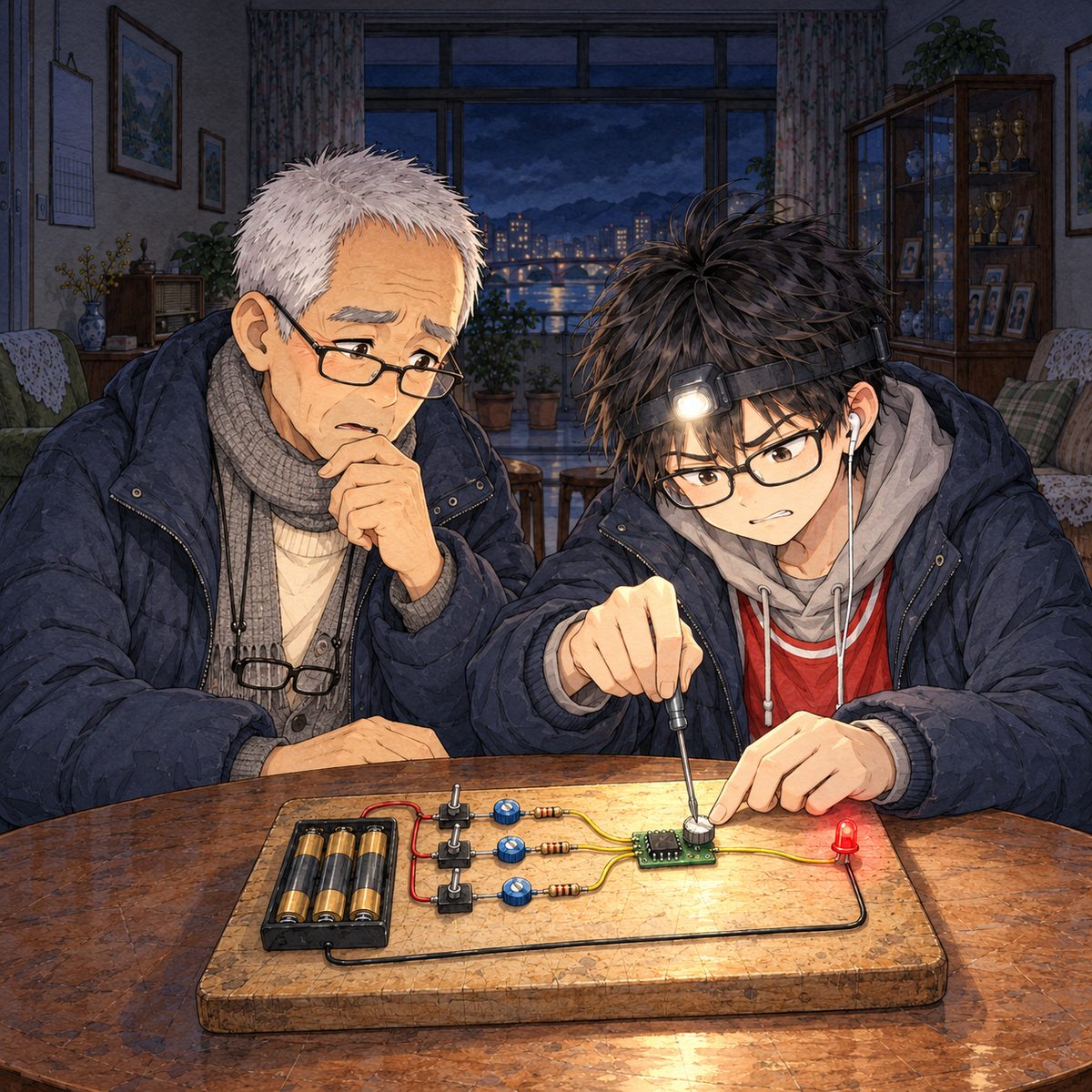
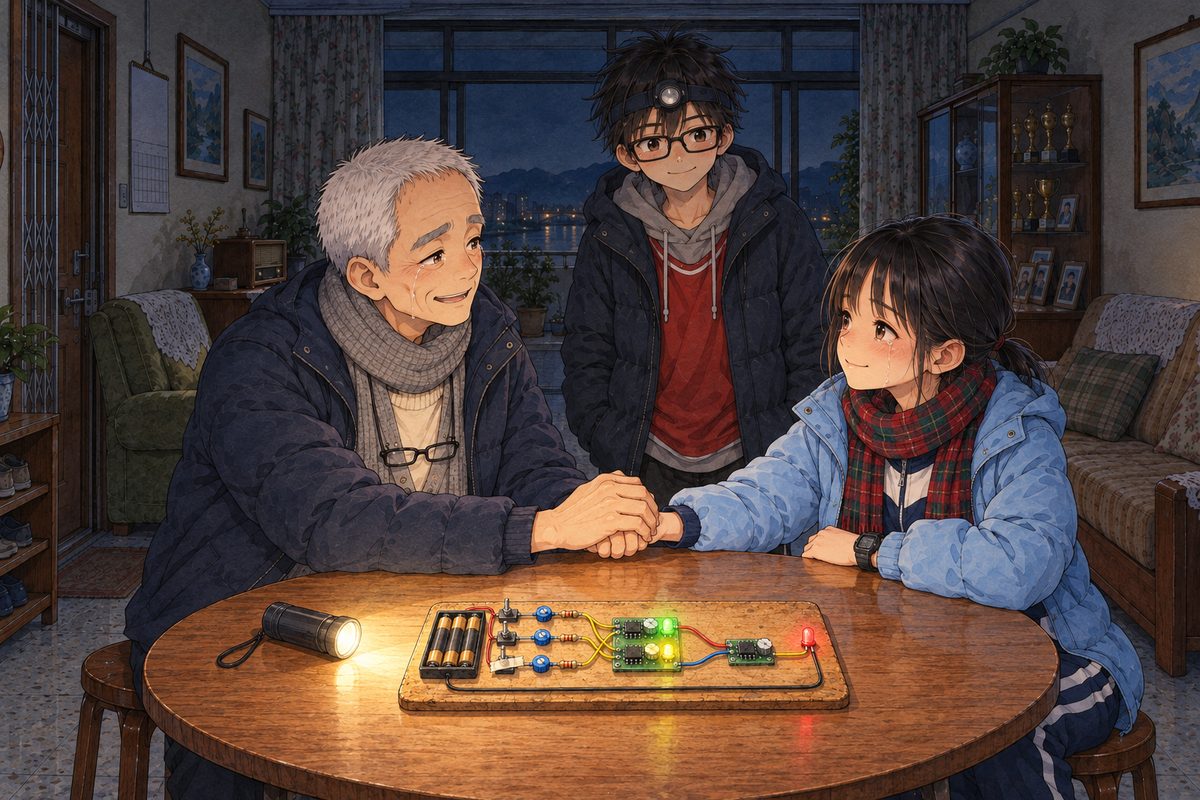
On page 10 Grandpa turns the white knob a little each time the light gets it wrong. That is how Frank Rosenblatt's perceptron learned in 1958. It moved only the knobs of the switches that were on, and only after a wrong answer. Rosenblatt later built it as a real machine, with an eye made of light sensors and small motors to turn its knobs.
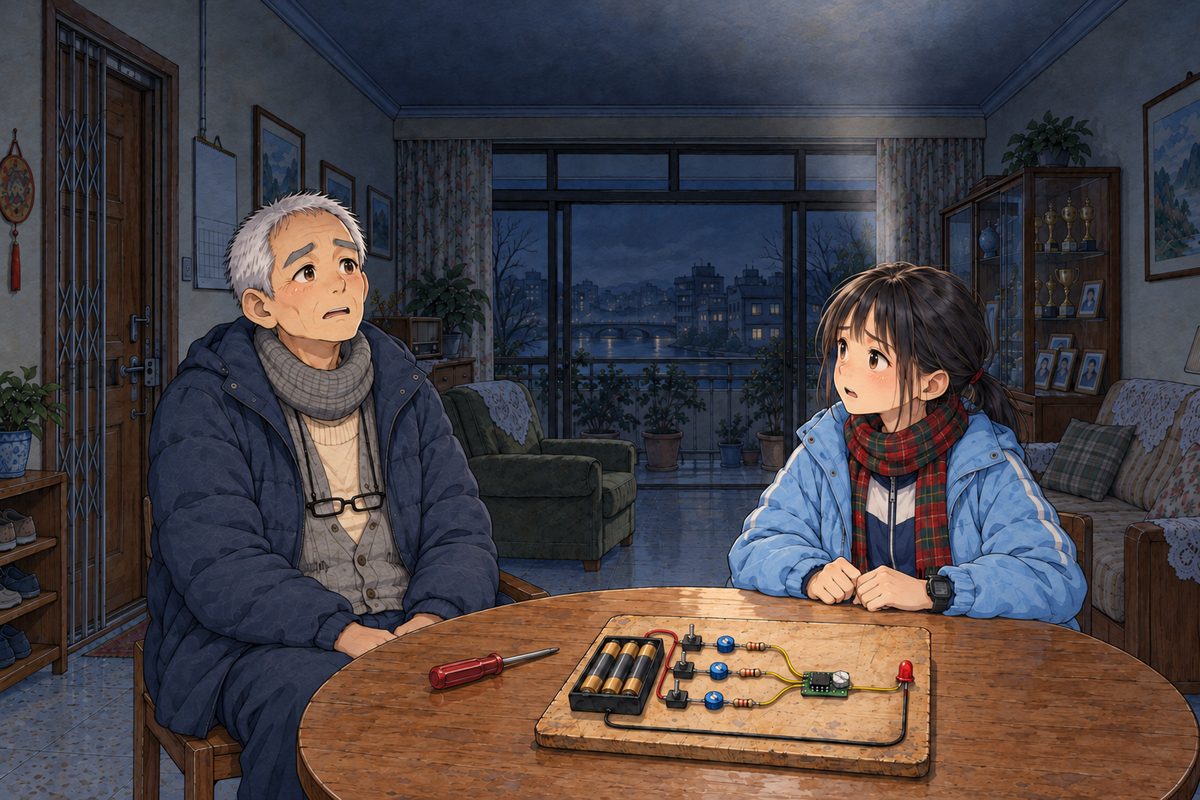
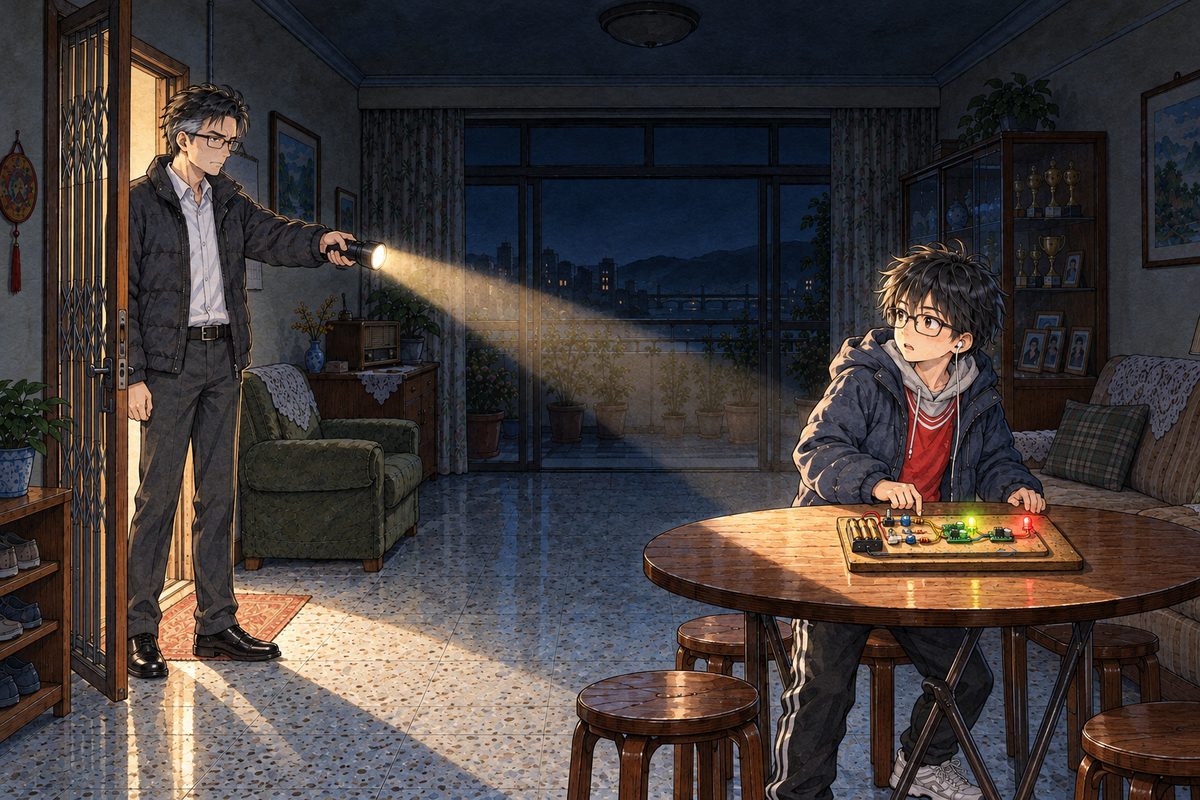
On page 11 Grandpa asks for the stair light. One switch downstairs, one upstairs, and either one changes the light. Engineers call this rule XOR. It is the simplest rule one neuron can never learn, however its knobs are set.
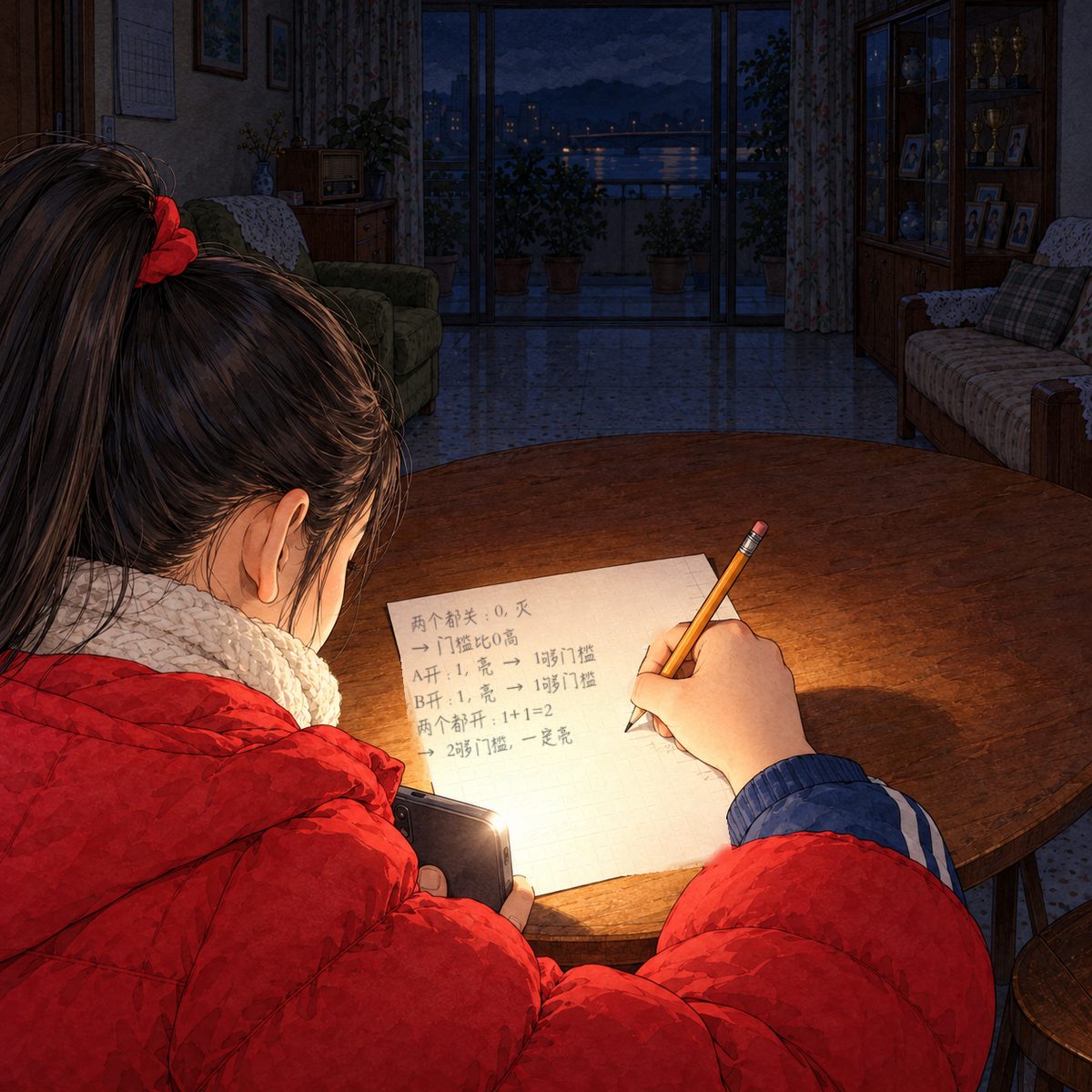
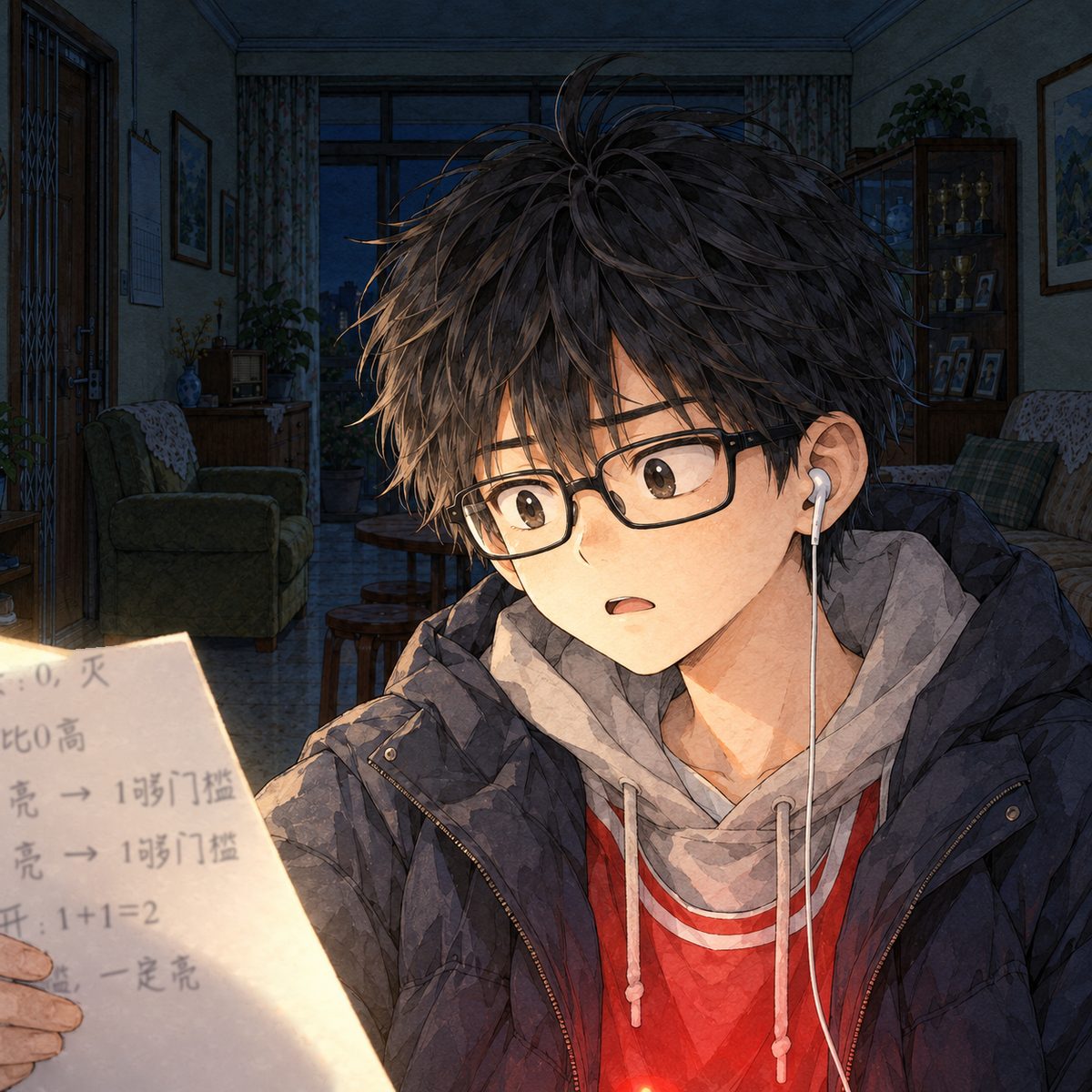
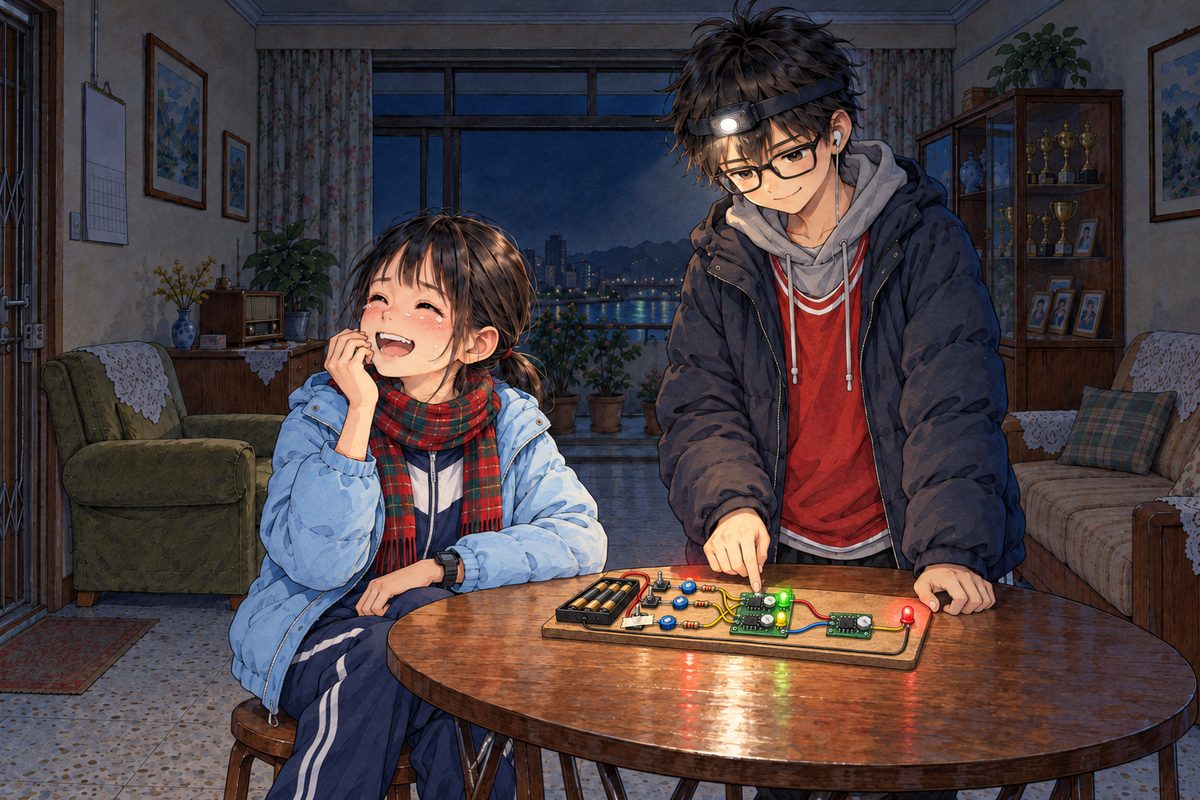
On page 12 Lili shows why without a single number. With both switches off the light is dark, so the bar is above nothing. Either switch alone lights it, so each one reaches the bar by itself. Then both together reach it too, and the light comes on just when it should stay off. The picture on page 13 says it another way. One neuron can draw only one straight line, and the stair light's two lit corners sit across from each other.
In 1969 Marvin Minsky and Seymour Papert proved this in a book called Perceptrons. Many people gave up on boards like Haoran's for years, and the book is often blamed for that. It is not quite fair. Minsky and Papert knew a second layer could make the stair light. What nobody knew yet was how a machine could set the knobs in that hidden layer by itself. That is Chapter 5.
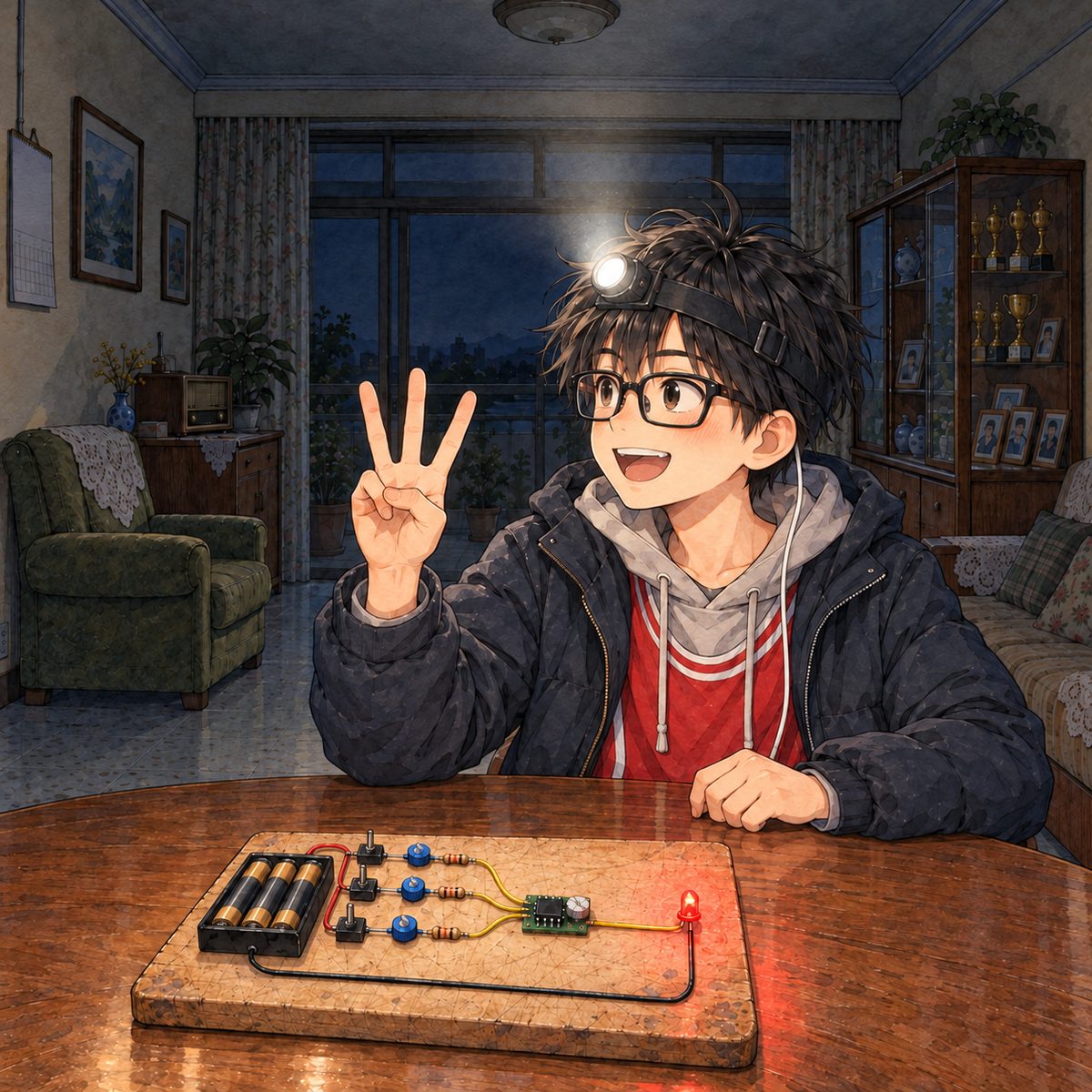
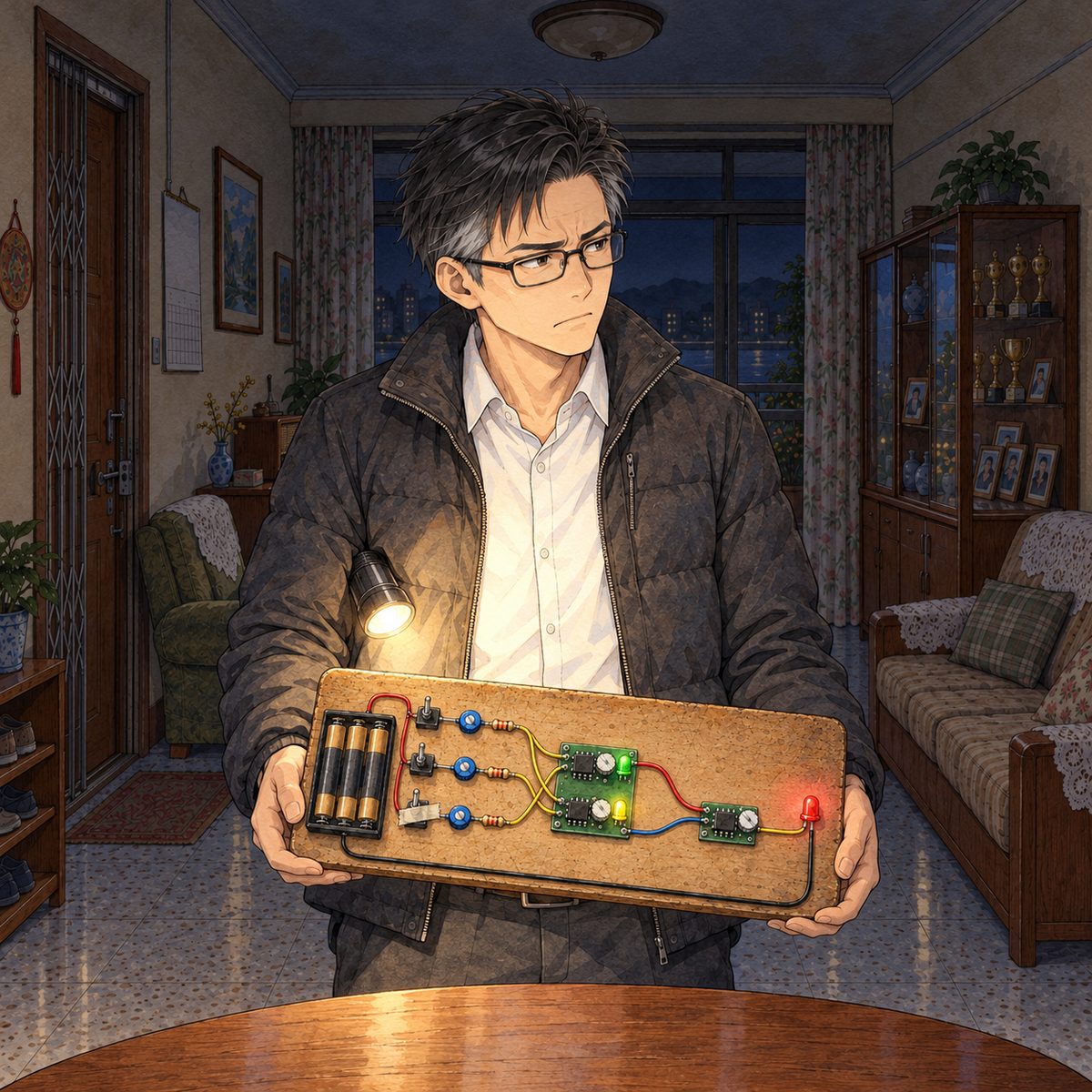
On page 17 the stair light works. Green and yellow look at the switches and tell red something new, "someone is on" and "both are on". From there red needs only one straight line. That is all a hidden layer does, and it is the smallest picture of deep learning there is.
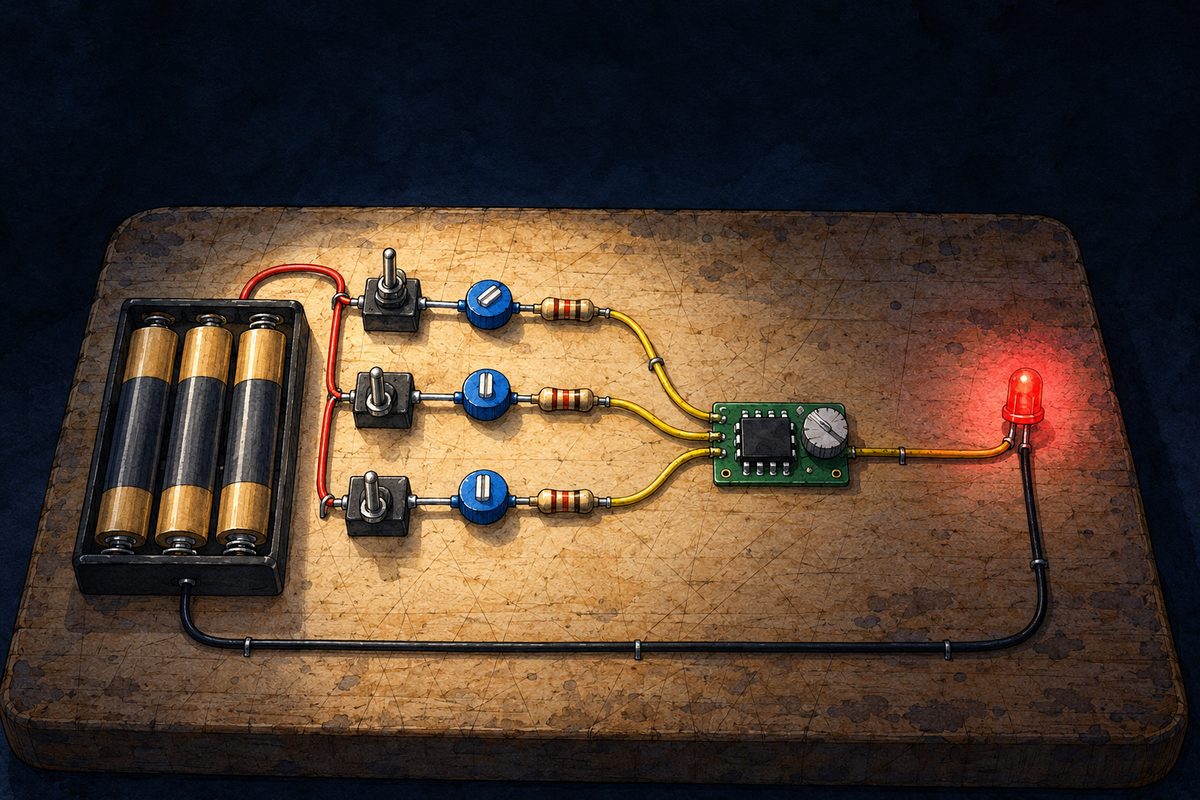
A human brain has about 86 billion neurons. Each one hears from thousands of others and fires when enough of them speak at once. Haoran's board borrows only three ideas from this. There are many inputs, each has its own strength, and the total has to cross a bar.
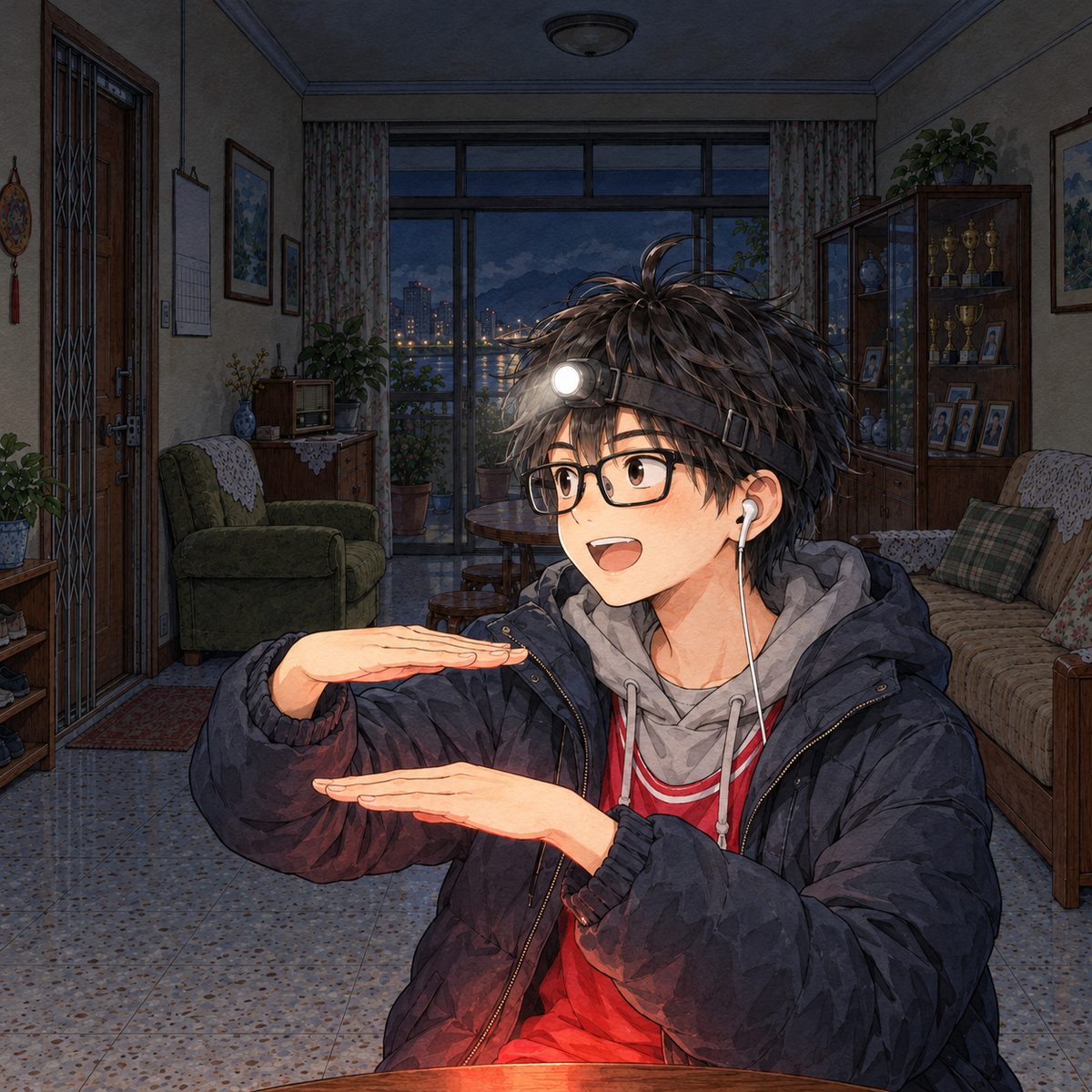
A real neuron is far richer. In 2021 three scientists in Jerusalem trained a computer network to copy a detailed model of one brain cell, and it needed seven layers to do it. That is what Haoran means on page 18. Whether the brain learns anything like the way these networks learn is still an open question.
In 1943 Warren McCulloch and Walter Pitts wrote down the first neuron in maths. Inputs of 0 or 1 are added up, and the neuron says 1 when the sum reaches the bar. Wired together, such neurons can work out any yes-or-no rule. But their wires were fixed. They could not learn.
A weight says how much one input counts, and a negative weight is a vote against. With both weights at 1, a bar of 2 gives "and" and a bar of 1 gives "or". Textbooks often write 1.5 and 0.5, and the light behaves just the same.
Xiaoyu's two steps use exactly these. Green is "or", with a bar of 1. Yellow is "and", with a bar of 2. Red counts green at +1 and yellow at −1, with a bar of 1, so it lights only when green says yes and yellow says no.
Rosenblatt's perceptron first ran as a program, and around 1960 it became a real machine, the Mark I Perceptron. Its rule came with a promise. If any setting of the knobs gets every example right, the perceptron will find one. Albert Novikoff proved this in 1962.
One hidden layer, if it is wide enough, can copy almost any sensible rule. George Cybenko proved this in 1989, and Kurt Hornik and his colleagues proved it another way the same year. Some rules, though, need far fewer neurons when the network is deep. In networks that look at pictures, the early layers find edges, the middle layers find shapes, and the later layers find parts and then whole things.
Bridge City, Xiaoyu, Grandpa Chen, Haoran, his father, Lili, the power cut, the maths test and the board. A real board like Haoran's would use a small comparator chip for each neuron, with a trimmer knob for each weight and one for the bar. The drawing keeps only what a reader needs to follow the wires. Grandpa's illness is not drawn from any real person, and the story makes no medical claim.
Yingying Fu created this manga. She chose the story and its people, directed every page, and edited every word and picture. The words were drafted with Claude, an AI by Anthropic. The pictures are made with AI image generation, painted panel by panel from her direction and checked and corrected by hand.
这一章有些道理留给了画面,好让那几个黑夜静一点。这里用文字再讲一遍。
第十页,灯一错,外公就把白旋钮拧一点。一九五八年,罗森布拉特的“感知机”就是这么学的。它只在答错以后才动手,也只动开着的那几个开关的旋钮。后来罗森布拉特真把它造成了机器,眼睛是一排感光元件,旋钮靠小马达来转。
第十一页,外公要的是楼梯灯。楼下一个开关,楼上一个开关,随便扳哪个,灯都跟着变。工程师管这叫“异或”。一个神经元,旋钮怎么拧都学不会它,这是它学不会的规则里最简单的一条。
第十二页,丽丽一个数也没用,就把道理讲透了。两个开关都关,灯不亮,说明门槛比零高。随便开一个灯就亮,说明每个开关单独都够得着门槛。那两个一起开,更够得着,灯非亮不可,可楼梯灯这时偏偏该灭。第十三页的图换了个说法。一个神经元只能画一条直线,楼梯灯亮的两个角却斜对着,一条线分不开。
一九六九年,明斯基和佩珀特写了一本书,叫《感知机》,把这件事证明了。好多人从此多年不碰浩然这样的板子,这本书也常被说成罪魁祸首。这么说不太公平。他们知道,加一层就做得出楼梯灯。那时谁也不知道的,是机器怎么自己去拧中间那一层的旋钮。这个,第五章再讲。
第十七页,楼梯灯成了。中间的绿灯和黄灯先看开关,再换个说法告诉红灯,“有人开了”,“两个都开了”。到了红灯这儿,一条直线就够了。隐藏层干的就是这件事,这也是深度学习最小的样子。
人的大脑里大约有八百六十亿个神经元。每一个都连着成千上万个别的神经元,同时收到的信号一多,它就放电。浩然的板子只借了三样东西。输入有好多个,每个输入分量不同,加起来过了门槛才亮。
真的神经元要复杂得多。二〇二一年,耶路撒冷的三位科学家训练一个电脑网络,去模仿一个脑细胞的精细模型,结果要七层才学得像。浩然在第十八页说的就是这个。大脑学东西的办法跟这些网络像不像,到今天还没有定论。
一九四三年,麦卡洛克和皮茨头一回用数学写出了神经元。输入是0或1,加起来够到门槛,就输出1。这样的神经元连起来,什么“是或否”的规则都算得出。可它们的线是焊死的,不会学。
权重就是一个输入占多少分量,负的权重等于投反对票。两个权重都是1,门槛定成2,就是“与”。门槛定成1,就是“或”。课本上常写1.5和0.5,灯亮灯灭完全一样。
小雨的两步,用的正是这些数。绿灯是“或”,门槛1。黄灯是“与”,门槛2。红灯听绿灯算+1,听黄灯算−1,门槛是1,所以只有绿灯说是、黄灯说不是,它才亮。
罗森布拉特的感知机,起先是电脑上的一个程序,一九六〇年前后造成了真机器,叫“马克一号感知机”。它的学法还附带一个保证。只要旋钮有一种拧法能把所有例子都做对,它就一定找得到。一九六二年,诺维科夫证明了这一点。
理论上,一个隐藏层只要够宽,差不多什么合理的规则都模仿得出来。一九八九年赛本科证明了这一点,同一年霍尼克和同事换了个办法也证明了。可有些规则,网络深一点,用的神经元就少得多。看图的网络里,前几层找边,中间几层找形状,后面几层先认出零件,再认出整个东西。
桥城、小雨、陈外公、浩然和他爸爸、丽丽,还有那次停电、那场数学考试和那块板子,都是编的。真要做浩然那样的板子,每个神经元得用一个小比较器芯片,每个权重和门槛各配一个微调旋钮。画里只留了跟着电线看得懂的那部分。外公的病不是照着哪个真人写的,故事也不作任何医学上的判断。
这本漫画由 Yingying Fu 创作。故事和人物由她决定,每一页由她导演,每一句话、每一幅画由她修改。文字是和 Anthropic 的人工智能 Claude 一起起草的。画面由人工智能生成,按她的要求一格一格地画,再逐张检查、修正。
© 2026 Yingying Fu. All rights reserved.© 2026 傅颖盈。保留所有权利。