The ideas, a little slower
The park, the night and the recordings are in the pictures. Here are the ideas in words.
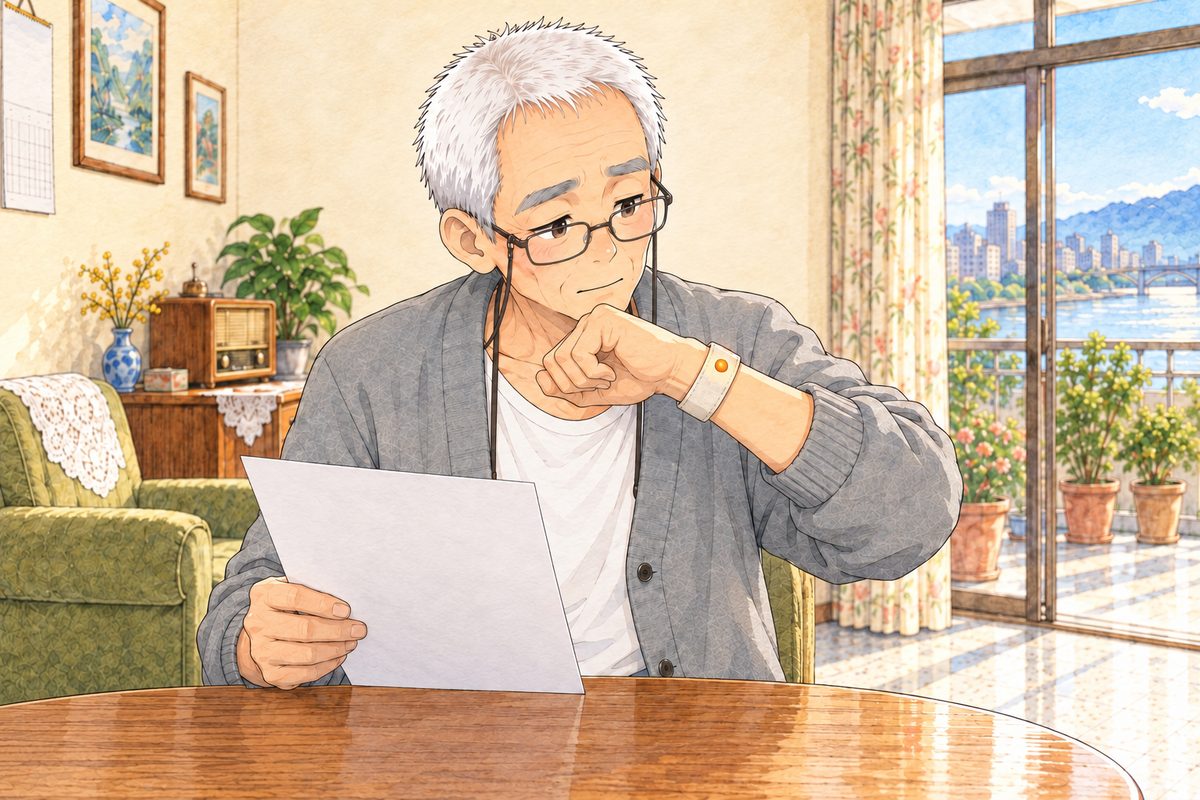
On pages 1 and 5 Willow cannot hear Grandpa, and Teo says why. A machine that learns from examples copies the patterns in them. If the examples are lopsided, so are the patterns, and an unfair world can be repeated at great scale with the look of neutral arithmetic. Researchers describe four ways bias gets in. It can come in through who is in the data, through how the data is labelled, through what the goal measures, and through how the system is used. A speech recogniser learns from recordings paired with what was said. Whisper, for example, learned from 680,000 hours of audio with transcripts gathered from the web (Radford and colleagues, 2022). The research gives one plain example, a voice assistant trained mostly on grown-up speech that struggles with a four-year-old. The story's Bridge City dialect, and Willow's trouble with it, are made up to show this pattern. The research does not report a study of Chinese dialects or of older speakers.
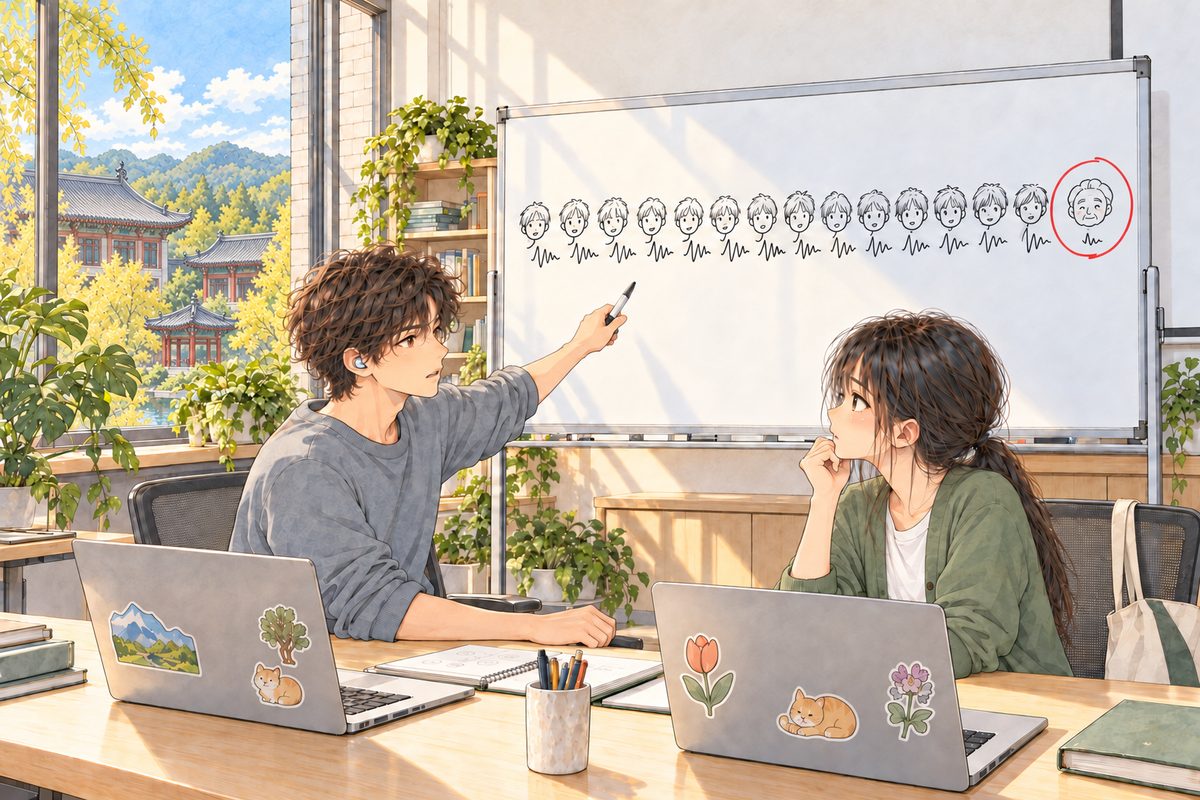
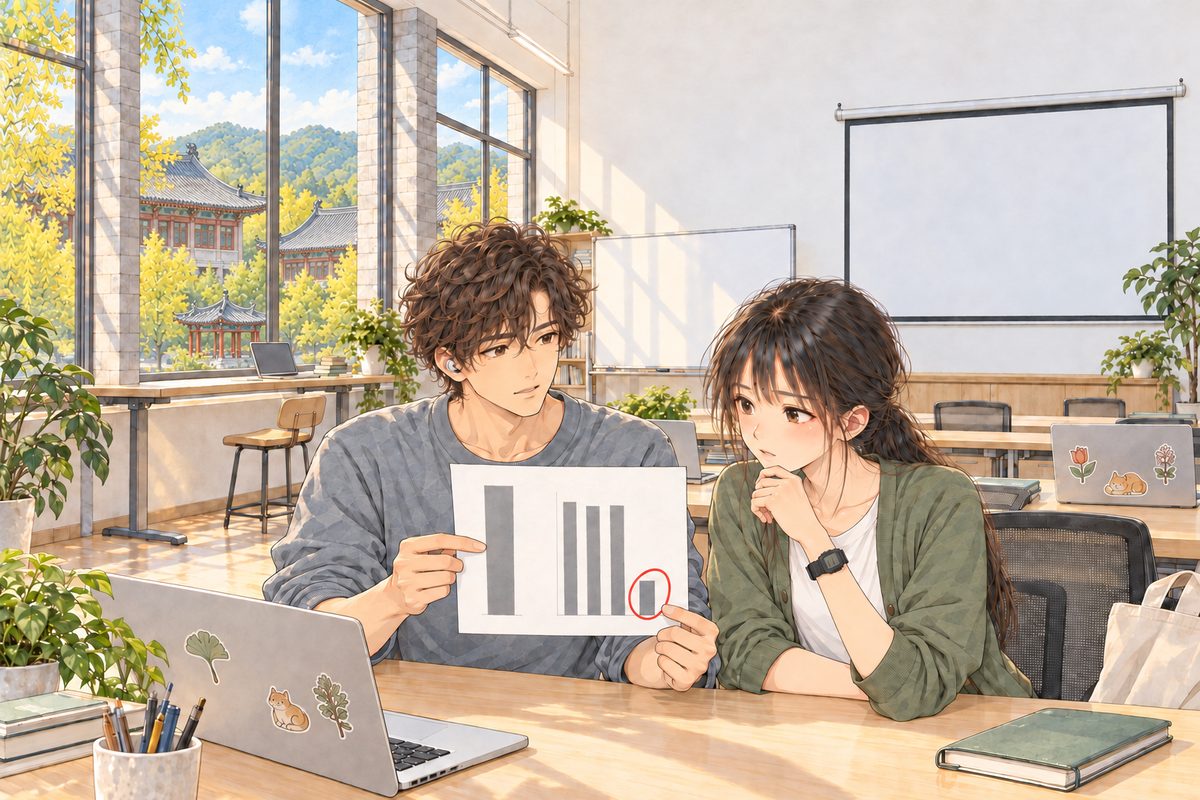
On page 10 the team asks who the other four are. This is the idea of the chapter. In 2018 Joy Buolamwini and Timnit Gebru built a test set of photos of parliament members, balanced by sex and by skin type, and tested three commercial programs that guess a person's sex from a face (from IBM, Microsoft and Face++). All three did best on lighter-skinned men and worst on darker-skinned women. The worst error on darker-skinned women was 34.7 percent, against at most 0.8 percent on lighter-skinned men. The main reason was that the common training and test sets were mostly lighter-skinned faces. A good overall score had hidden it. That is Xiaoyu's question, "who are the other four?", and her move is to count each group on its own.
On page 15 the hospital program counts the wrong thing. In 2019 Ziad Obermeyer and colleagues studied a widely used American program that chose patients for extra care. It used past health spending as a stand-in for need. Less had been spent on Black patients with the same illness, so the program judged them healthier than they were. When the researchers built a version that predicted health more directly, the share of Black patients flagged for extra help rose from 17.7 to 46.5 percent. The program predicted cost correctly. Cost was the wrong thing to predict. The link to the story is that Lantern counted the requests Willow understood, and a person who had given up, like Auntie Zhang, made no requests to count. In 2018 Reuters also reported that an experimental hiring tool at Amazon, trained on ten years of mostly men's CVs, marked down CVs that contained the word "women's" (Dastin, 2018).
On page 17 a public test works. In 2019 Inioluwa Deborah Raji and Joy Buolamwini tested the same companies again after Gender Shades came out, and every audited company had reduced its gap within months. The US National Institute of Standards and Technology ran a much larger study the same year (Grother, Ngan and Hanaoka, 2019). It also found differences between demographic groups for many face recognition programs, and much smaller ones for the most accurate programs.
On page 18 the answer is to report it by group. Margaret Mitchell and colleagues proposed model cards in 2019, short reports of how a model performs for different groups of people and what it should not be used for. Timnit Gebru and colleagues proposed datasheets for datasets in 2021, a record of how a dataset was made, by whom and for what. There are other responses too. People audit and red-team systems, rebalance data or adjust thresholds (each of which builds in a choice), write laws, and keep a person responsible for important decisions. The summary from the experts is that bias cannot be removed once and for all, but it can be measured, reduced and kept visible.
One last sentence for families. If a voice assistant often fails to understand someone you love, the gap is the machine's, not theirs. Tell the maker, and always keep a way to call a person for help that does not depend on being understood by a machine.
What is true here
Fair, but which fair?
In 2016 Julia Angwin and colleagues at ProPublica reported that a score used in American courts to predict who would be arrested again, COMPAS, made different kinds of mistakes for Black and white defendants, and the company that made it replied with a different measure of fairness. The same year Jon Kleinberg, Sendhil Mullainathan and Manish Raghavan, and in 2017 Alexandra Chouldechova, proved that when two groups have different base rates, a score cannot satisfy several natural definitions of fairness at once, except in unrealistic cases. So fairness is a choice about which errors matter most, and that choice is about values, not only maths.
Words carry it too
In 2016 Tolga Bolukbasi and colleagues showed that word embeddings had learned "man is to computer programmer as woman is to homemaker", and later work found that the bias stayed hidden in other directions even after the obvious one was removed. In 2017 Aylin Caliskan, Joanna Bryson and Arvind Narayanan found that word embeddings reproduce human implicit associations. In 2023 Federico Bianchi and colleagues found that image generators drew mostly light-skinned men for "a software developer", and that asking for the opposite did not reliably fix it.
The law, as of 2026
The European Union's AI Act (Regulation 2024/1689) treats systems used in hiring, education, credit and policing as high-risk. As of October 2026 a 2026 amending regulation had postponed the main high-risk duties to 2 December 2027 for stand-alone systems and to 2 August 2028 for systems built into regulated products.
SourcesBuolamwini and Gebru (2018), Gender shades.Raji and Buolamwini (2019), Actionable auditing.Grother, Ngan and Hanaoka (2019), FRVT Part 3, Demographic effects (NISTIR 8280).Obermeyer, Powers, Vogeli and Mullainathan (2019), Dissecting racial bias in an algorithm used to manage the health of populations.Dastin (2018), Amazon scraps secret AI recruiting tool that showed bias against women, Reuters.Angwin, Larson, Mattu and Kirchner (2016), Machine bias, ProPublica.Kleinberg, Mullainathan and Raghavan (2016), Inherent trade-offs in the fair determination of risk scores.Chouldechova (2017), Fair prediction with disparate impact.Bolukbasi and colleagues (2016), Man is to computer programmer as woman is to homemaker?Caliskan, Bryson and Narayanan (2017), Semantics derived automatically from language corpora contain human-like biases.Bianchi and colleagues (2023), Easily accessible text-to-image generation amplifies demographic stereotypes at large scale.Mitchell and colleagues (2019), Model cards for model reporting.Gebru and colleagues (2021), Datasheets for datasets.Radford and colleagues (2022), Robust speech recognition via large-scale weak supervision (Whisper).European Union (2024), Regulation (EU) 2024/1689; European Union (2026), Regulation (EU) 2026/1744.
What is pretend
Bridge City, its dialect and everyone in it are made up. So is the whole world of 2037, with its garden towers and solar boats. Willow, its voice service, its night music and every word it says are made up, and so are the night phone line and its closing. Lantern, its "ninety-six in a hundred", its pause and its promise to understand Bridge City dialect by spring are made up. The home test, Mr Sun's night (no illness is meant), the hundred speakers, the thousand sentences and every result on the laptop screen are made up too. So are Lili's radio programme, the conference in San Francisco, Ms Ye, Mrs Bai, Mira, Professor Lin's lab and Teo. The research has measured this same pattern with faces, words, images and health and hiring programs, and the studies named in the boxes are real. It does not report a study of Chinese dialects, and the story's numbers about them are invented to show the pattern. The story is set a few years from now and imagines a hopeful future. Grandpa's memory is drawn from no one in particular, and the story makes no medical claim.
Who made this
Yingying Fu created this manga. She chose the story and its people, directed every page, and edited every word and picture. The words were drafted with Claude, an AI by Anthropic. The pictures are made with AI image generation, painted panel by panel from her direction and checked and corrected by hand.
 Chapter 1第一章What Counts as Clever什么才算聪明
 Chapter 2第二章Before the Machines机器之前
 Chapter 3第三章Rules and Habits规则和习惯
 Chapter 4第四章One Little Neuron一个小小的神经元
 Chapter 5第五章Learning from Mistakes从错误里学
 Chapter 6第六章Everything Is Numbers一切都是数字
 Chapter 7第七章Learning to See老吴
 Chapter 8第八章The Next Word下一个字
 Chapter 9第九章Attention注意力
 Chapter 10第十章The Helper助手
 Chapter 11第十一章A Voice from Tape磁带里的声音
 Chapter 12第十二章Learning by Playing边玩边学
 Chapter 13第十三章Confidently Wrong错得理直气壮
 Chapter 14第十四章Not Everyone Is Heard没被听见的人Reading now正在读
 Chapter 15第十五章Whose Voice?谁的声音?