The ideas, a little slower
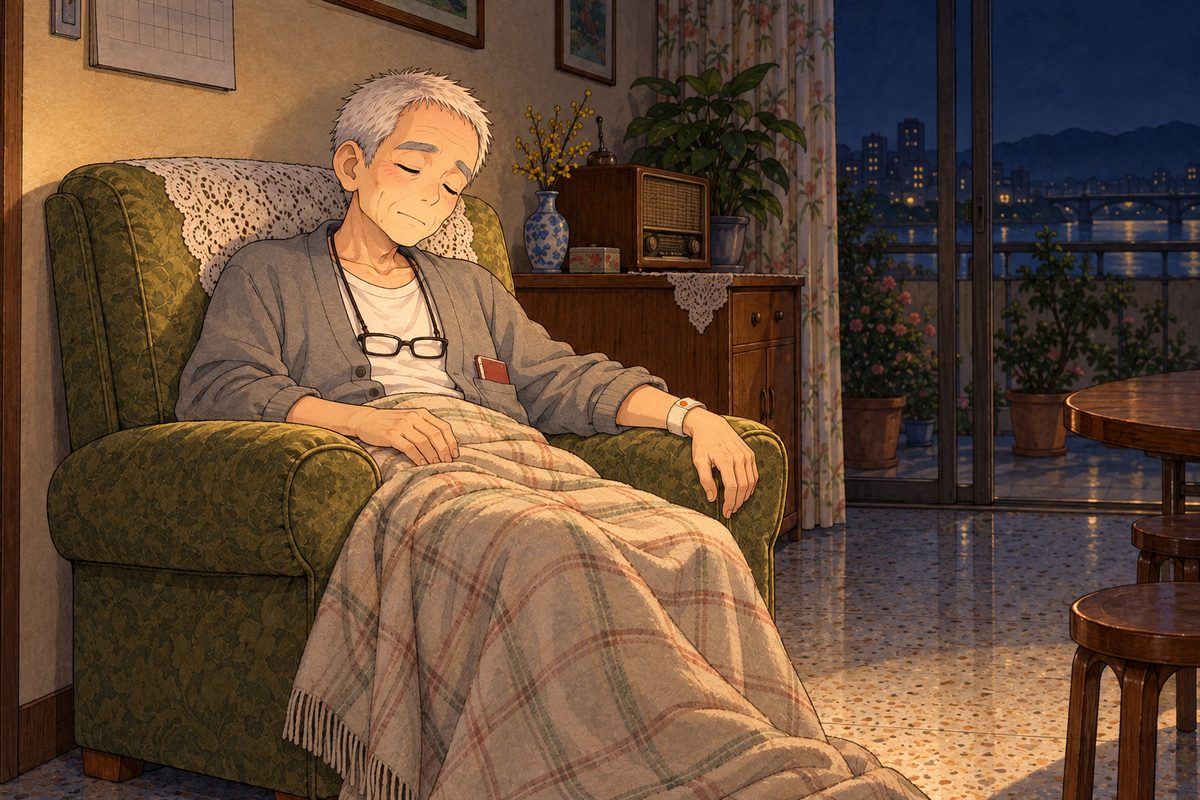
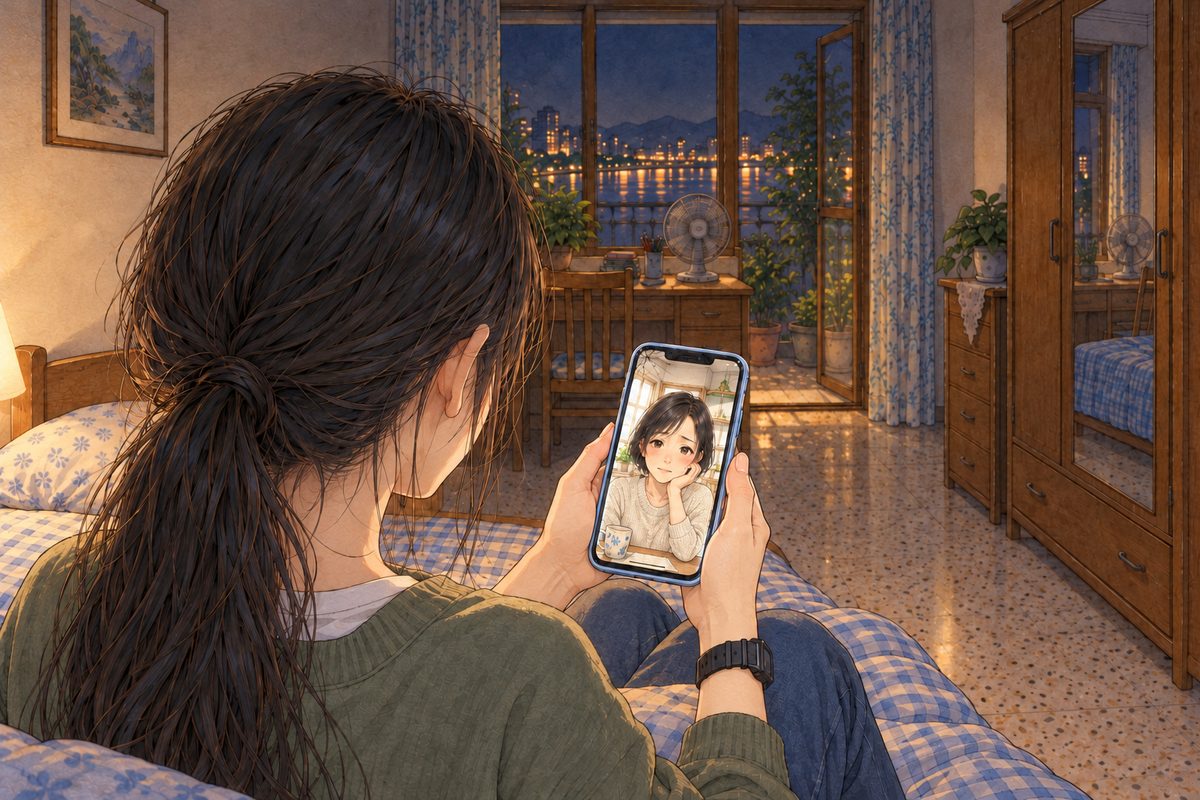
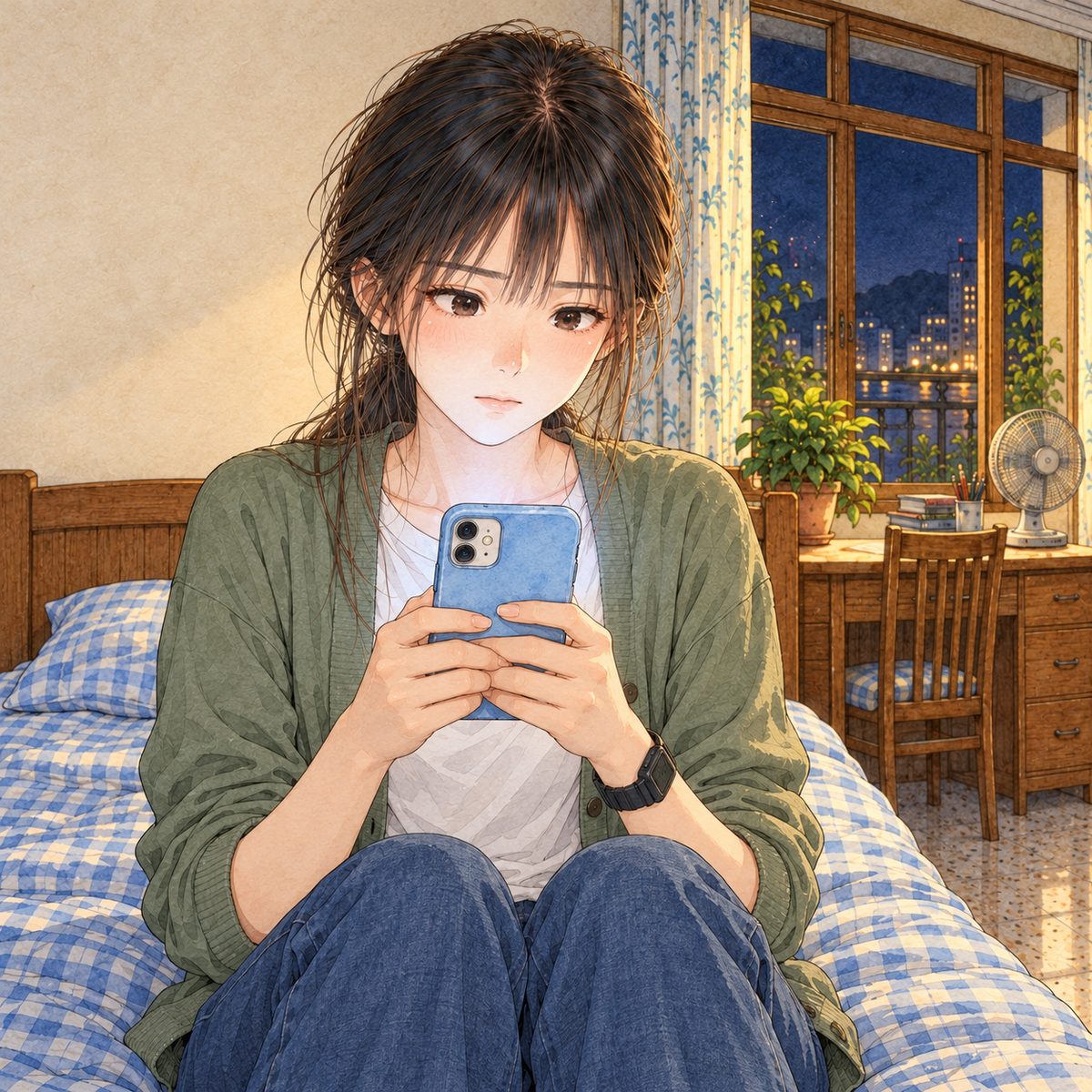
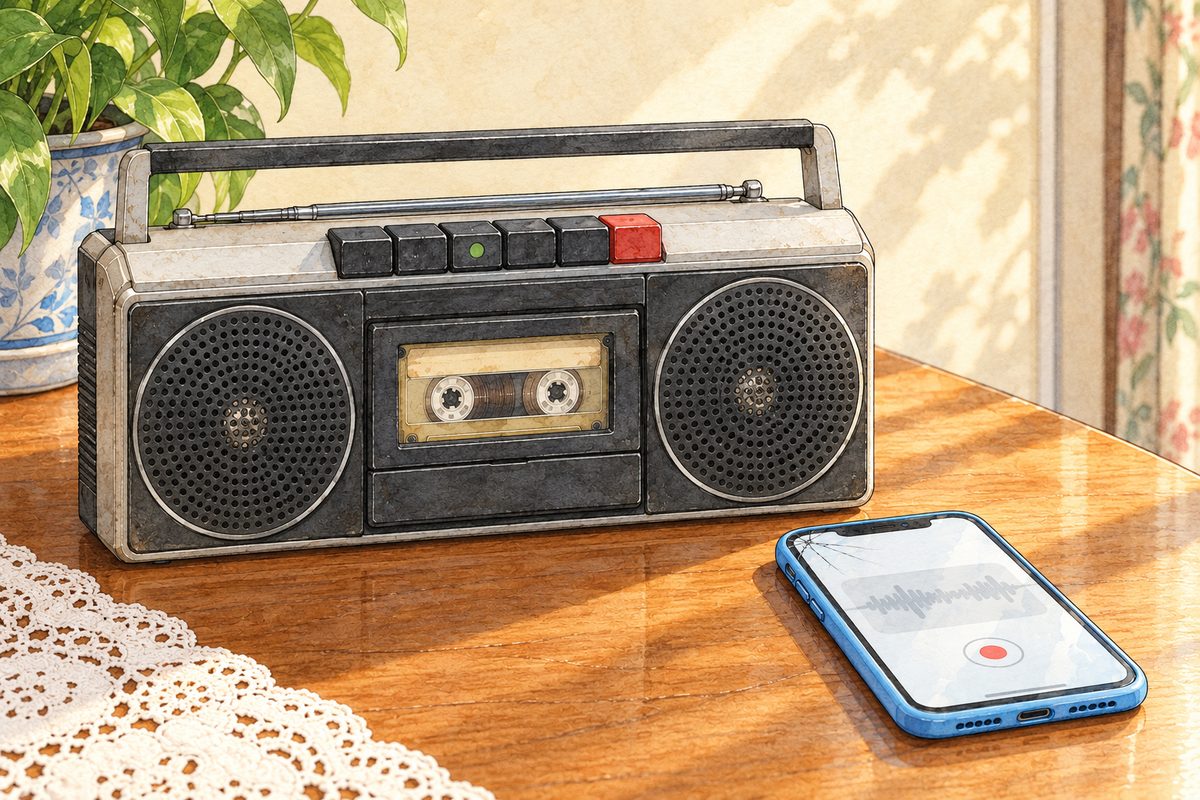
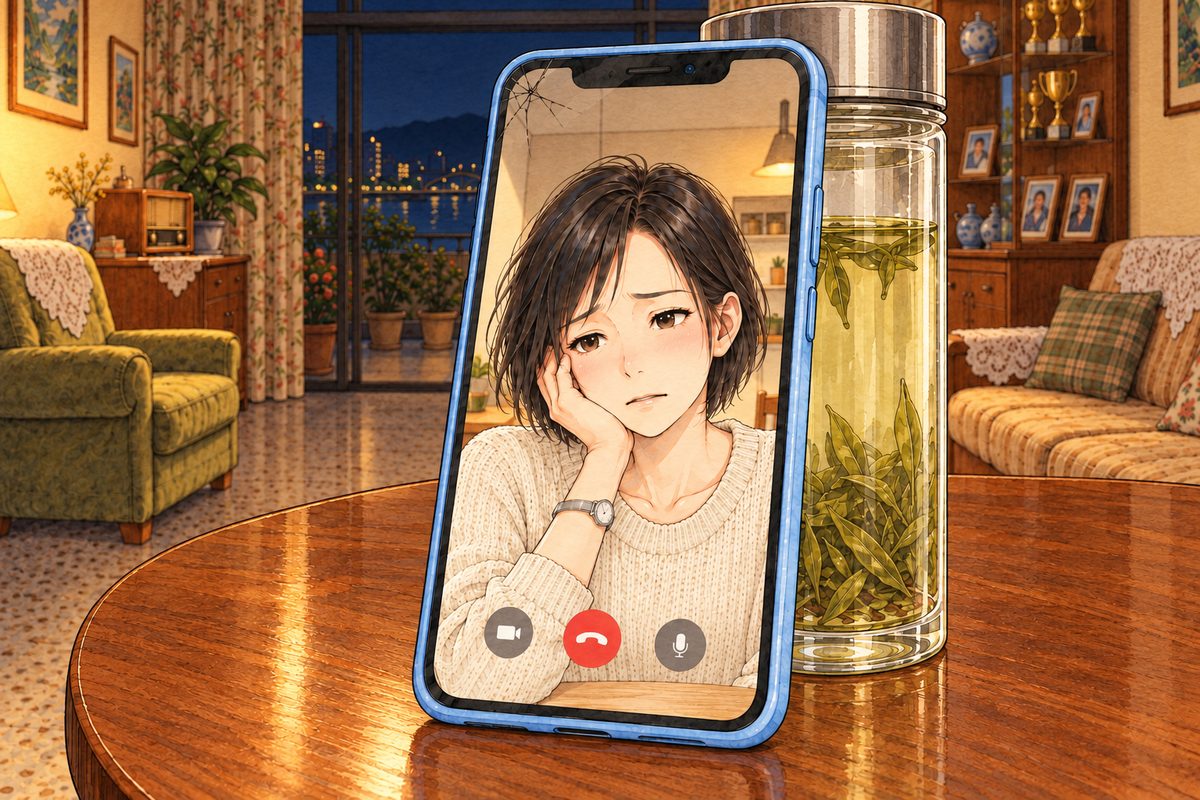
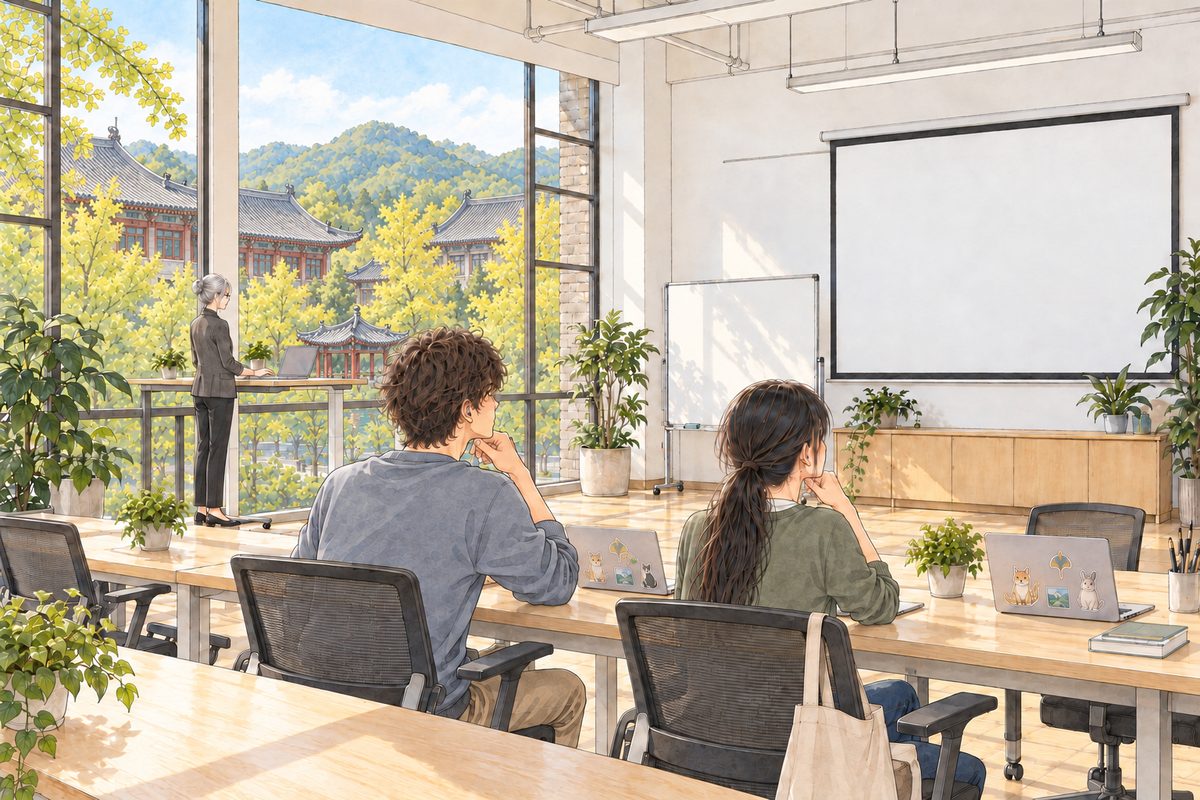
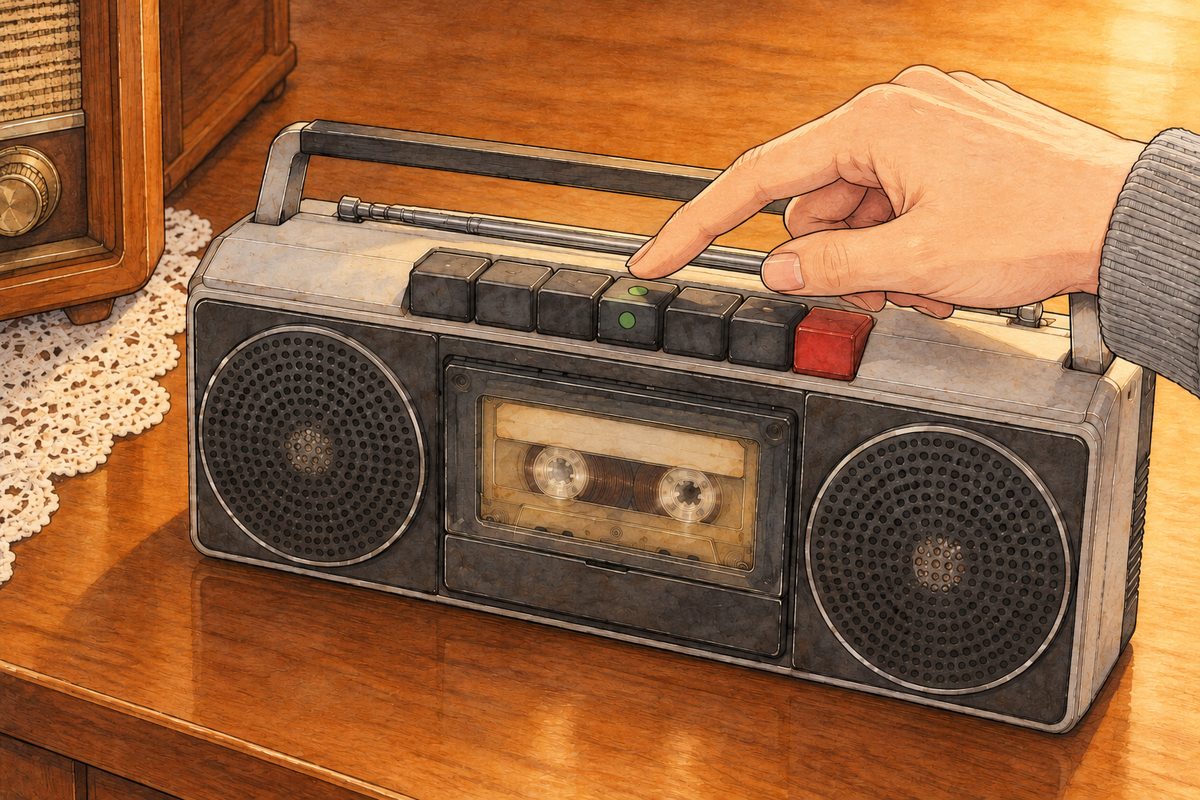
The lake, the tapes and the pavilion are in the pictures. Here are the ideas in words.
On pages 1 and 5 Lantern's advert sings in a voice made from somebody who was never asked, and Teo says where such voices come from. Large models learn from enormous collections of text, images, audio and video, much of it gathered from the public internet. Did the people who made all that agree to it? Much of the data was collected without asking. As of 2026 whether that is lawful is contested in courts and parliaments in several countries, and different places are reaching different answers. The ethical point is simpler. Many people did not know, and many feel it should have been their choice. As of 2026 speech systems can also imitate a particular voice from a short recording. That is why the question from Chapter 11, "Did she agree?", matters so much. Meilan could not be asked, and in the story Grandpa answered for her.
On page 10 Teo says the program memorised Grandpa's song. Models mostly learn general patterns, but they can also memorise specific pieces of their training data, and this is more likely for things that are unusual or that appear many times. In 2021 Nicholas Carlini and colleagues extracted hundreds of word-for-word passages from GPT-2, including names, phone numbers and email addresses that had appeared on the web. In 2023 Milad Nasr and colleagues got a production chat assistant to reproduce training text by asking it to repeat a single word forever. These studies are about text. A voice program memorising one family's song is the story's way of showing the same idea. Grandpa's song works as the clue because it is unusual and exists nowhere else.
On page 12 Haoran finds that Willow kept what old people said to it at night. Conversations with chat assistants and recordings from voice assistants may be stored, heard by people who work to improve the system, or used for further training, depending on the company and the settings. In 2023 the US Federal Trade Commission and Department of Justice reached a 25 million dollar settlement with Amazon over allegations that it kept children's Alexa recordings longer than allowed and undermined parents' requests to delete them. Italy's data protection authority also blocked ChatGPT for a month in 2023 over data-protection concerns, and it was allowed back on 28 April after changes.
On page 14 Mira says that teaching Willow again would take a mountain of electricity. AI runs on computers in data centres, and computers use electricity and often water for cooling. Patterson and colleagues estimated in 2021 that training GPT-3 used about 1,287 megawatt-hours and emitted about 552 tonnes of carbon dioxide equivalent. They also stressed that the hardware, the data centre and its location could change the emissions by a factor of 100 to 1,000. The open model BLOOM, trained in France on a largely nuclear-powered grid, was estimated at about 24.7 tonnes for the training energy alone, or about 50.5 tonnes counting the equipment and other overheads (Luccioni, Viguier and Ligozat, 2023). An early, widely quoted paper by Strubell and colleagues (2019) first raised the issue, but its largest figure was later argued to be a big overestimate and should not be quoted as typical. Using a model costs energy too, and it happens billions of times. Generating images takes far more energy than classifying text (Luccioni, Jernite and Strubell, 2024). In 2025 Google reported that its median Gemini text prompt used about 0.24 watt-hours of energy, 0.03 grams of carbon dioxide equivalent and 0.26 millilitres of water. That is less than watching television for nine seconds, but it is a company figure that has not been independently audited, and it leaves out training. For the whole sector, the International Energy Agency estimated that data centres used about 415 terawatt-hours in 2024, about 1.5 percent of the world's electricity, and projected about 945 terawatt-hours by 2030 in its base case. In the United States, the Lawrence Berkeley National Laboratory estimated 176 terawatt-hours, or 4.4 percent, in 2023, and roughly 6.7 to 12 percent by 2028. Li and colleagues estimated that training GPT-3 in Microsoft's US data centres may have evaporated around 700,000 litres of fresh water, a model-based estimate rather than a measurement. So the honest reading is balanced. One question uses very little. The worry is scale, and where the power and water come from. AI may also help, for example with weather forecasts and managing the power grid. The cheap clean power of Bridge City in 2038 is imagined.
On page 18 Teo names a second harm of fakes. In 2019 Robert Chesney and Danielle Citron called it the liar's dividend. When everyone knows that fakes are possible, a person caught on a real recording can say it is fake. Real cases exist now. In January 2024 voters in New Hampshire got robocalls with an AI imitation of President Biden's voice, and the Federal Communications Commission later fined the consultant responsible 6 million dollars. Chapter 11 told the Arup case. The responses are content credentials such as the C2PA standard, invisible watermarks, detection tools that work imperfectly and can be fooled, and law. The European Union's AI Act (Article 50) requires that people be told when they are talking to an AI and that certain AI-generated content be marked, from 2 August 2026. Haoran's promise on page 17, to say whenever a voice is made by a machine, is this idea. The oldest defence still matters most. Check where a recording came from.
One last sentence for families. A voice assistant is not a secret-keeper, so keep names, addresses and private things for people you trust, look at its settings and delete old recordings, ask before you record or copy anyone's voice, and keep a family password for urgent calls, as Xiaoyu and Mama did in Chapter 11.
What is true here
Children's data in law
In the United States the Children's Online Privacy Protection Act requires a parent's consent before online services collect personal information from children under 13. In the European Union, Article 8 of the General Data Protection Regulation sets an age, between 13 and 16 depending on the country, below which a parent must consent for certain online services. UNICEF's guidance on AI and children names data protection and privacy as a core requirement. In September 2025 the US Federal Trade Commission used its study powers to require seven companies that offer AI companion chatbots (Alphabet, Character.AI, Instagram, Meta, OpenAI, Snap and xAI) to report how they test for harms to children and teenagers and how they handle children's data.
Ways to share less
Differential privacy adds carefully measured randomness so that results do not reveal any one person's data (Dwork and colleagues, 2006). Data minimisation means collecting only what is needed. Some assistants now run on the device instead of in the cloud. None of these is a complete answer. The most reliable protection for a family is still the simplest, which is not to share private things with a machine.
The worst fakes, as of 2026
The 2026 amendment to the EU AI Act adds a ban, from 2 December 2026, on AI systems that generate intimate images of real people without their consent, or sexual images of children.
SourcesCarlini and colleagues (2021), Extracting training data from large language models.Nasr and colleagues (2023), Scalable extraction of training data from (production) language models.Federal Trade Commission (2023), FTC and DOJ charge Amazon with violating children's privacy law by keeping kids' Alexa voice recordings forever and undermining parents' deletion requests.Garante per la protezione dei dati personali (2023), Artificial intelligence, stop to ChatGPT by the Italian SA.Federal Trade Commission (2025), FTC launches inquiry into AI chatbots acting as companions.UNICEF (2021), Policy Guidance on AI for Children; UNICEF (2025), Guidance on AI and Children.Dwork, McSherry, Nissim and Smith (2006), Calibrating noise to sensitivity in private data analysis.Strubell, Ganesh and McCallum (2019), Energy and policy considerations for deep learning in NLP.Patterson and colleagues (2021), Carbon emissions and large neural network training.Luccioni, Viguier and Ligozat (2023), Estimating the carbon footprint of BLOOM, a 176B parameter language model.Luccioni, Jernite and Strubell (2024), Power hungry processing.Elsworth and colleagues (2025), Measuring the environmental impact of delivering AI at Google scale.International Energy Agency (2025), Energy and AI.Shehabi and colleagues (2024), 2024 United States Data Center Energy Usage Report.Li, Yang, Islam and Ren (2025), Making AI less thirsty.Chesney and Citron (2019), Deep fakes, a looming challenge for privacy, democracy, and national security.Federal Communications Commission (2024), Forfeiture order on the New Hampshire robocalls.European Union (2024), Regulation (EU) 2024/1689; European Union (2026), Regulation (EU) 2026/1744.
What is pretend
Bridge City and everyone in it are made up. So is the whole world of 2038, with its garden towers, solar boats and cheap clean power. Lantern, Willow, its dialect launch, its advert, the tool that made the advert and its archive are made up, and so are the made voice in the advert and every word it says or sings. The dialect team, what it gathered, and Willow keeping night recordings and learning from them are made up too. So are Lantern's answers, Mira's agreement, Haoran's live talk, Lantern's promises, Willow's new night voice, and the lab in Zurich and its offer. Grandpa's song "The Moon on the Lake" and Meilan's tapes are the story's, from Chapter 11. The research has measured memorising in text, not in a voice program learning one family's song, and the story uses the song to show the idea. Grandpa's memory is drawn from no one in particular, and the story makes no medical claim. Whether a made voice of someone who has died comforts or hurts is something families weigh for themselves. In this story Meilan could not be asked, and Grandpa answered for her.
Who made this
Yingying Fu created this manga. She chose the story and its people, directed every page, and edited every word and picture. The words were drafted with Claude, an AI by Anthropic. The pictures are made with AI image generation, painted panel by panel from her direction and checked and corrected by hand.
 Chapter 1第一章What Counts as Clever什么才算聪明
 Chapter 2第二章Before the Machines机器之前
 Chapter 3第三章Rules and Habits规则和习惯
 Chapter 4第四章One Little Neuron一个小小的神经元
 Chapter 5第五章Learning from Mistakes从错误里学
 Chapter 6第六章Everything Is Numbers一切都是数字
 Chapter 7第七章Learning to See老吴
 Chapter 8第八章The Next Word下一个字
 Chapter 9第九章Attention注意力
 Chapter 10第十章The Helper助手
 Chapter 11第十一章A Voice from Tape磁带里的声音
 Chapter 12第十二章Learning by Playing边玩边学
 Chapter 13第十三章Confidently Wrong错得理直气壮
 Chapter 14第十四章Not Everyone Is Heard没被听见的人
 Chapter 15第十五章Whose Voice?谁的声音?Reading now正在读